
Women Who Fish
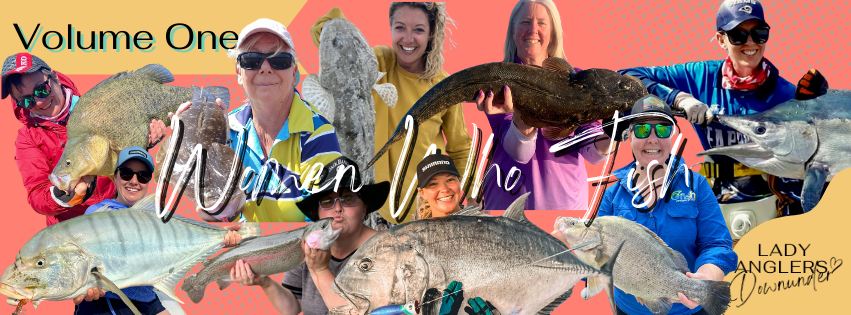
There is no single way to be a woman who fishes. The women featured in this story come from different backgrounds, fish for different reasons, and sit at very different points in their fishing journeys. Some are just finding their feet, others are seasoned competitors, industry leaders, and advocates shaping the future of recreational fishing in Australia.
What connects them is not experience level or species targeted, but a shared love for time on the water and the way fishing shows up in their lives. Through these conversations, each woman shares her story in her own words, from quiet moments of healing and family connection to high-adrenaline competition and industry leadership.
This series is about representation, community, and celebrating the many forms women’s fishing can take. Whether you’re here to learn, feel inspired, or simply recognize yourself in someone else’s story, we’re glad you’re here.
Jackie Bardelli
Jackie is a fiercely driven angler whose life revolves around the water and the thrill of competition. A proud Board Member of the Bluefin Fishing Club in Inala, the largest fishing club in Australia, and Vice-Captain of its Game Fishing Division, fishing for Jackie is far more than a pastime. It’s a lifestyle built on challenge, community, and pushing boundaries.
From chasing marlin off the Gold Coast to heading north for reef species, most weekends find Jackie exactly where she belongs, rod in hand and eyes firmly on the next goal. Her defining moment came when she won her very first Bluefin Game Fishing Division competition, out fishing a field dominated by men, including her own husband. For Jackie, that win was about more than the trophy. It was proof that skill, determination, and passion have no gender.
With a fishing journey that began in childhood alongside her grandfather in the USA and later reignited through community and competition in Australia, Jackie’s story is one of resilience, adrenaline, and leadership. She is a powerful reminder that women don’t just belong in fishing spaces, they can lead them.
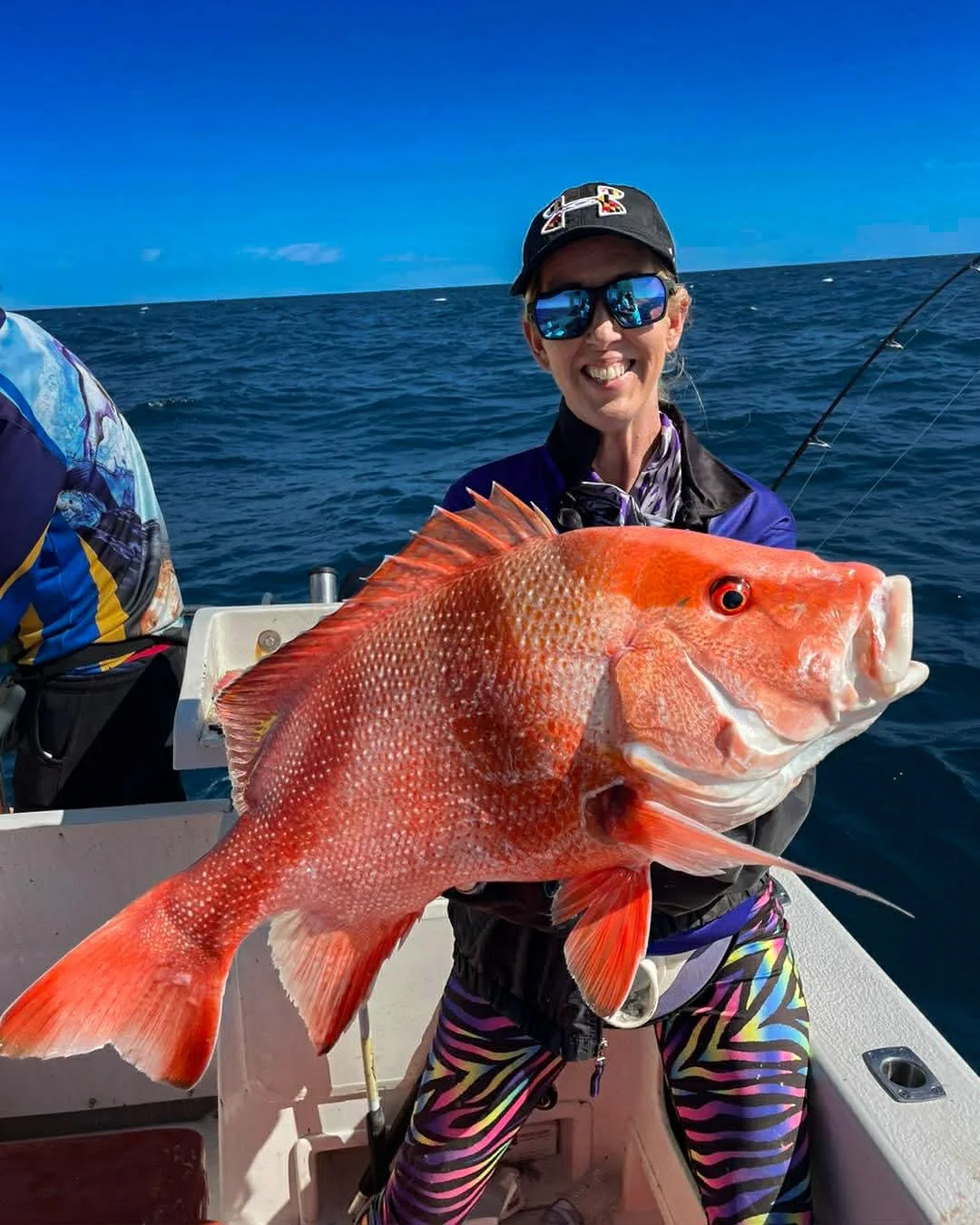
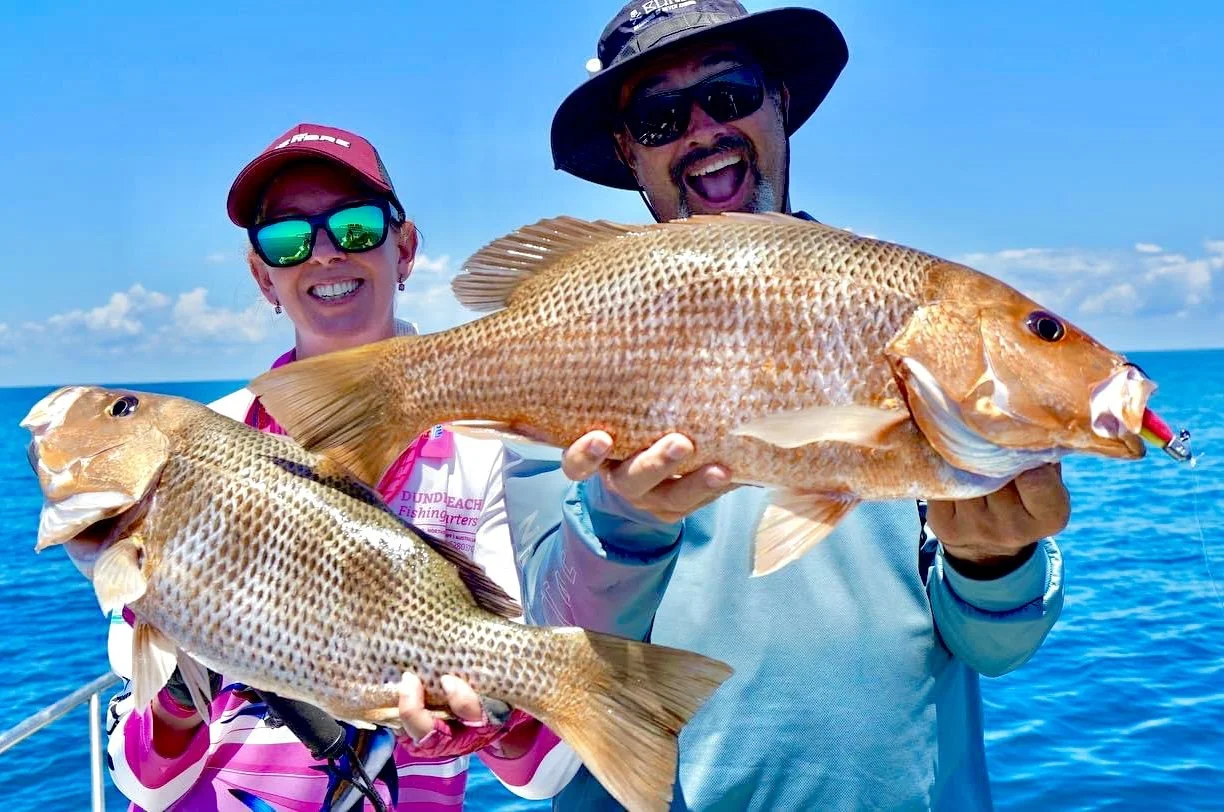
Someone say “saddle up”? Jackie with an amazing Red Emperor
Tell us a little about yourself and where fishing fits into your life right now
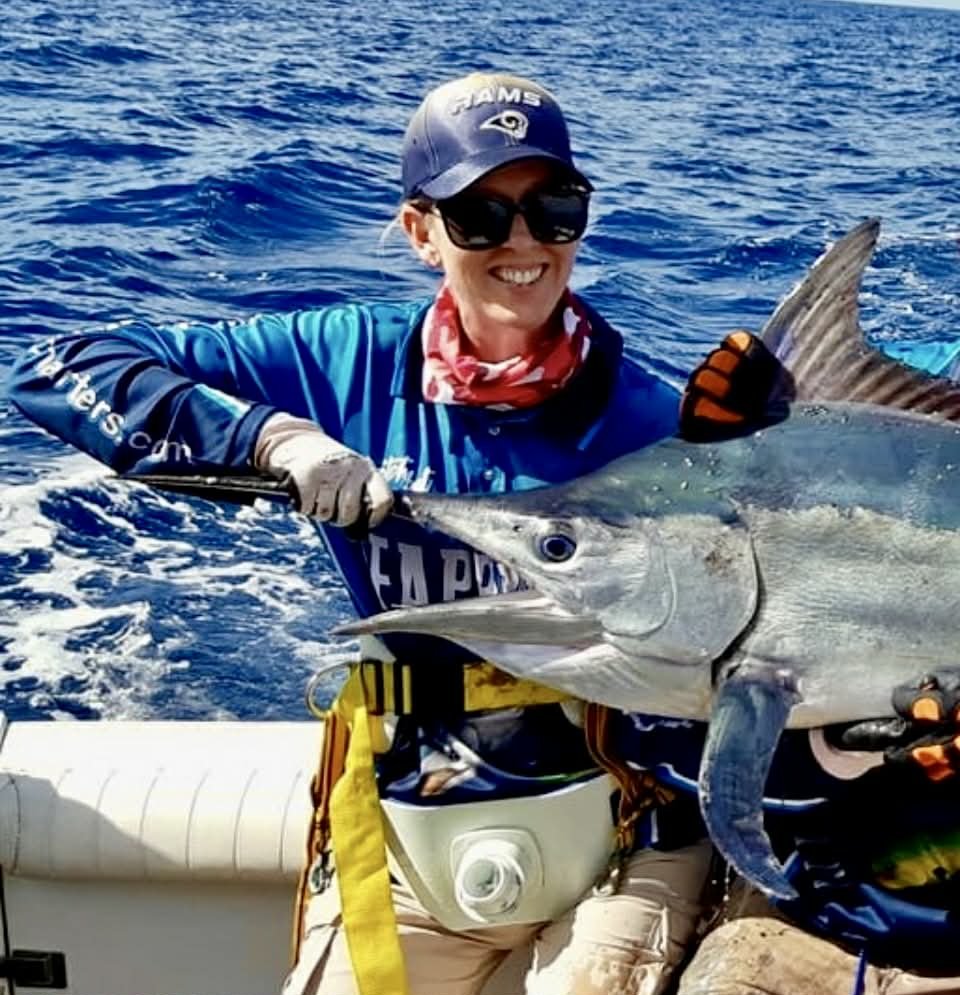
I’m a Board Member of the Bluefin Fishing Club in Inala, the largest fishing club in Australia, and Vice-Captain of its Game Fishing Division. Fishing isn’t just a hobby for me, it’s my lifestyle. If I’m not chasing marlin off the Gold Coast, I’m heading north targeting reef species.
Most weekends you’ll find me on the water, rod in hand, chasing the next challenge. I thrive on the competitive side of fishing. Winning my very first Bluefin Game Fishing Division competition, against a field dominated by men including my own husband, was a defining moment. That win was about more than a trophy. It was proof that skill, determination, and passion break barriers in fishing.
How did your fishing journey begin?
My fishing journey started in the United States, where I grew up fishing for rainbow trout with my grandfather in Vermont. Years later, after moving to Brisbane, I joined the Bluefin Fishing Club with my husband in my late 30s, and that passion was completely reignited.
Being part of such a strong fishing community opened doors I never expected, including being featured on Mark Berg’s Fishing Addiction. I was surprised with a dream fishing trip to Dundee Beach in the Northern Territory, bringing my journey full circle from childhood angler to competitive game fisher.
What does fishing give you beyond just catching fish?
Fishing gives me connection, resilience, and peace. It’s the camaraderie on the boat, the thrill of the chase, and those quiet moments fully immersed in nature.
On the competitive side, fishing gives me focus and adrenaline. Testing myself against others sharpens my skills and mindset, while the process teaches patience and mental strength. Fishing reminds me to slow down and appreciate life, even when I’m chasing the next win.
What’s one moment on the water that really stands out for you?
My standout moment was fishing at Dundee Beach with Mark Berg. The challenge of targeting 25 different species over four days pushed every limit. Landing a big Red Emperor during that trip was unforgettable, but fishing alongside an Australian fishing legend and achieving something that hadn’t been done in 15 years of the show made it truly special.
Another defining moment was winning my first Bluefin Game Fishing Division competition. Standing on the podium, knowing I had out fished seasoned male anglers, reinforced that women belong in competitive fishing at the highest level.
Have you faced any challenges as a woman in fishing, and how did you navigate them?
Fishing has traditionally been a male-dominated space, and early on I was often underestimated. I navigated those challenges through persistence, passion, and consistently showing up prepared.
Respect comes with results. Winning competitions against predominantly male fields has been one of the most powerful ways to challenge perceptions. Today, I actively work to promote inclusivity and ensure women feel welcome and supported in fishing communities.
What’s something you’ve learned about yourself through fishing?
Fishing has shown me how resilient and adventurous I really am. I perform best when I’m challenged, whether it’s battling a big fish, competing in tournaments, or navigating rough conditions.
I’ve learned that competition brings out my strongest focus and determination, and that community and mentorship play a huge role in long-term success in fishing.
Do you have a favourite species, style of fishing, or place to fish? Why?
Game fishing for marlin off the Gold Coast is my passion. There’s nothing like the adrenaline of a marlin strike, hearing the reel scream, and settling into a long, strategic fight.
Marlin fishing combines strength, patience, teamwork, and competition. With every strike potentially being the winning fish, it delivers pure excitement and keeps me coming back season after season.
How do you support or encourage other women in the fishing space?
I support women in fishing by sharing my experiences on social media, mentoring within my fishing club, and leading by example. Representation matters. When women see other women succeeding, whether it’s landing a marlin or winning a competition, it builds confidence and opens doors.
I make it a priority to ensure women feel welcome, capable, and supported in every fishing environment I’m part of.
What role do community groups play in the future of women’s fishing?
Community groups like LAD, WRFL, and WIRF are essential for the growth of women’s fishing. They provide connection, mentorship, visibility, and safe spaces where women can learn and thrive.
These organisations help break down barriers and ensure future generations of female anglers have role models and opportunities. The support I’ve received has been invaluable, and I strongly believe we’re stronger when we work together.
For any woman thinking of starting to fish, what piece of advice would you give her?
Just start. Don’t wait until you feel ready. Grab a rod, join a local fishing club, and learn as you go. Fishing is about experience, not perfection.
Surround yourself with supportive people and embrace every opportunity to grow. And if you’re competitive like me, don’t be afraid to enter competitions early. You might surprise yourself with how quickly you rise to the challenge.
Jo Starling
Jo Starling’s fishing journey is one of independence, empowerment, and deep personal transformation. Raised in Darwin and shaped by a fiercely adventurous spirit, Jo found fishing later in life through women who refused to let her underestimate herself.
Today, fishing is far more than a pastime for Jo. It is a source of confidence, healing, discipline, and self-reliance, and the foundation of her leadership in women’s fishing. As founder of the Women’s Recreational Fishing League, Jo continues to champion mentorship, skill-building, and representation, helping women step fully into their power on and off the water.
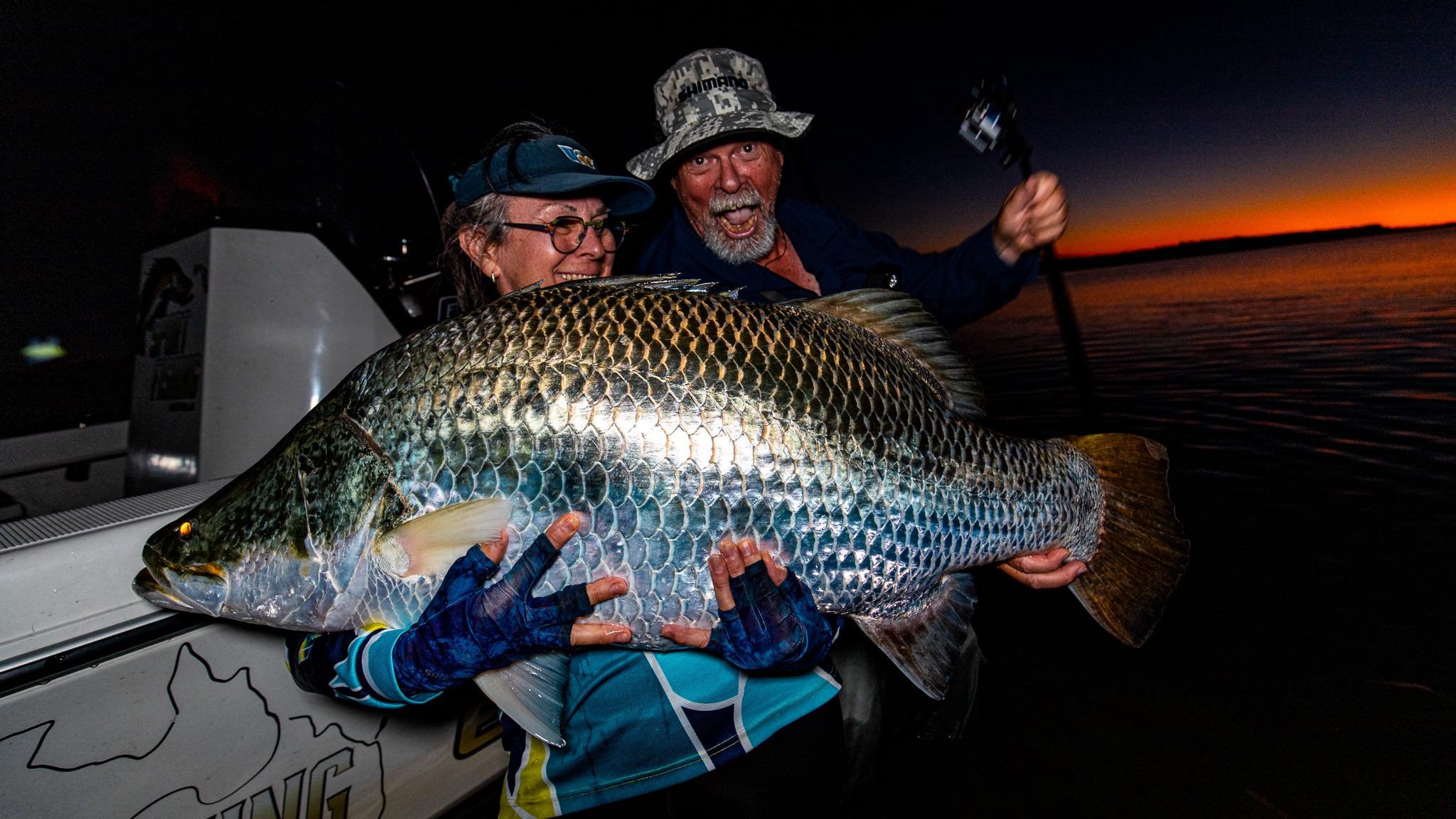
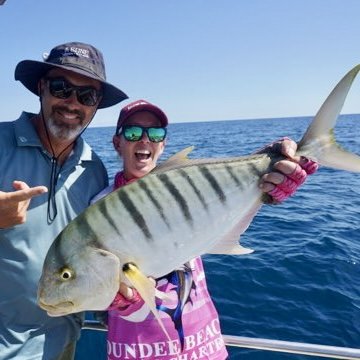
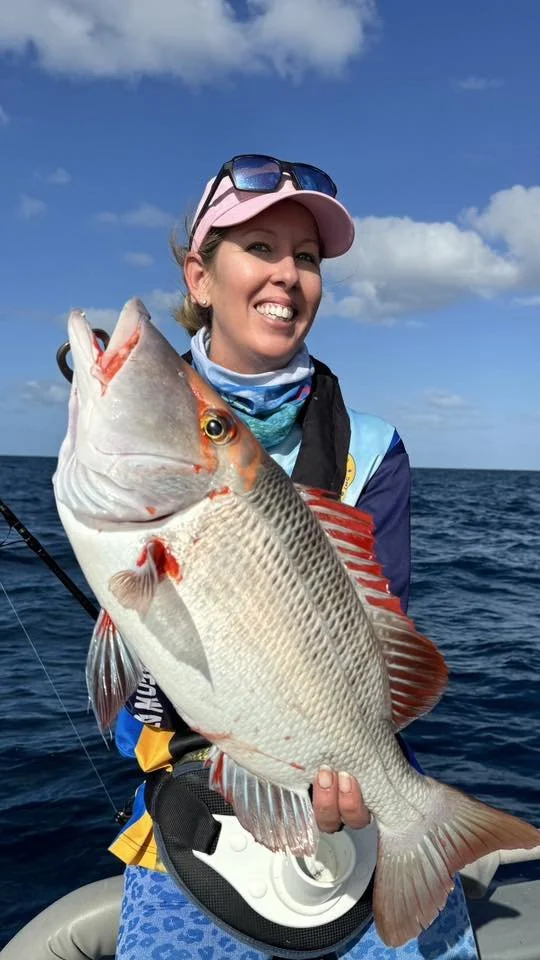
Now THAT is a Barra!!
Tell us a little about yourself and where fishing fits into your life right now
I’m Jo Starling. I’ve been a fishaholic for two and a half decades now, with no plans for rehabilitation.
I grew up in Darwin before computers, spending my youth camping, beachcombing, making art, learning karate, running long distances, and generally being as adventurous as possible. Fishing now sits at the core of who I am, not just as a passion, but as a defining force in my confidence, independence, and leadership.
How did your fishing journey begin?
The men in my family fished. I wasn’t invited.
I was raised in a traditionally gender-roled family, and my early attempts at learning to fish through my first two husbands were unsuccessful, to say the least. Those experiences put me off completely.
Everything changed when my sisters-in-law, Tiina and Tania, decided to form an all-female, all-family fishing team. I laughed at first and told them I was hopeless, a belief shaped by poor early experiences. Thankfully, they refused to accept that answer and committed to teaching me properly.
We began fishing in the early years of what became the Secret Women’s Business Barra Challenge. Back then, women’s events still relied heavily on male skippers and didn’t encourage self-sufficiency. SWB was different. It was created by two visionary women, Jo and Mel, who wanted to build real capability and confidence.
We camped together beside Corroboree Billabong, shared stories under the stars, and learned by doing. It was magic.
What does fishing give you beyond just catching fish?
Fishing gave me back my power.
I believe I am the woman I am today because of fishing. Compassionate and empathic, yet fiercely independent, strong, and unshakeably confident. This is despite a history of trauma and the ongoing realities of PTSD and anxiety.
Fishing reconstructed my sense of control over my circumstances. It gave me self-reliance and self-efficacy that no one could take from me. It stopped my eyes from constantly searching for an escape and showed me what empowerment actually looks like.
What’s one moment on the water that really stands out for you?
In 2018 at the Barra Nationals, I fought a truly epic barramundi. I’ve lost many metre-plus fish, but this one was different. Right beside the boat, impatience got the better of me and I lost her, but not before I saw her shoulders and what I swear was a wink before she spat my lure.
She haunted me for years.
Recently, I finally landed my first metre-long barra, a 119cm fish from Lake Maraboon in Queensland. She was the teacher in my mind as I fought that fish, reminding me what not to do. When that fish was on the deck, I felt a sense of closure I didn’t know I needed.
That capture is now a pending Ladies World Record on 10kg line. And I no longer carry that Daly River monkey on my back.
Have you faced any challenges as a woman in fishing, and how did you navigate them?
Yes. Any woman who pushes into competitive fishing will face challenges, although the landscape has improved dramatically over time.
There are still sexist attitudes in parts of the sector, but I don’t believe change comes from confrontation alone. It comes from women choosing not to limit themselves and stepping fully into the opportunities now available.
There is no reason to stay on the shore anymore.
What’s something you’ve learned about yourself through fishing?
Fishing has shown me that I have an innate understanding of interplay. It has also reinforced my deep compassion, love of nature, and respect for balance and symbiosis.
Do you have a favourite species, style of fishing, or place to fish? Why?
I don’t have a favourite species or place, but I do have a favourite style. Fly fishing.
Fly demands discipline, mindfulness, and presence well beyond conventional tackle. It challenges me in the best way and feeds my soul. It’s also a beautiful artform.
If I could only ever chase one species, it would be trout, because they would allow me to follow my rod anywhere in the world.
How do you support or encourage other women in the fishing space?
Inspired by the work of the SWB founders and my own experiences, I founded the Women’s Recreational Fishing League to encourage Australian women to develop self-reliance through fishing as a sport.
I’m privileged to work alongside a committed national leadership team who have dedicated years to mentoring, opportunity creation, and advocacy. Together, we continue to build pathways for women to grow in confidence, skill, and independence.
What role do community groups play in the future of women’s fishing?
Change cannot happen unless under-represented groups see themselves in leadership. Women need visible examples showing that participation, influence, and excellence are possible.
Community groups help clear the path, provide mentoring and training, create opportunity, and celebrate achievements. Without collaboration and shared momentum, progress slows. Together, we move forward.
For any woman thinking of starting to fish, what piece of advice would you give her?
Make the decision to do it. You won’t look back.
I’d also strongly encourage finding a mentoring group of women. Men can be wonderful teachers, but women teach differently, and those lessons often land more deeply. It’s worth listening to both.
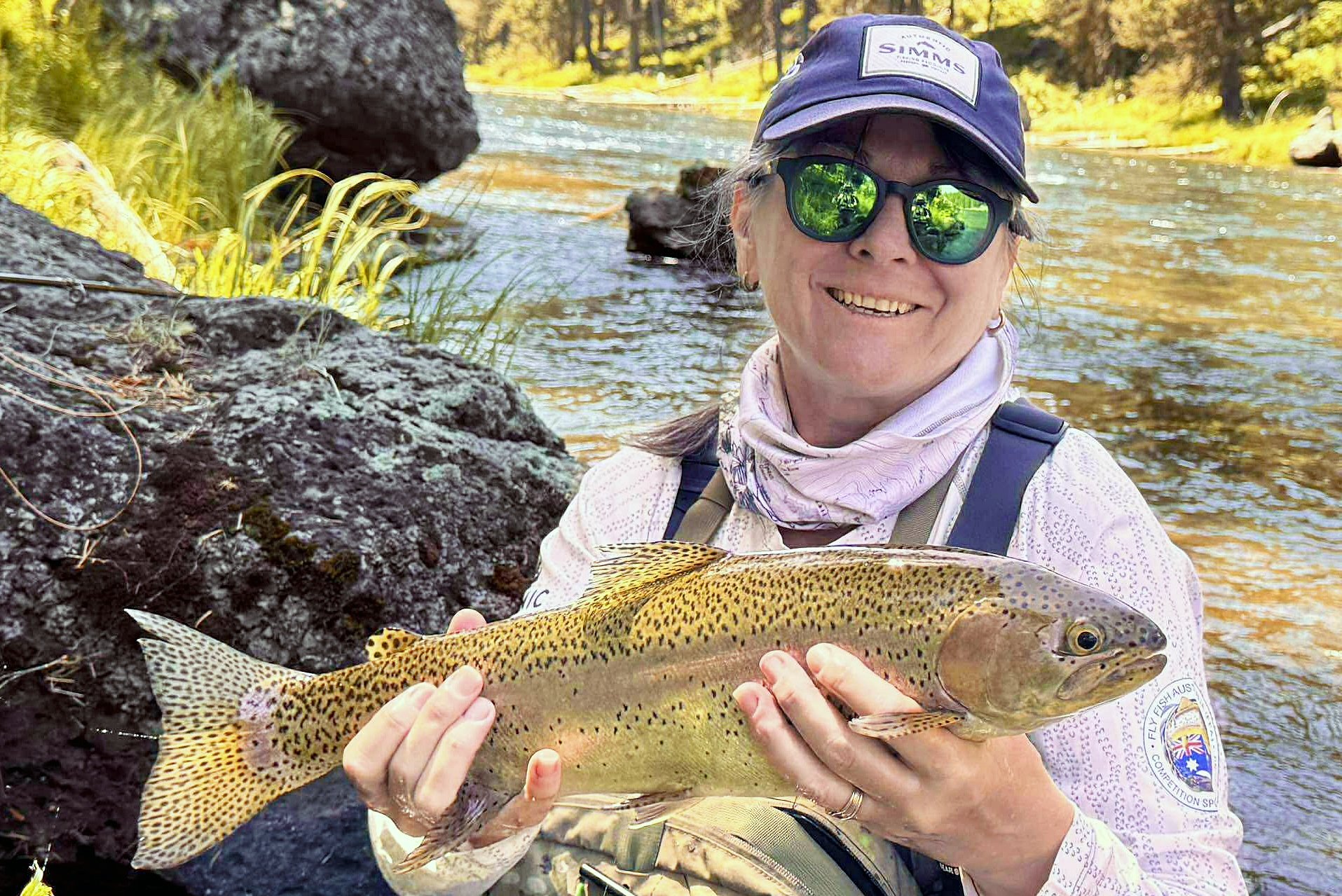
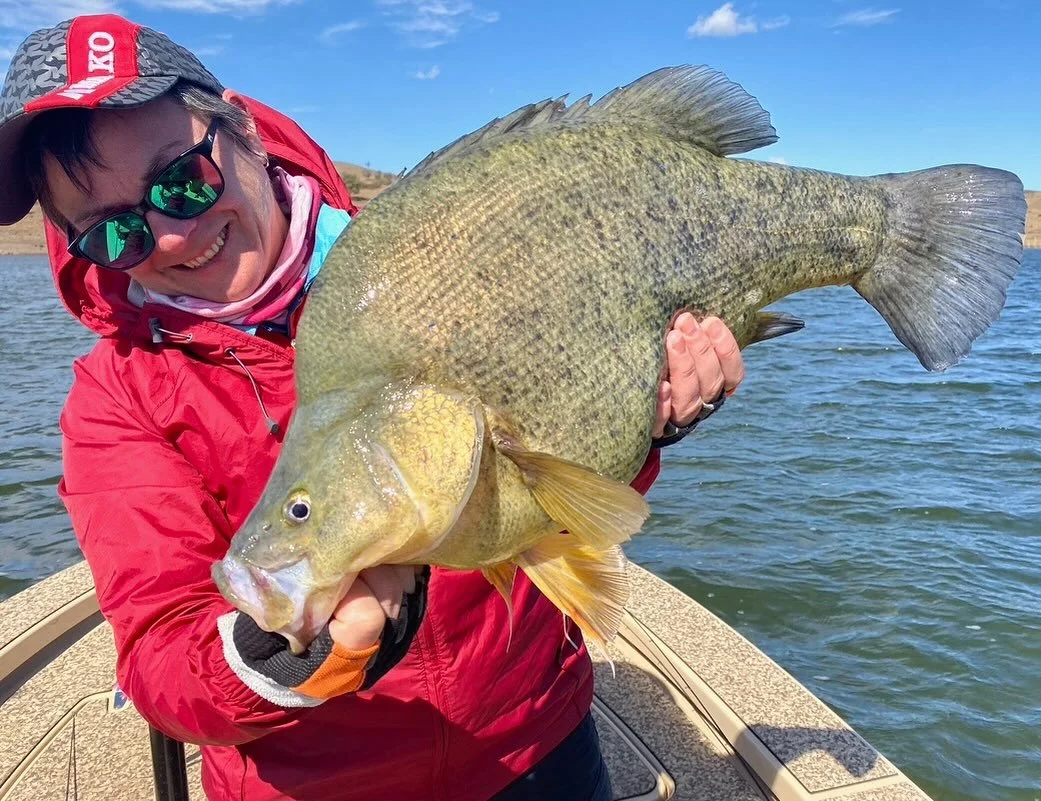
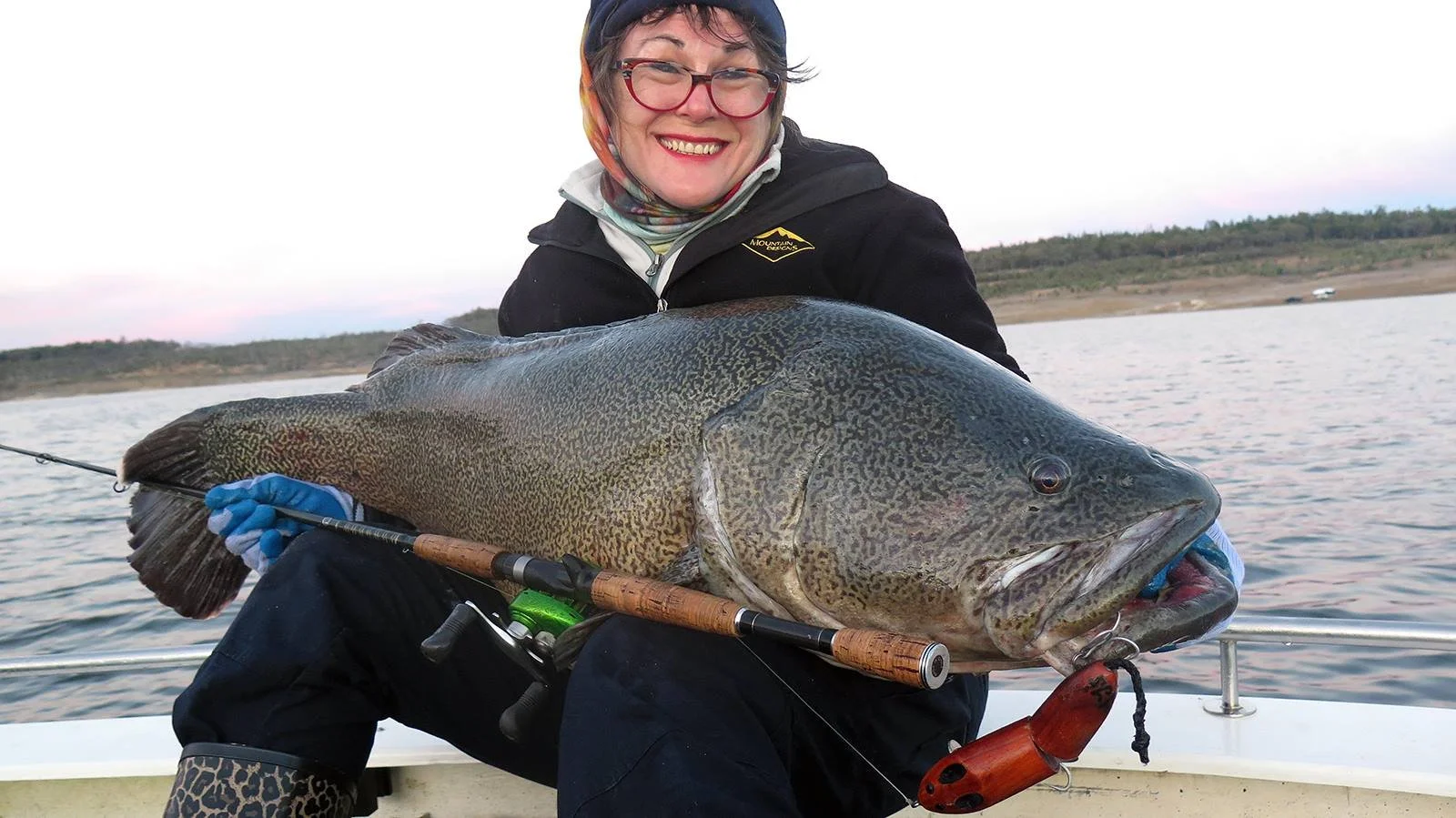
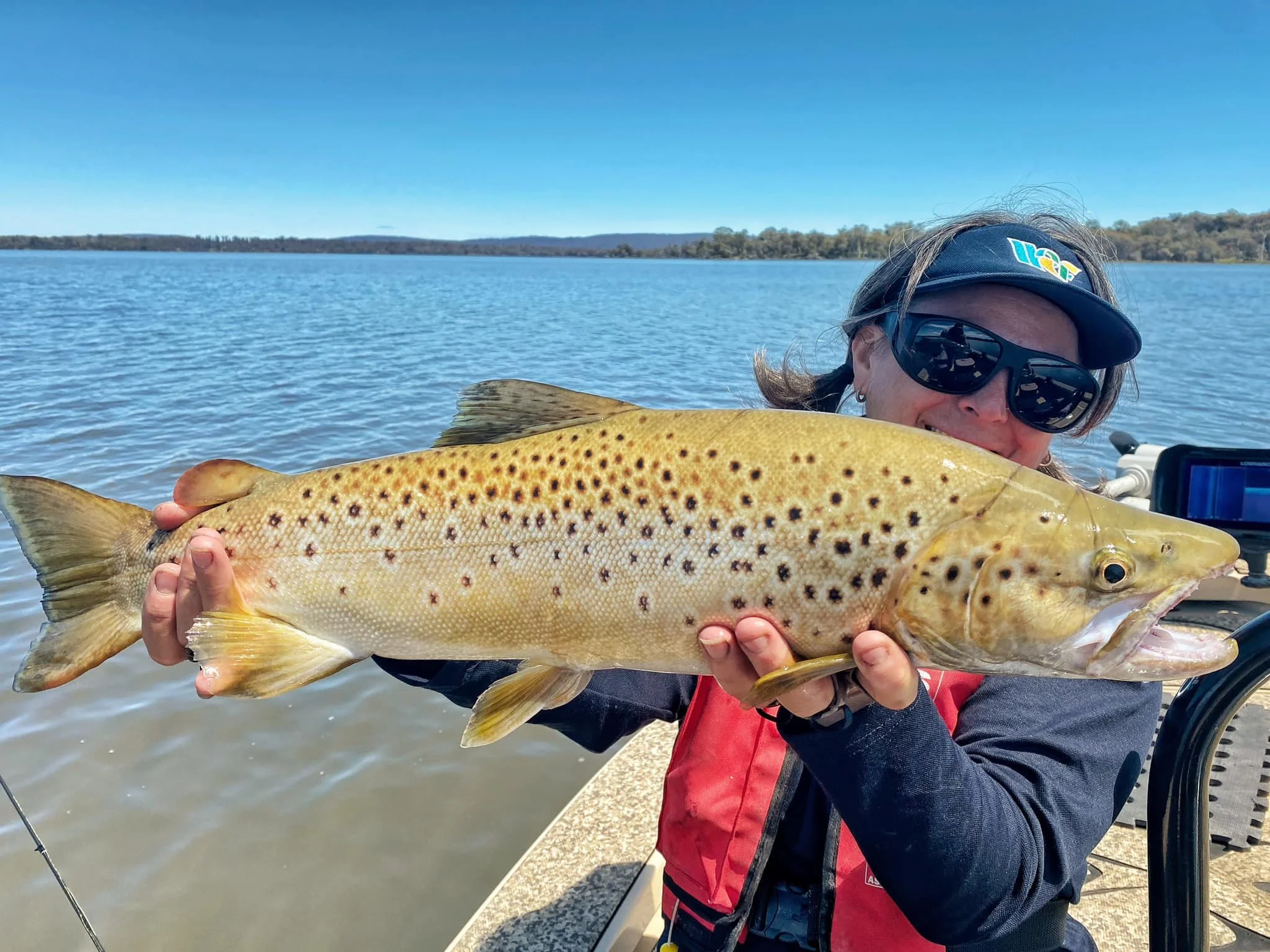
Jo’s story is a powerful reminder that fishing can be a pathway to confidence, independence, and deep personal change. Through leadership, mentorship, and an unwavering belief in women’s capability, she continues to help shape a future where women fully belong on the water.
I hope you’ve enjoyed getting to know Jo and her journey as much as I have.
Kymmy 💛
Imogene Garlick
When I sat down to chat with Imogene (albeit via messenger) about her year so far, fishing came up quickly, but so did something far bigger.
On the 8th of April, while fishing with her dad, Imogene began to experience what she later described as the worst headache of her life. Within minutes, it was clear something was seriously wrong. What followed was a rapid trip to hospital, an emergency diagnosis of a ruptured aneurysm, surgery, a coma, and a long road to recovery.
True to who she is, Imogene didn’t lose her sense of humour for long. At one point, she told her doctor it was time to sign her out because she had fish to catch. The look she got in return said it all.
Winter river closures gave her time to heal, and while she couldn’t drive for months, the pull of the water never left. The day before the rivers reopened, she packed her gear and loaded the car, ready. Catching fish didn’t matter that day. Being back in the river did.
Recovery hasn’t been linear. Living with a brain injury means some days come with heavy neuro fatigue, and there are times when fishing alone just isn’t possible. But on other days, nothing stops her. Fishing grounds her, calms her, and gives her purpose, especially when she’s teaching her grandson, who is always asking when they can go again.
There was fear too, particularly of cold water. But recently, Imogene found herself back where she belongs, standing in the river in her Crocs, doing what she loves.
This year, fishing hasn’t just been something Imogene enjoys. It’s been part of her healing.
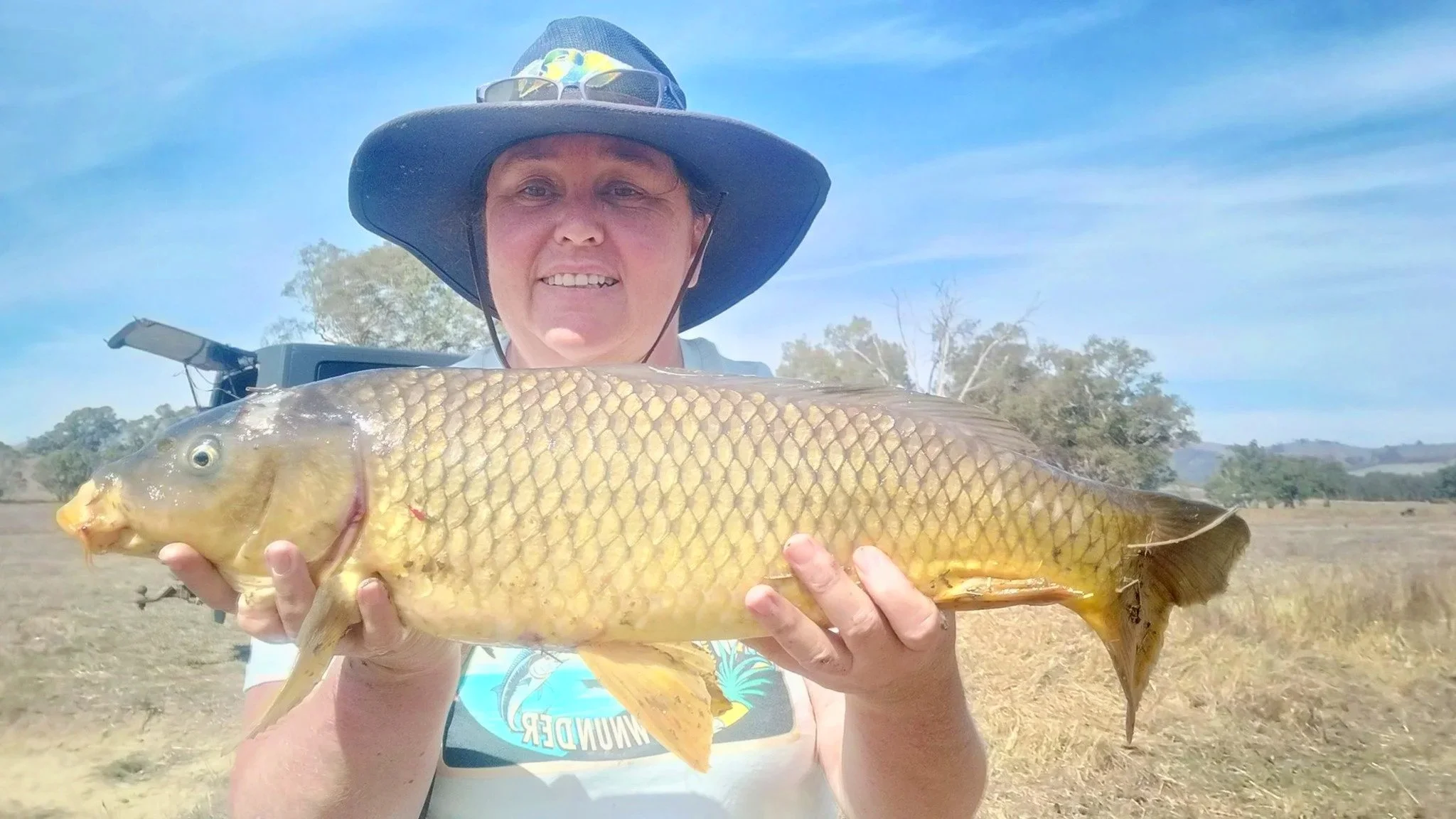
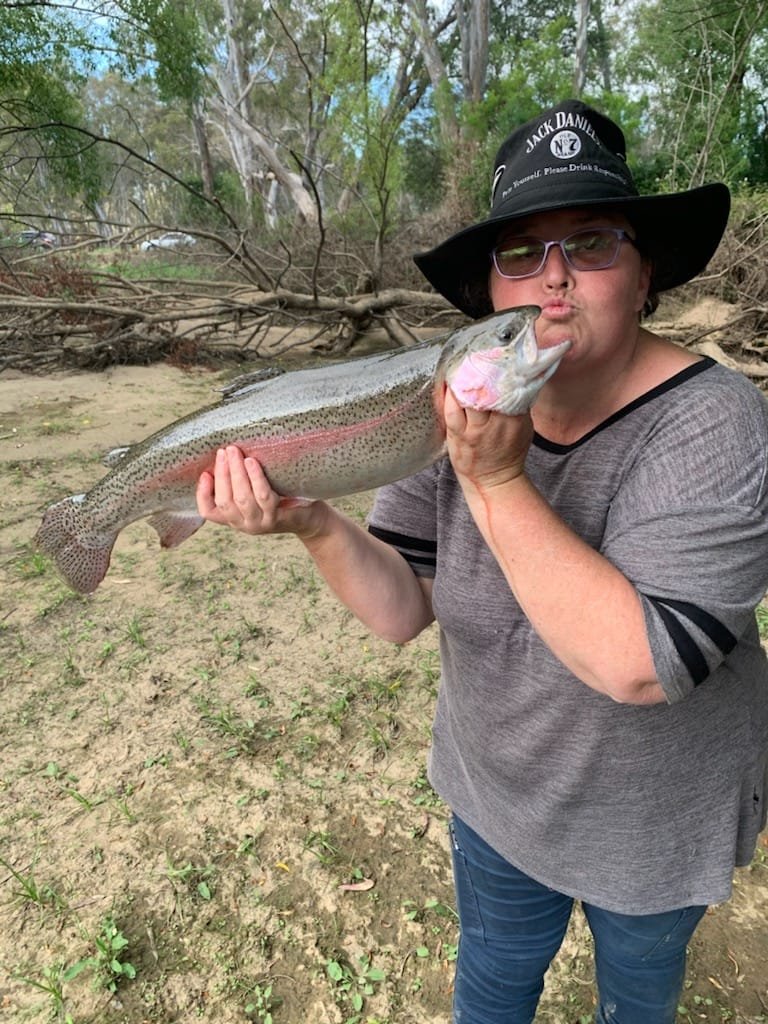
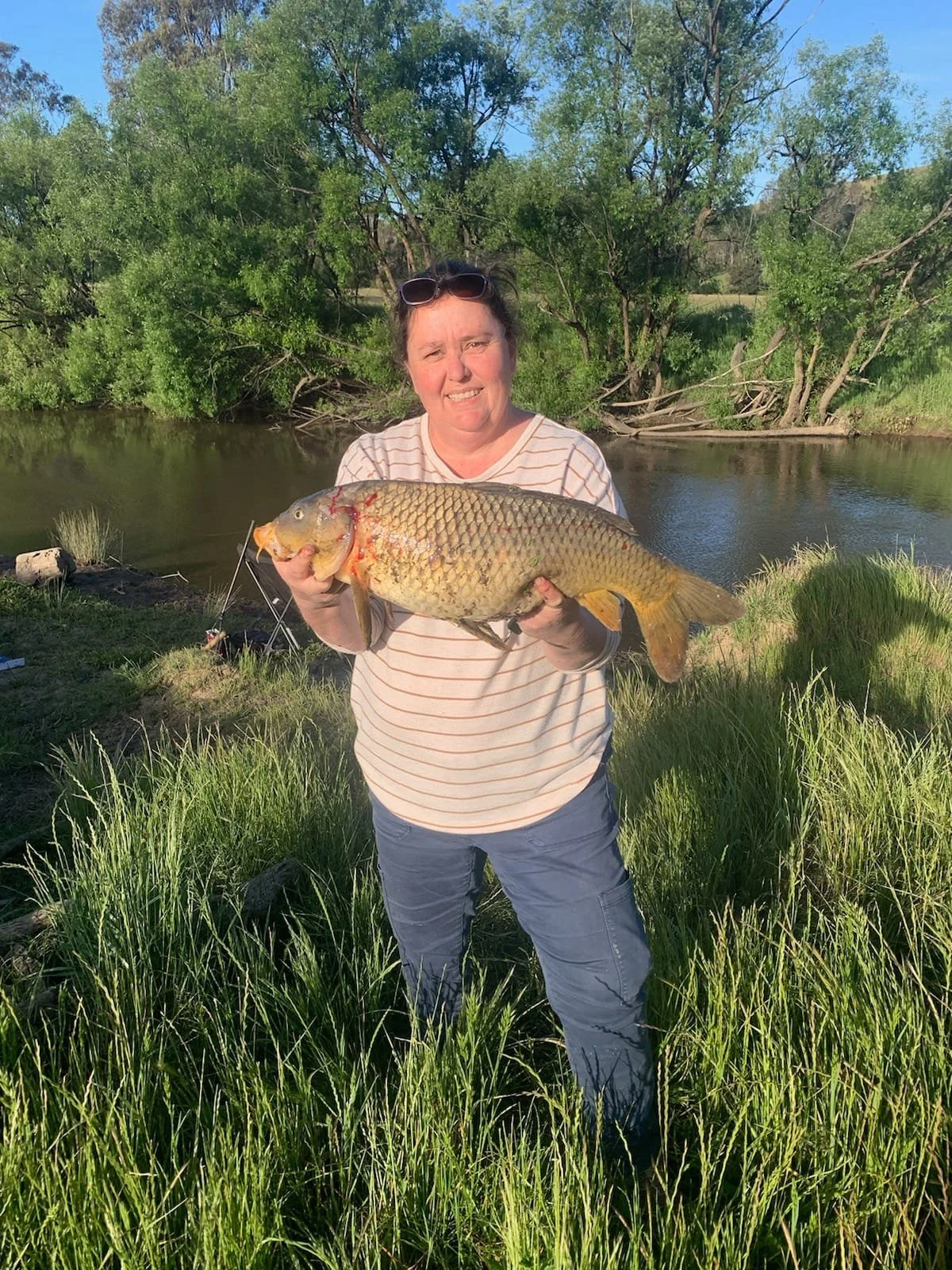
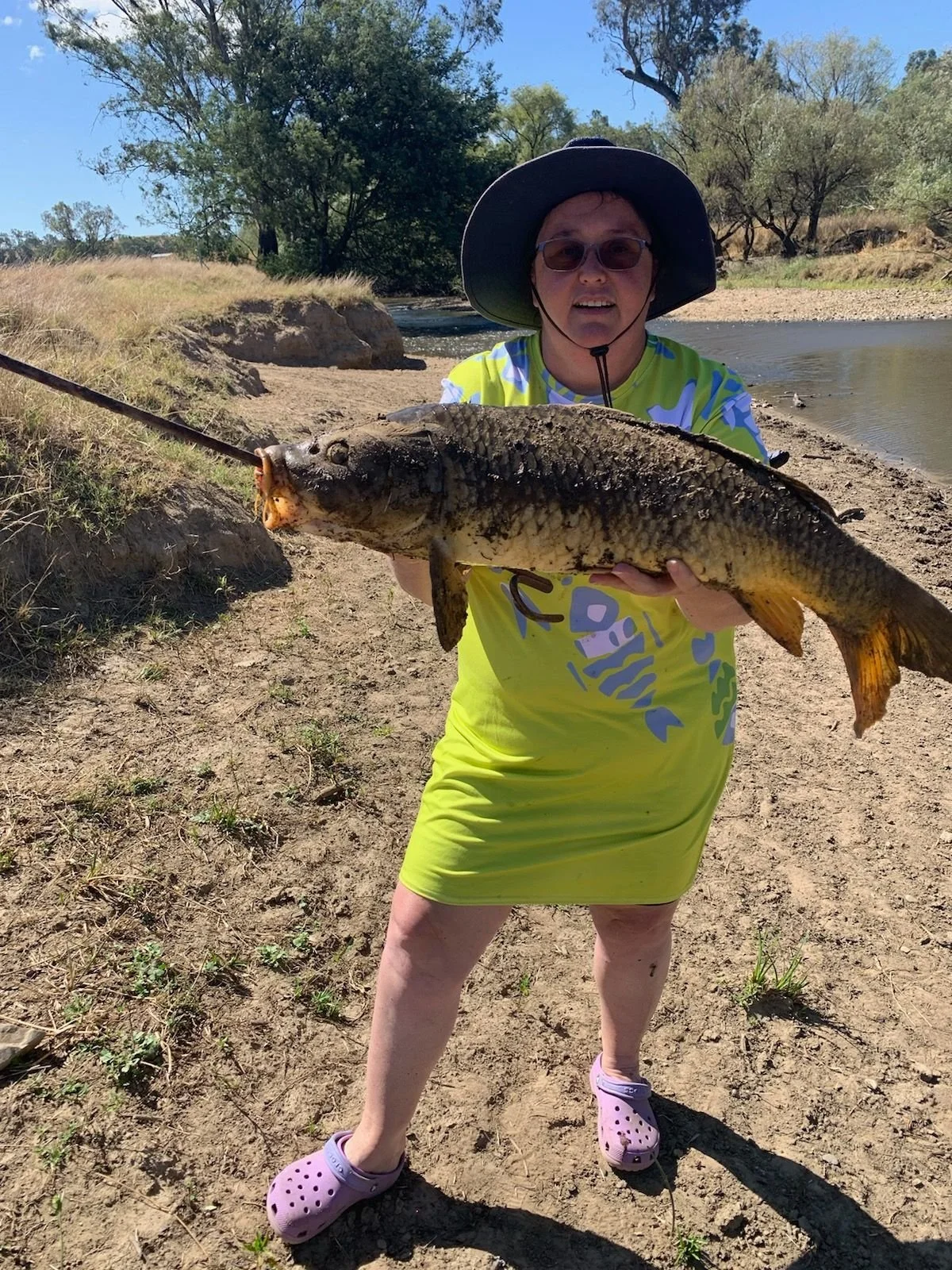
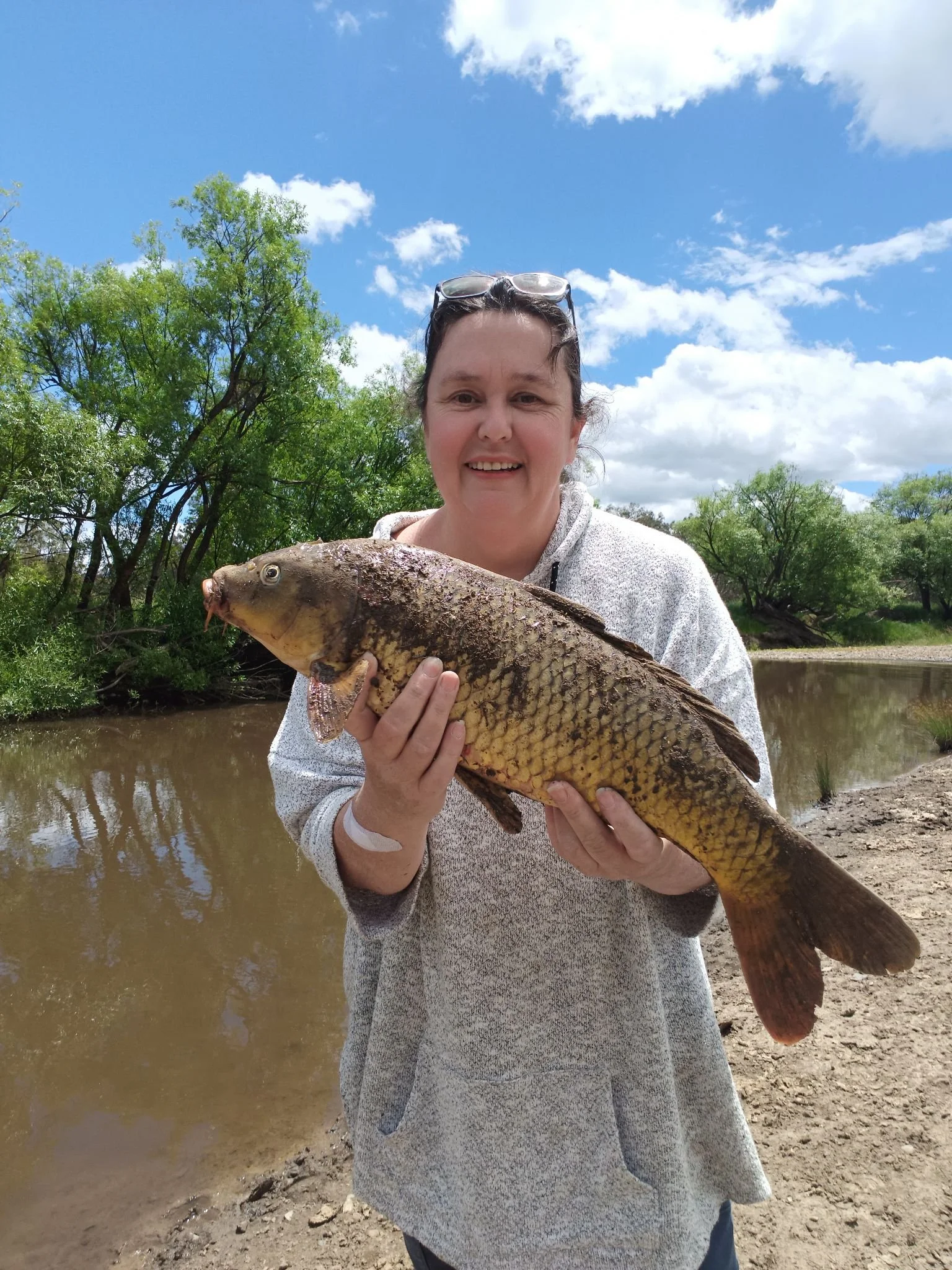
Taking care of mental health AND a spot of pest control
How did your fishing journey begin?
My fishing journey began as a teenager growing up with my dad, who had also learned to fish from his own father. As the only teen of a single dad, fishing and camping became our time together. One Easter, instead of chocolate, I was given my very first fishing rod.
We lived near a river, and I would often grab my rod and head off on my own. Those early moments shaped my love for fishing and the independence it gave me from a young age.
What does fishing give you beyond just catching fish?
Fishing gives me connection and therapy. Now that I’m my dad’s carer, it still provides us with valuable time together. At the same time, fishing gives me much-needed “me time”, a chance to clear my head and reset when life feels heavy.
What’s one moment on the water that really stands out for you?
There are so many special moments, but one of the most recent that brings me the most joy was watching my five-year-old grandson reel in his own fish. Seeing him brave enough to hold it, even if it meant wearing my gloves, was incredibly special and had us both laughing.
Have you faced any challenges as a woman in fishing, and how did you navigate them?
I’ve been very fortunate to have the support of my dad and others around me, something I know not everyone experiences. That support has made my fishing journey a positive one, and I’m grateful for it.
What’s something you’ve learned about yourself through fishing?
Fishing has taught me that nothing can stop me.
Do you have a favourite species, style of fishing, or place to fish? Why?
Right now, I love chasing carp. They’re a great fighting fish, and I enjoy doing my part to reduce their numbers in our rivers. Bait fishing is also something I really enjoy, as it allows me to slow down when life feels busy.
That said, I also love the challenge of lure fishing. Each style gives me something different, depending on what I need in that moment.
How do you support or encourage other women in the fishing space?
I’m always happy to help anyone who wants to learn or who’s looking for a fishing buddy. I encourage women who feel like they can’t do it or don’t have the time, because fishing can fit into so many lifestyles.
If you have kids, it’s also one of the best ways to spend quality time together and create lasting memories.
What role do community groups play in the future of women’s fishing?
Community groups play a huge role in showing women that fishing isn’t just “a man’s thing”. For a long time, fishing has been seen as something men do to get away, but there’s no reason women can’t be part of it too.
Being involved in groups like these builds confidence, and with that confidence, women may even find themselves teaching the men a thing or two.
For any woman thinking of starting to fish, what piece of advice would you give her?
Don’t overthink it, just do it. If you’re unsure what to buy, the staff at your local tackle shop will help. If you think you can’t fish on your own, you absolutely can.
Fishing is for everyone, and the best way to start is simply to take that first step.
Imogene’s story is a powerful reminder that fishing isn’t just about what we catch, but what we carry with us along the way. Through family, resilience, and a deep connection to the water, fishing has remained a place of healing, purpose, and belonging for her.
I hope you’ve enjoyed getting to know Imogene and her journey as much as I have.
Kymmy 💛
Louise Atkin
Louise’s fishing journey began not through family tradition, but through quiet curiosity and a pull toward the water. From handlining around Sydney jetties with little more than prawns and determination, she discovered a lifelong connection to fishing that has grown naturally over time.
For Louise, fishing is about peace, presence, and connection. It’s a way to slow down, tune into the environment, and share meaningful moments with like-minded people. Her approach is thoughtful and grounded, shaped by a deep respect for nature and a belief in trusting yourself, giving things a go, and enjoying life as it comes.
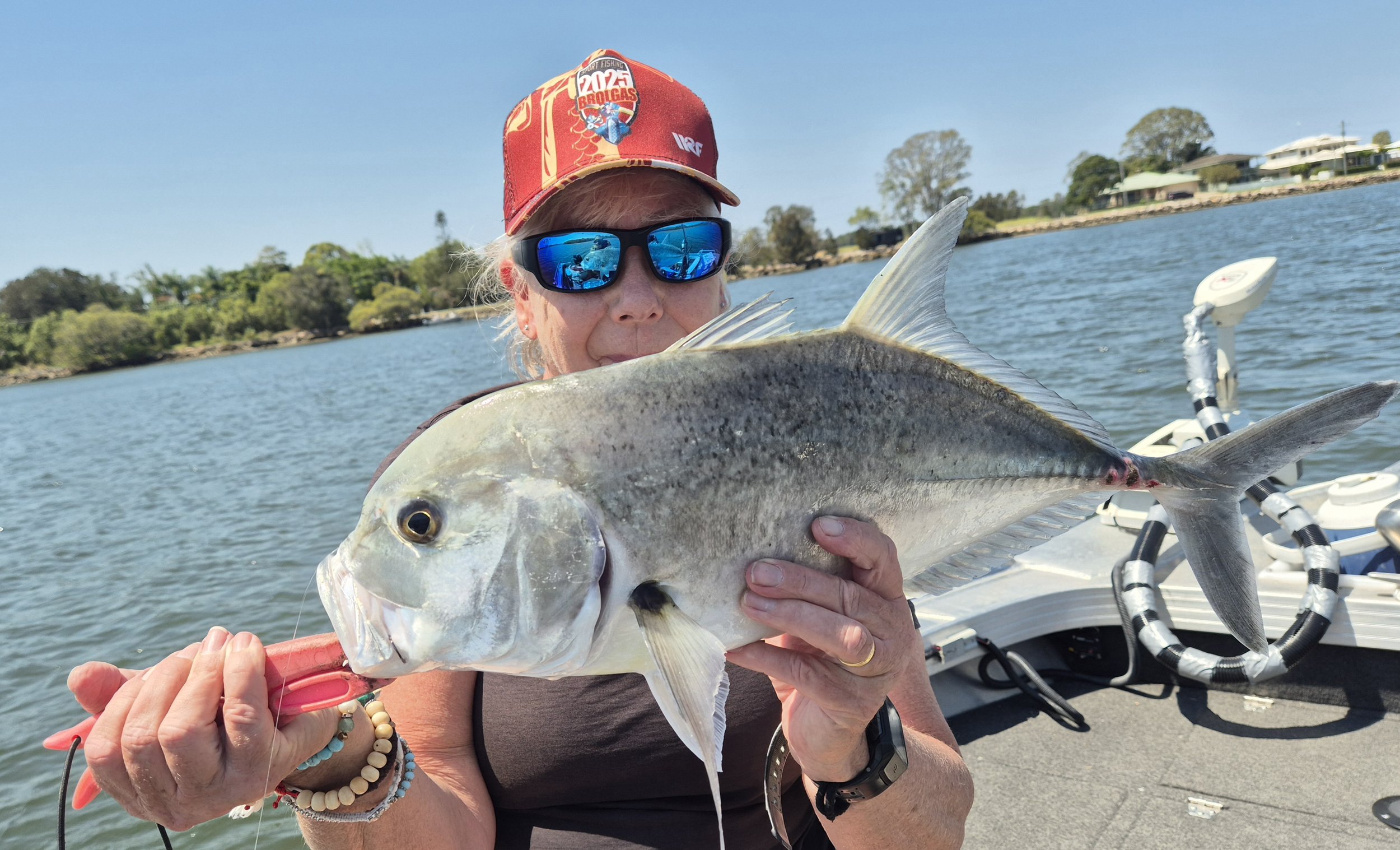
It’s not just flathead she knows how to bring in
How did your fishing journey begin?
I didn’t come from a fishing family, but for some reason I was always drawn to it. I started fishing around the jetties in Sydney whenever I could, using prawns and a handline. It was as basic as it gets. No gear and no idea.
Despite that, fishing was something I always enjoyed, and it quietly stayed with me over the years.
What does fishing give you beyond just catching fish?
Fishing gives me peace. It’s time out, relaxation, and a chance to connect with the environment and with like-minded people. It allows me to slow down and simply be present.
What’s one moment on the water that really stands out for you?
There are a few milestone moments that stand out. The first time I caught a fish on a soft plastic, the first time I tagged a fish, and then receiving my first recapture certificate. Each one felt like a small but meaningful achievement along the way.
Have you faced any challenges as a woman in fishing, and how did you navigate them?
Personally, I haven’t faced many challenges as a woman in fishing. I think that’s largely due to having worked in a male-dominated industry for much of my life, which helped build confidence and resilience.
What’s something you’ve learned about yourself through fishing?
Fishing has deepened my love for the environment and highlighted how important it is to protect it and educate future generations. It has also taught me the importance of being present in the moment, and how fragile those moments can be.
Do you have a favourite species, style of fishing, or place to fish? Why?
I don’t really have a favourite. I love it all. That said, pike eels are probably the exception. Very angry, very toothy individuals, and not quite my thing.
How do you support or encourage other women in the fishing space?
By having empathy, listening, communicating, sharing experiences, and encouraging belief. Belief in yourself and trust in your own ability go a long way.
What role do community groups play in the future of women’s fishing?
Community groups definitely have a place, but we’re not a one-size-fits-all. It’s important to look around, ask questions, and find what resonates with you. And if something doesn’t feel right, that’s okay too.
For many women, these groups offer more than just fishing. They can be a source of support, a place to feel seen, to connect, and to simply be yourself. And at the end of the day, it’s also about going fishing and enjoying life.
For any woman thinking of starting to fish, what piece of advice would you give her?
Throw caution to the wind and give it all a go. Life is too short.
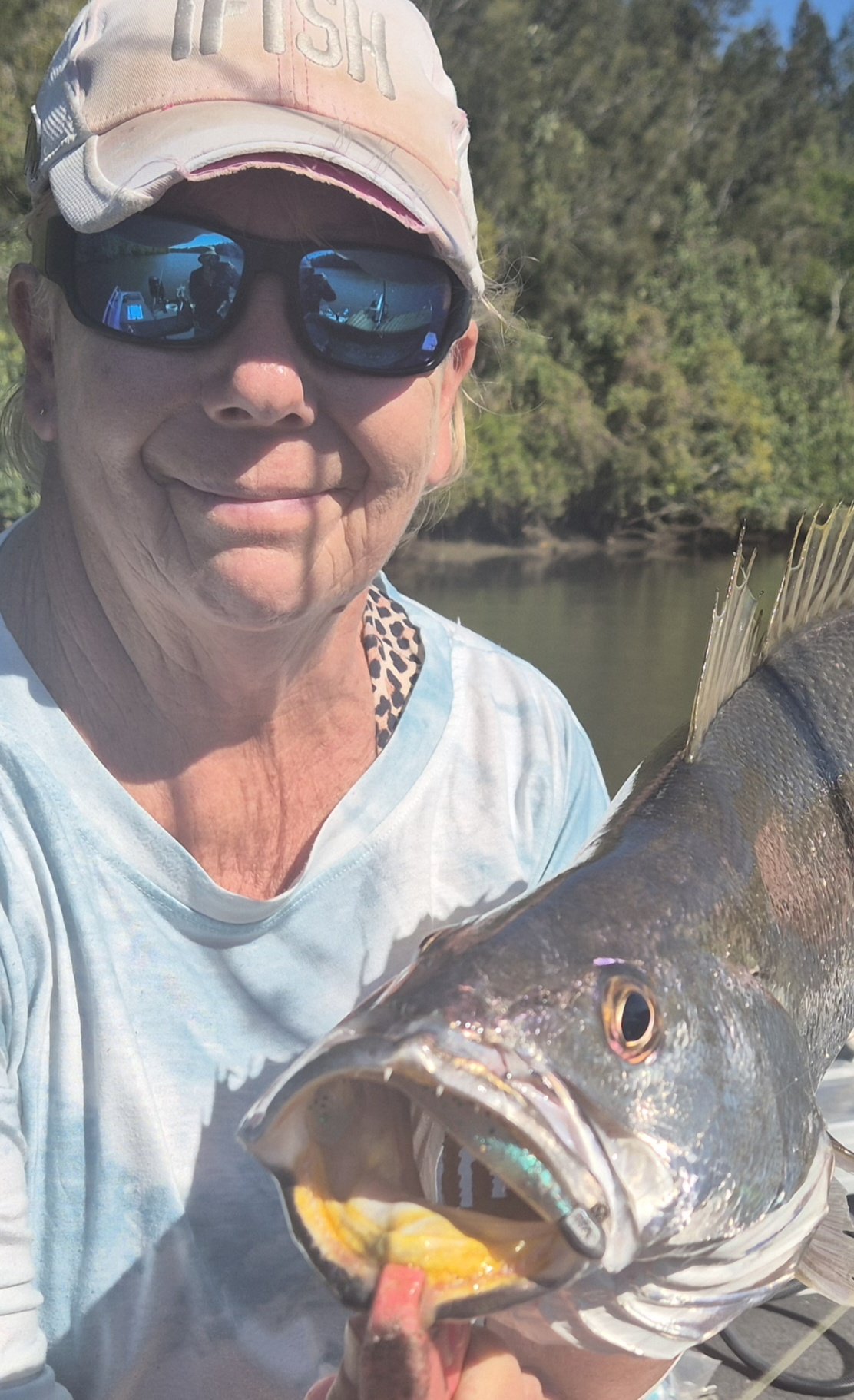
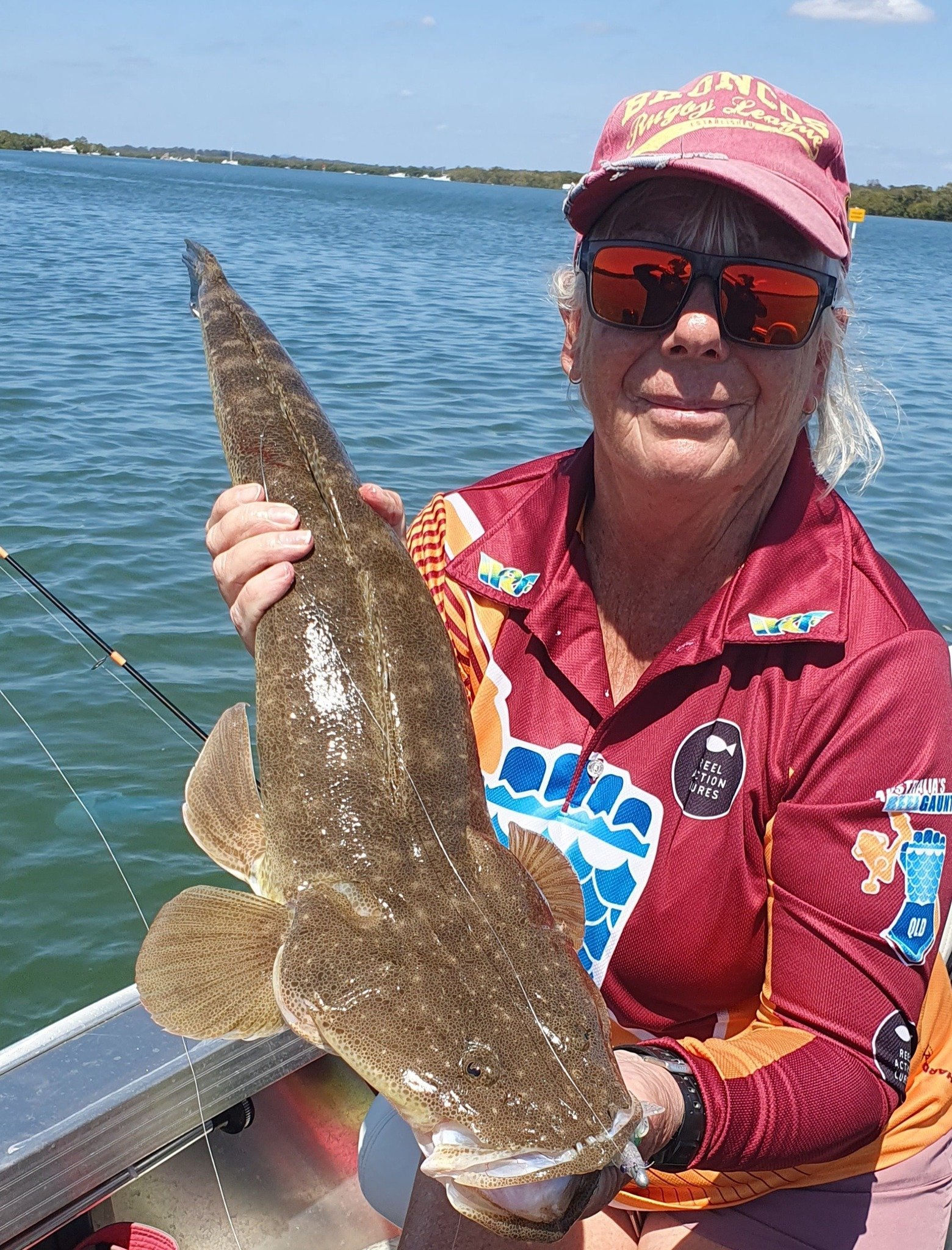
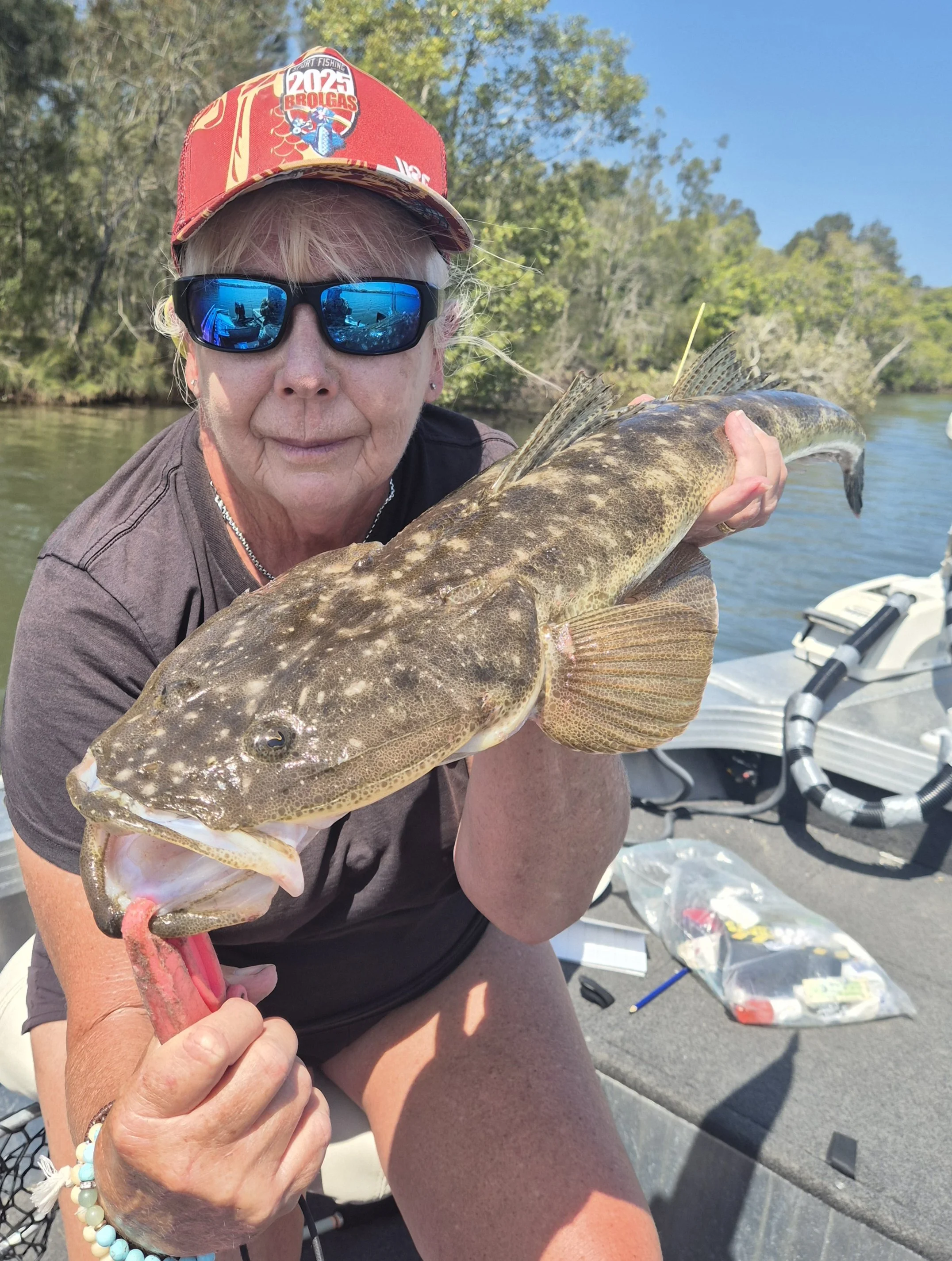
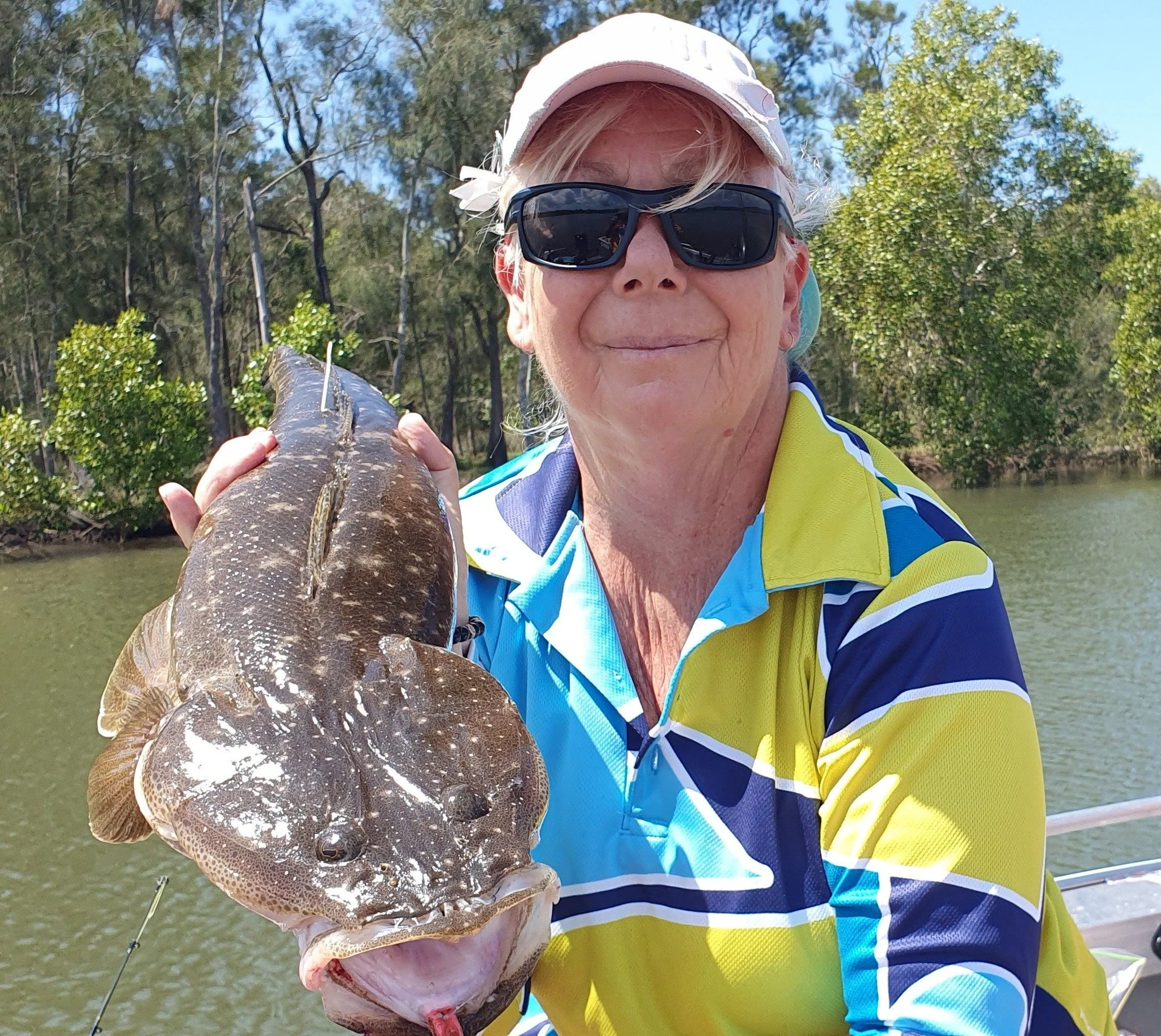
Louise’s story is a reminder that fishing doesn’t have to begin with experience or expertise, just curiosity and a willingness to give it a go. Through presence, respect for the environment, and quiet confidence, fishing has become a space where she finds peace, connection, and perspective.
I hope you’ve enjoyed getting to know Louise and her journey as much as I have.
Kymmy 💛
Caitlin Berecry
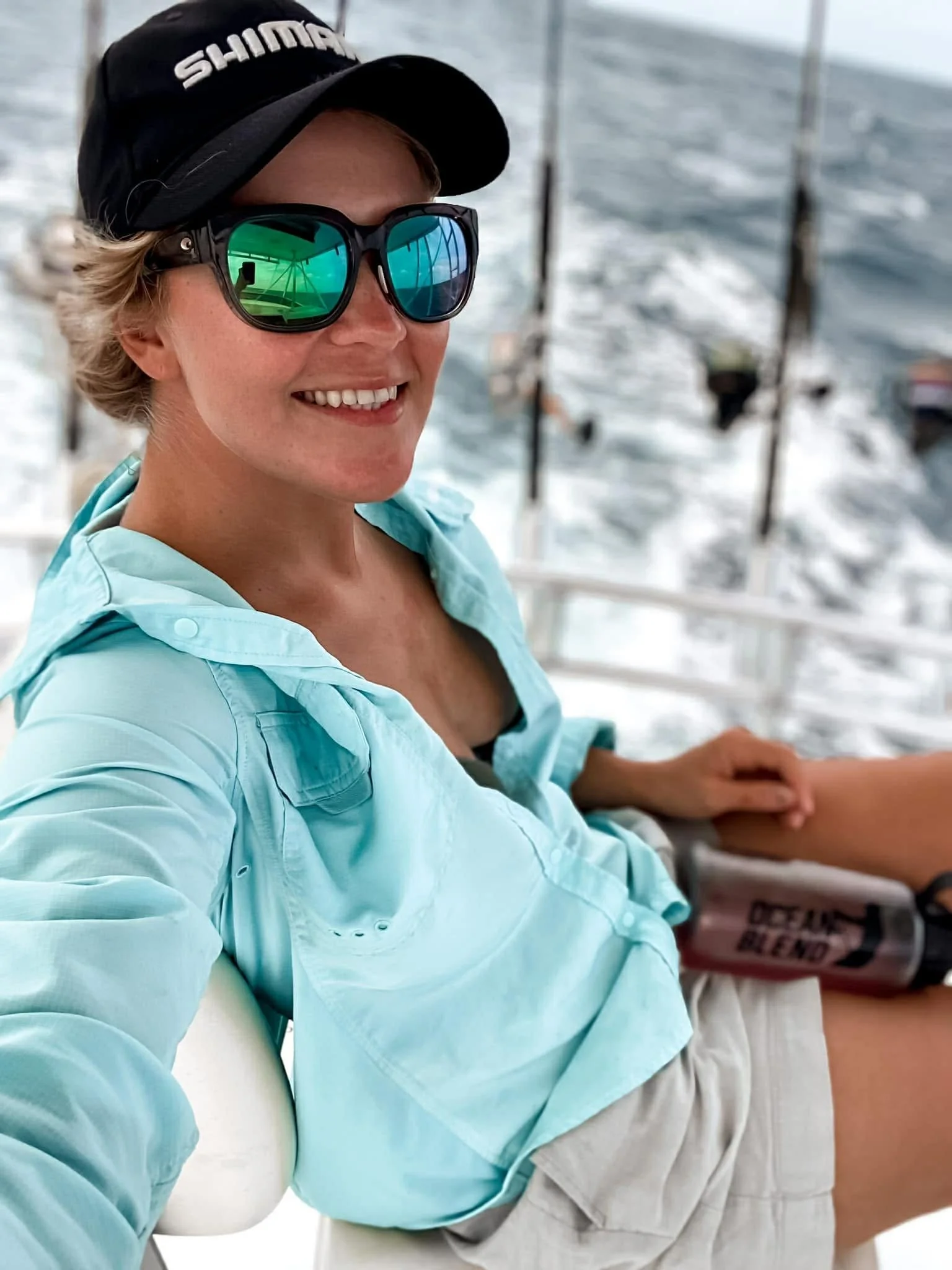
Caitlin’s relationship with fishing is both deeply personal and professionally driven. What began as a natural extension of an outdoors-focused upbringing has evolved into a life structured around time on the water, learning new techniques, and continually refining her skills.
Now working as Social Media Coordinator for Shimano, fishing sits at the intersection of Caitlin’s career and her passion. Whether she’s testing gear, chasing new challenges, or planning solo kayak sessions, her approach is thoughtful, technical, and grounded in experience. Caitlin represents a modern generation of anglers who see fishing not just as a pastime, but as a craft, a career, and a lifelong pursuit of growth.
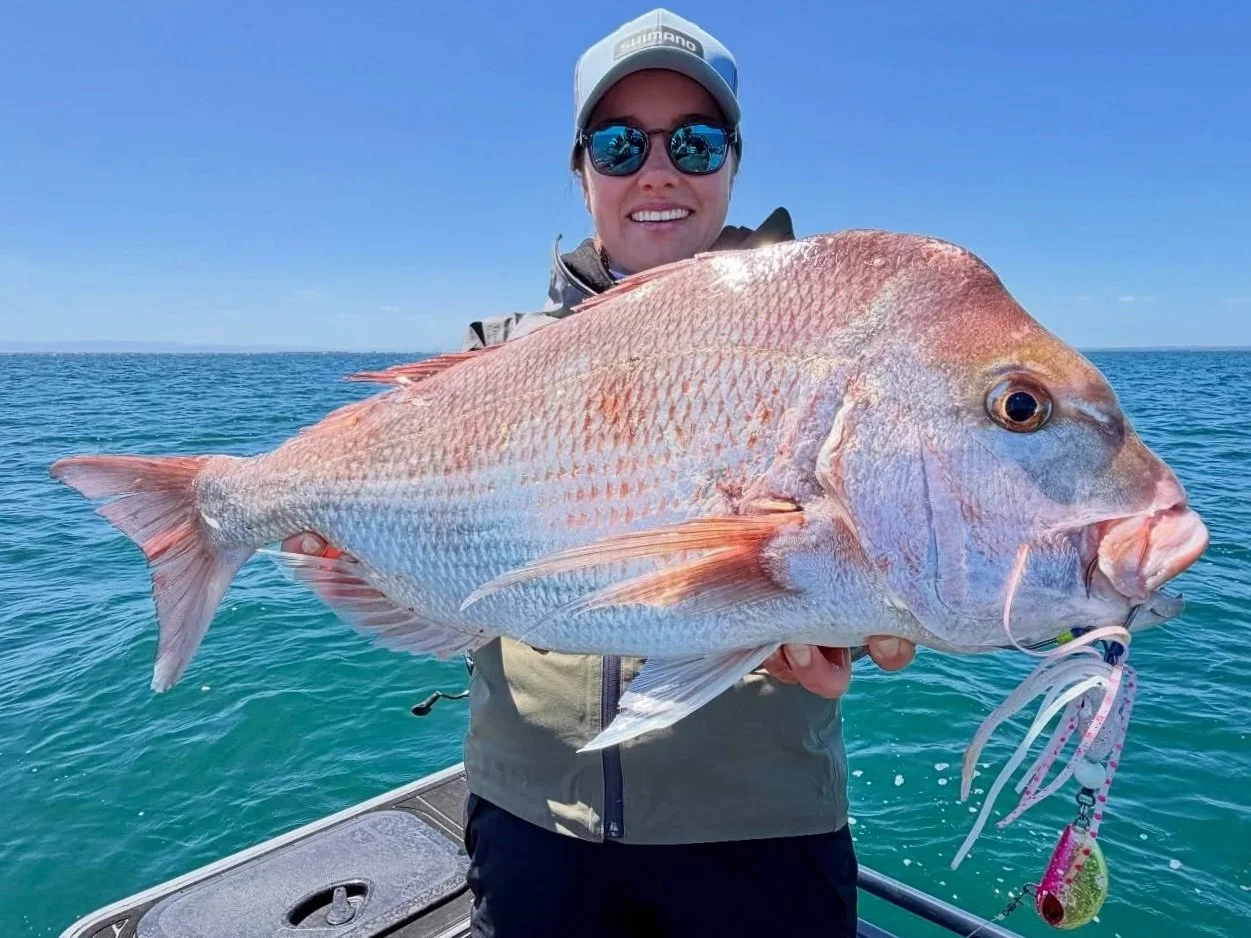
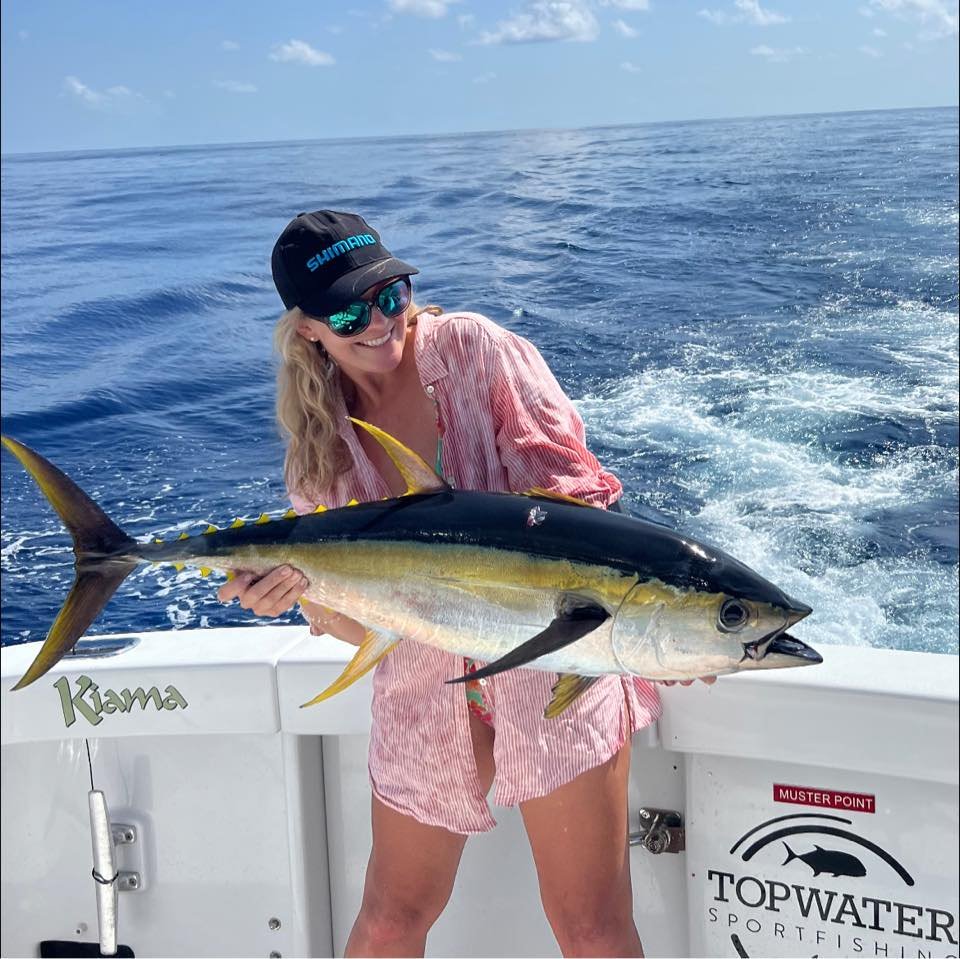
Caitlin sure knows how to bring in the bigguns
Tell us a little about yourself and where fishing fits into your life right now
Fishing has always been a constant in my life. It’s what I organise my time, travel, and energy around, and it’s still the first thing I think about when I get a spare day. These days, fishing sits at the intersection of my personal life and my career, which is something I’ve worked towards for a long time.
I currently work as the Social Media Coordinator for Shimano, where part of my role involves creating fishing content each month. That means spending time on the water testing gear, refining techniques, and turning real on-water experiences into useful, relevant content for other fishers.
Alongside that, I stay involved in the broader fishing industry through media, community work, and on-water projects. Fishing isn’t just something I do on weekends. It’s how I stay connected to the industry, the environment, and the people in it.
How did your fishing journey begin?
I’ve always been outdoorsy. I grew up on a farm, spent a lot of time around water, and had a competitive, goal-oriented streak from early on. Fishing felt like a natural fit because it combined being outdoors with problem-solving, learning skills, and working towards something tangible.
Once I got into fishing properly, it quickly turned into travelling to fish and fishing wherever I landed. I’ve fished across the country in everything from remote rivers and estuaries to offshore waters, targeting a wide range of species and techniques. That variety is what keeps it interesting for me. There’s always something new to learn, refine, or improve.
What does fishing give you beyond just catching fish?
On a very practical level, fishing gives me a living. It’s my day job and it pays my bills. Beyond that, it gives me focus. Fishing channels the noise in my head into something constructive. It gives me a problem to solve and an outlet for energy.
It’s also where I reset. Being on the water is the one place where I can switch off from everything else while still being fully engaged. It challenges me, keeps me learning, and honestly, it’s where I’m happiest.
What’s one moment on the water that really stands out for you?
I’ve been lucky to experience some genuinely special moments. Catching my first mulloway on a lure, landing big yellowfin tuna on topwater, catching marlin from a 4.8-metre tinny, and landing two 91cm flathead in the same month all stand out for different reasons.
But the moments that really stay with me are the solo captures from my kayak. Doing all the planning, travel, and groundwork myself, finding the water I want to fish, and having it pay off with a new personal best is incredibly satisfying. Those fish feel properly earned, and they’re the ones that stick with me the longest.
Have you faced any challenges as a woman in fishing, and how did you navigate them?
Yes and no. I’ve always placed a strong emphasis on being technically proficient and learning things properly, so it can be frustrating when people assume a fish must have been handed to me or that I only caught it because of someone else.
That said, I try not to dwell on it. I focus on doing the work, learning my craft, and being capable. Even a few years ago, people would stare while I backed a trailer down the ramp like it was something unusual. That’s changed a lot in a relatively short time, which is encouraging.
Sometimes it does feel like there’s more to prove, but that’s pressure I probably put on myself. I’m also aware of the privilege I have. I don’t have kids, I can work remotely, and I’ve had the flexibility to travel and fish often. Combine that with a stubborn streak, and I’ve kept moving forward and let the results speak for themselves.
What’s something you’ve learned about yourself through fishing?
Fishing has shown me that I’m capable of more than I give myself credit for. I set high standards and can be hard on myself when things don’t go exactly to plan. Being goal-oriented means I’m always chasing improvement, which is motivating, but it also means I don’t always stop to recognise how far I’ve come.
Fishing has helped me find balance in that. It’s taught me that progress doesn’t have to be perfect to be meaningful, and that there’s real value in the process, not just the outcome.
Do you have a favourite species, style of fishing, or place to fish? Why?
I’m big on variety. If it’s not a new species, it’s a new technique or a different environment. I enjoy learning and keeping things interesting rather than doing the same thing on repeat.
That said, bass will always have my heart. They’re the species that really made me fall in love with fishing and taught me how to read water, structure, and presentation. I’m very lure-focused and tend to enjoy targeting quality fish rather than chasing numbers. Anything that offers a new experience, new water, or a new challenge keeps me engaged.
How do you support or encourage other women in the fishing space?
I don’t approach it as formally “supporting women” in fishing. I’m involved in initiatives like the Women in Recreational Fishing and Boating Network and I create a lot of educational content, but day-to-day it’s more about normalising women being part of fishing spaces.
I try to treat women the same way I treat anyone else who fishes, as fishers. Fishing isn’t a gendered sport. If seeing other women out there learning, fishing, and figuring things out helps make the space feel more accessible, then that’s a positive outcome. I’m simply fishing and sharing what I learn along the way.
What role do community groups play in the future of women’s fishing?
In the short to medium term, women’s fishing community groups play an important role. They create entry points, share knowledge, build confidence, and provide a sense of community for women who may not otherwise feel comfortable getting started.
Longer term, I’d like to see fishing move away from being divided along gender lines altogether. Ideally, fishing would simply be fishing. People enjoying the sport, learning from each other, and sharing the water.
I see these groups as part of a transition rather than the end goal. If they help women get involved, stay involved, and feel confident participating in broader fishing spaces, then they’re doing their job well.
For any woman thinking of starting to fish, what piece of advice would you give her?
You can do it. That’s it. You don’t need to be an expert to start. You’ll make mistakes, some days won’t work, and sometimes you won’t catch anything. That’s all part of it.
If you stick with it, you’ll learn quickly and figure out what works for you. Fishing is for everyone, and in my opinion, it’s the best sport in the world.
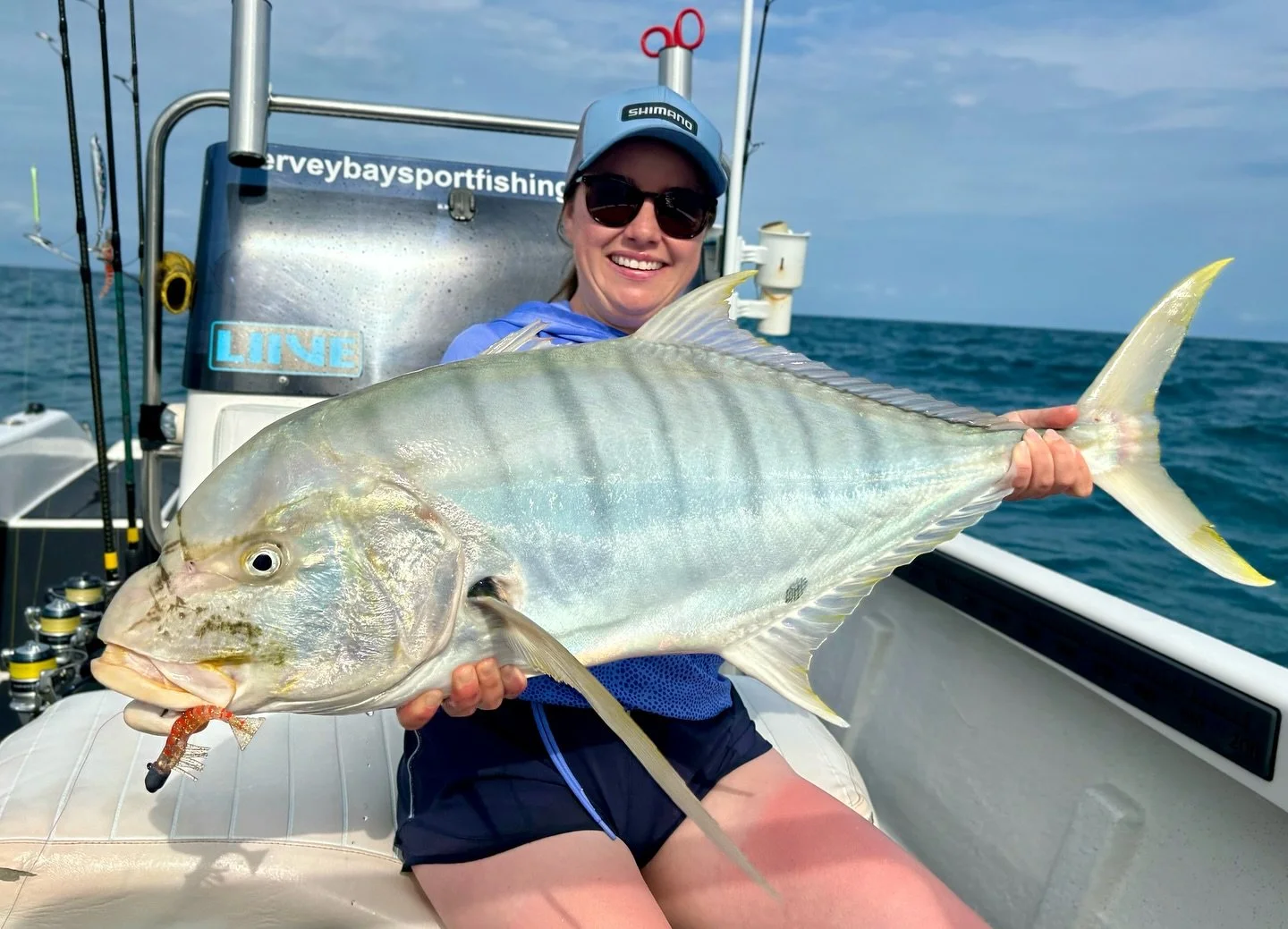
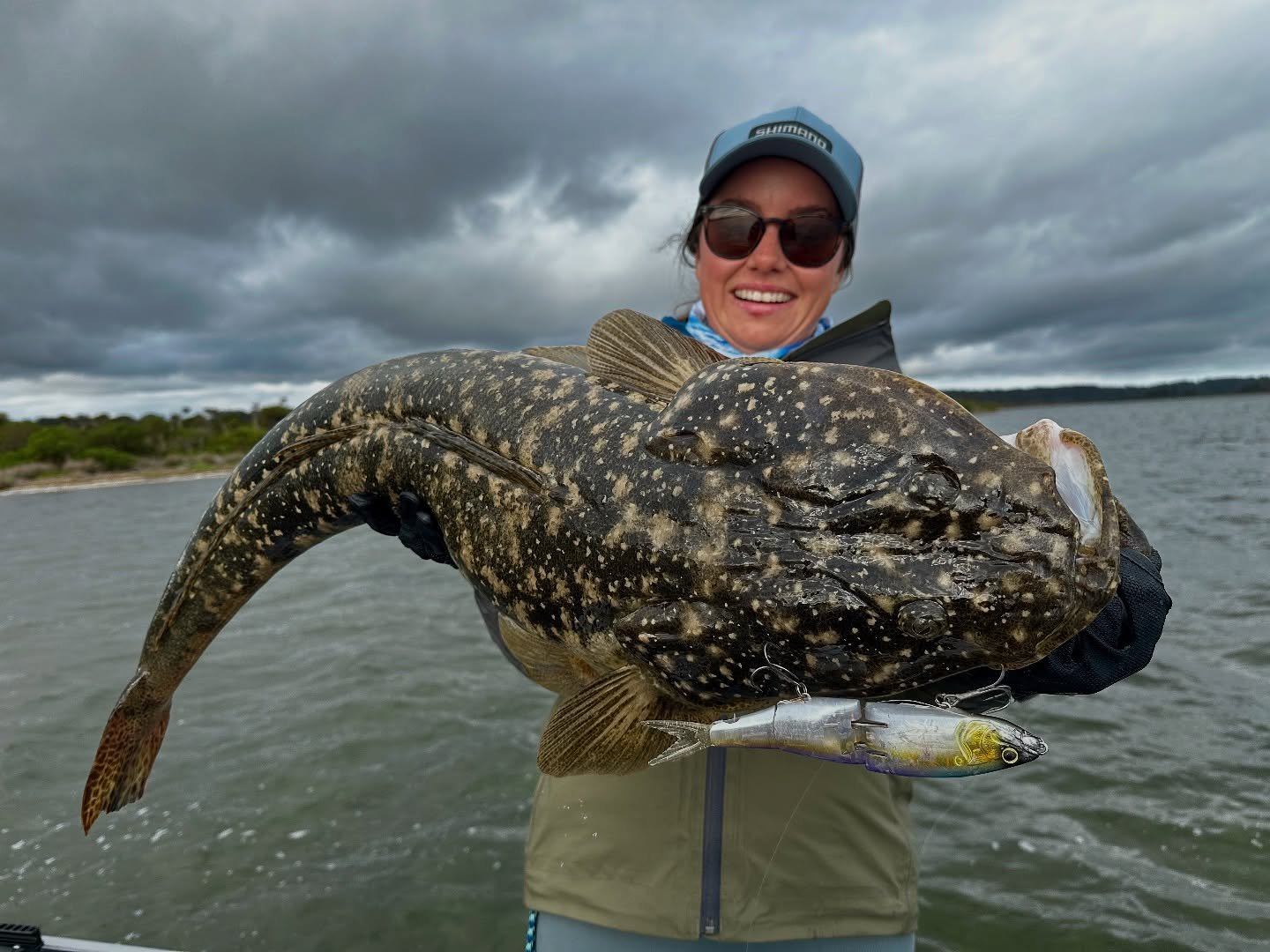
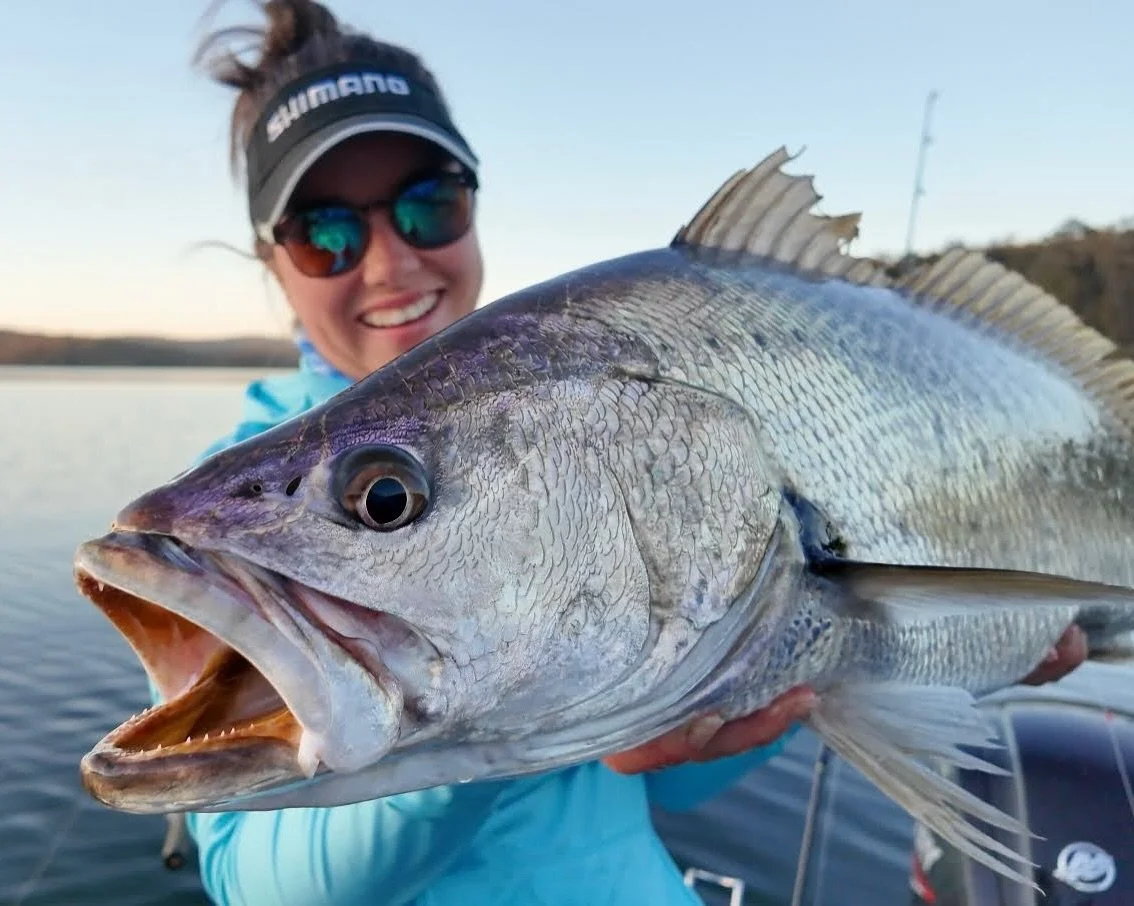
Caitlin’s story highlights the power of curiosity, consistency, and capability. Through a balance of skill, self-awareness, and a genuine love for the process, fishing has become both her career and her reset, a space where learning never stops and growth is constant.
I hope you’ve enjoyed getting to know Caitlin and her journey as much as I have.
Kymmy 💛
Nikki Bryant
Nikki’s fishing journey is deeply rooted in family, friendship, and time spent on the water. What began in 2003 with the purchase of a first boat and teaching her three children to fish has grown into a lifelong connection with Gippsland Lakes, a place that holds countless memories and continues to draw her back time and time again.
For Nikki, fishing is about switching off, recharging, and sharing meaningful moments with the people around her. Whether she’s out on the water with her husband Blair, introducing others to lure fishing, or quietly hunting black bream in her favourite waterways, her approach to fishing is patient, passionate, and grounded in genuine enjoyment.
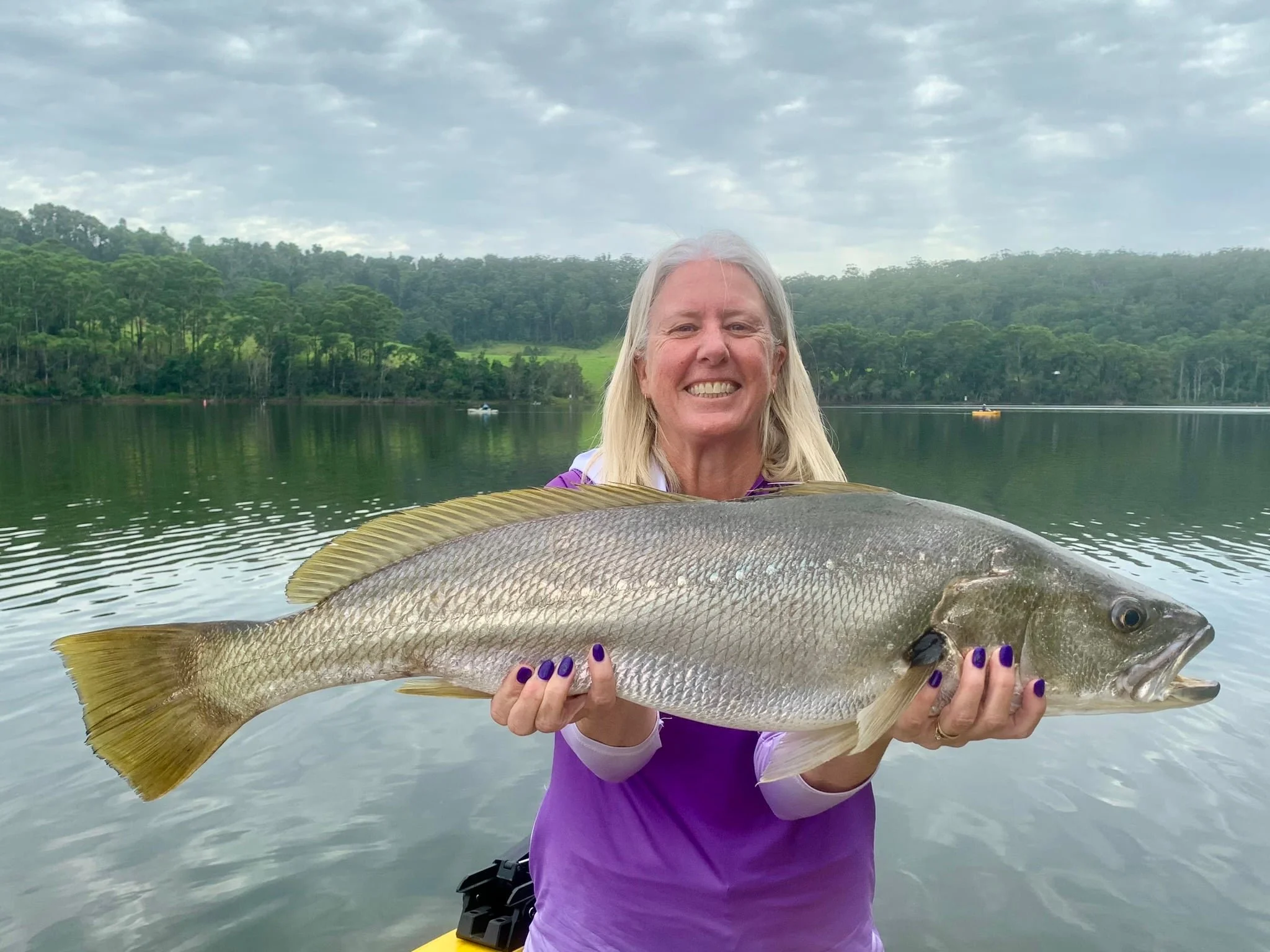
That’s not a bream
How did your fishing journey begin?
My fishing journey really began in 2003 when we bought our first boat and started teaching our three kids how to fish using soft plastics. Gippsland Lakes quickly became our second home, and we made so many special memories there as a family.
The kids have since grown up, but Blair and I still regularly make the trip to Gippsland. It remains one of our favourite places to fish and unwind.
What does fishing give you beyond just catching fish?
Fishing gives me a chance to recharge. It allows me to step away from the demands of work and everyday life and truly switch off.
Being out on the water, listening to the birds, and spending time in nature may sound cliché, but it genuinely brings me peace and balance.
What’s one moment on the water that really stands out for you?
One of my most treasured memories involves fishing with Karen. We met at a WRFL event at Lake Glenbawn and instantly connected, as though we’d been friends for years. Not long after, I invited her down to Victoria to fish my favourite waterway, Gippsland Lakes, targeting black bream.
During our first session on the famous Tambo River, we were casting soft plastics deep into the riverside snags. Before long, Karen told me she was snagged. Then her snag moved. Then it started taking drag. She was onto her first kilo Gippsland black bream.
Seeing her smile when we landed that fish, and the look that said “Now I get it”, is a moment I’ll cherish forever.
Have you faced any challenges as a woman in fishing, and how did you navigate them?
The biggest challenge for me has been proving that I’m a capable angler in my own right. Most competitions I fish are as part of a team with my husband, so I wanted to test myself independently.
We decided to fish a couple of ABT rounds where you compete as an individual angler on other people’s boats. I performed well in both competitions, and that gave me confidence in my own abilities.
Over time, I’ve realised I don’t actually have anything to prove. I love fishing, I love fishing with my husband, and that’s what truly matters.
What’s something you’ve learned about yourself through fishing?
Fishing has shown me that I’m far more competitive than I ever realised. When things aren’t going my way and my husband is catching fish, my competitive side can kick in and I can become frustrated and anxious.
It’s something I’ve been actively working on, learning to manage my mindset and enjoy the experience rather than letting competition take over. I’m pleased to say I’m getting much better at it.
Do you have a favourite species, style of fishing, or place to fish? Why?
Over the past couple of years, I’ve fallen in love with targeting black bream on hard body lures. It requires a lot of patience, as bream often strike on the pause, meaning you really have to slow everything down.
I love the hunt and the anticipation of waiting for a big black bream to take the lure. Outsmarting these fish delivers an incredible adrenaline rush.
How do you support or encourage other women in the fishing space?
I try to support other women simply by taking the time to explain things when questions are asked. I’ve given talks at angling clubs about lure fishing and have also been involved in women-only events.
That said, I’ve found many women feel more comfortable attending events when they can come along with their partner, and I think there’s real value in creating inclusive spaces that suit different comfort levels.
What role do community groups play in the future of women’s fishing?
I believe there’s a strong need for women-only groups, whether online or in person. These spaces allow women to ask questions, seek advice, and learn from like-minded anglers in a comfortable environment.
At the same time, I’ve met many incredible men in the fishing world who are generous with their knowledge and happy to help. Both types of spaces play an important role in growing confidence and connection.
For any woman thinking of starting to fish, what piece of advice would you give her?
Ask questions. People are always happy to help, and it’s important to remember that everyone starts as a beginner.
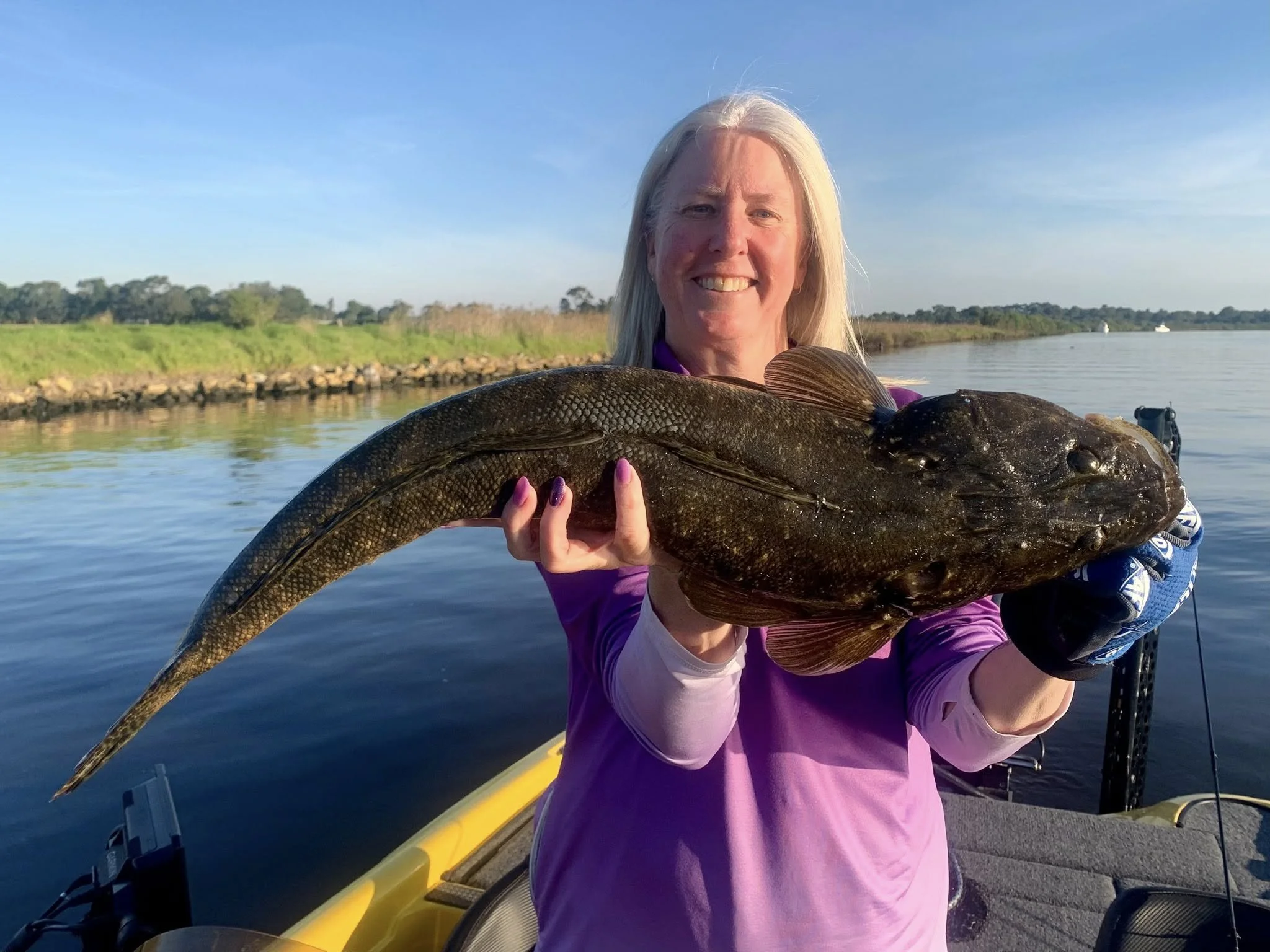
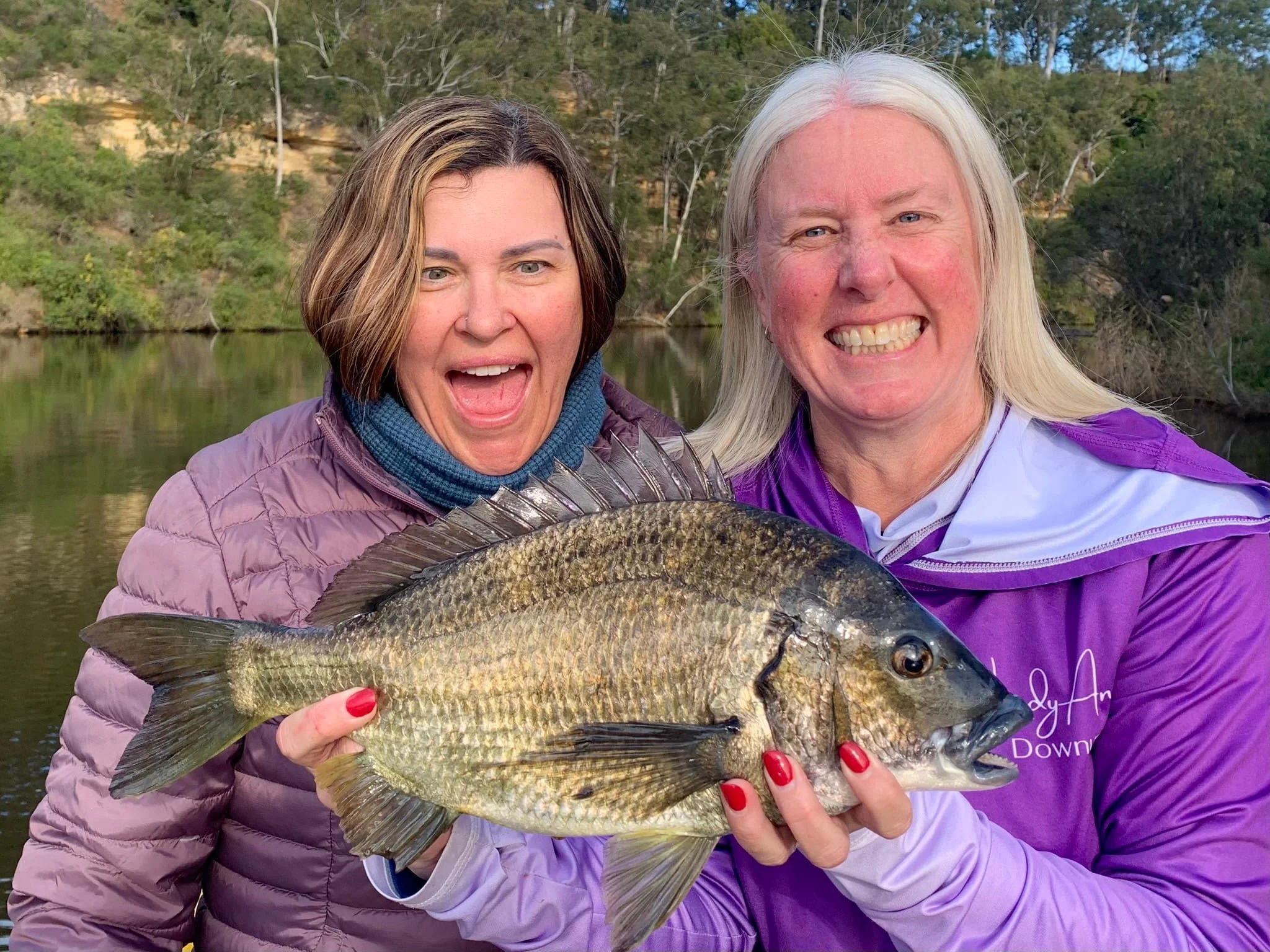
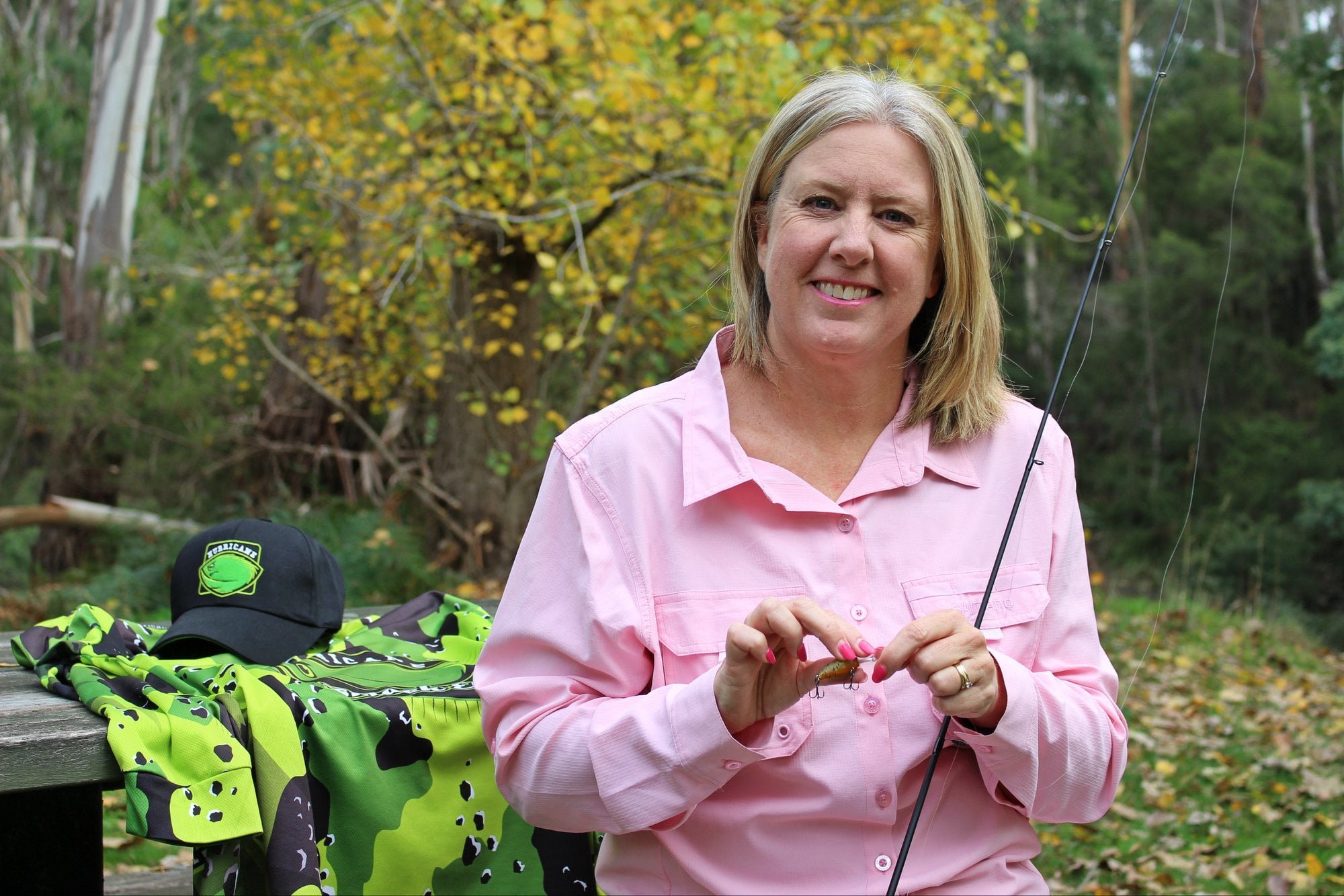
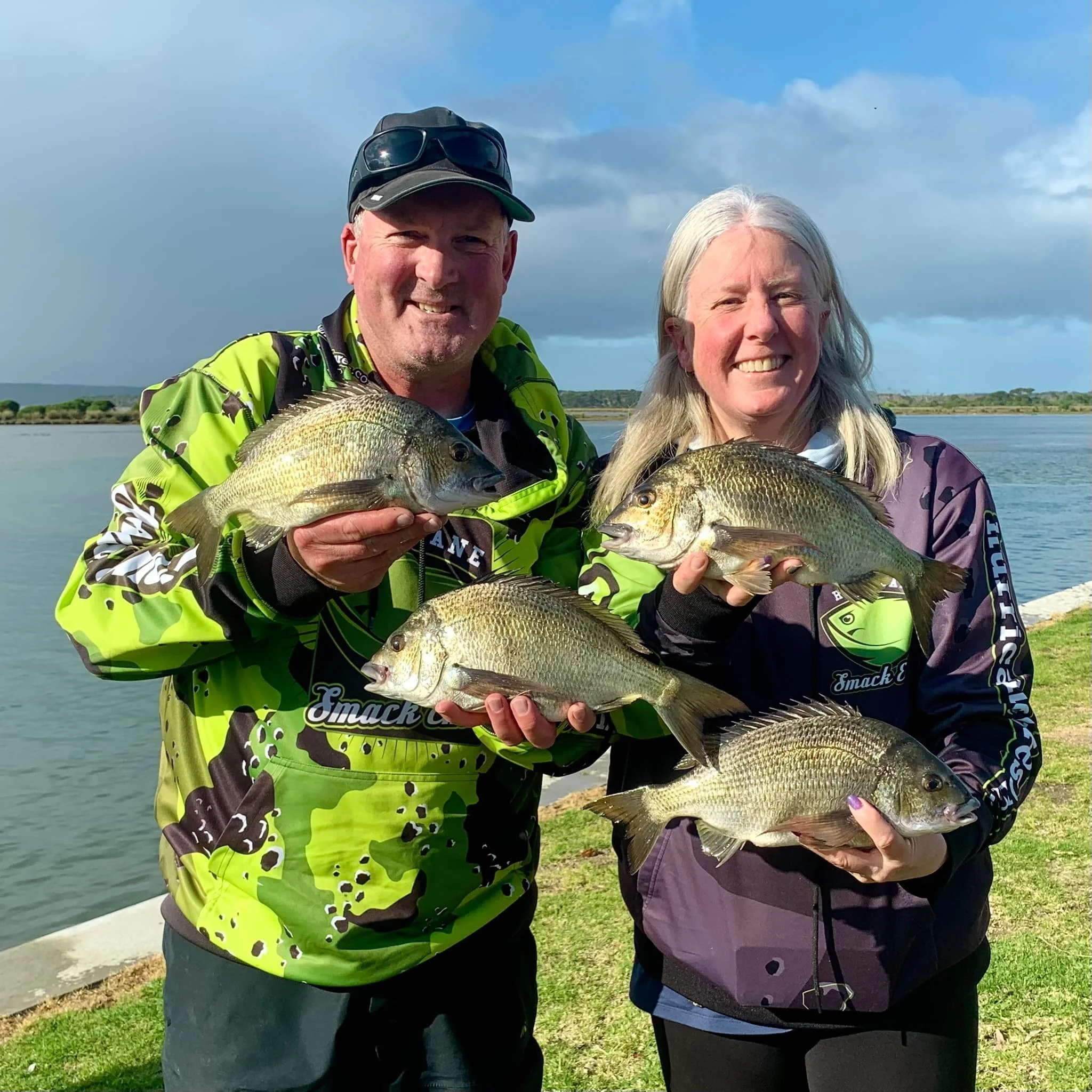
Nikki’s story is a reminder that fishing is as much about connection as it is about technique. Through family, friendship, and a deep love for her favourite waterways, fishing has become a place where she recharges, challenges herself, and creates lasting memories.
I hope you’ve enjoyed getting to know Nikki and her journey as much as I have.
Kymmy 💛
Emma-Jean Sommer
Emma’s fishing journey began early, shaped by family trips, time spent on the Murray River, and a curiosity that only grew stronger with age. What started as land-based fishing alongside her brothers and parents evolved into a deep desire to learn more, push herself further, and experience fishing in all its forms.
That determination eventually led Emma north, where she immersed herself in Far North Queensland fishing and worked within the industry as a liveaboard charter crew member. Stubborn, self-driven, and relentlessly committed to improving her skills, Emma’s approach to fishing is built on resilience, practice, and the belief that confidence comes from doing the work. Today, fishing remains both her reset and her proving ground.
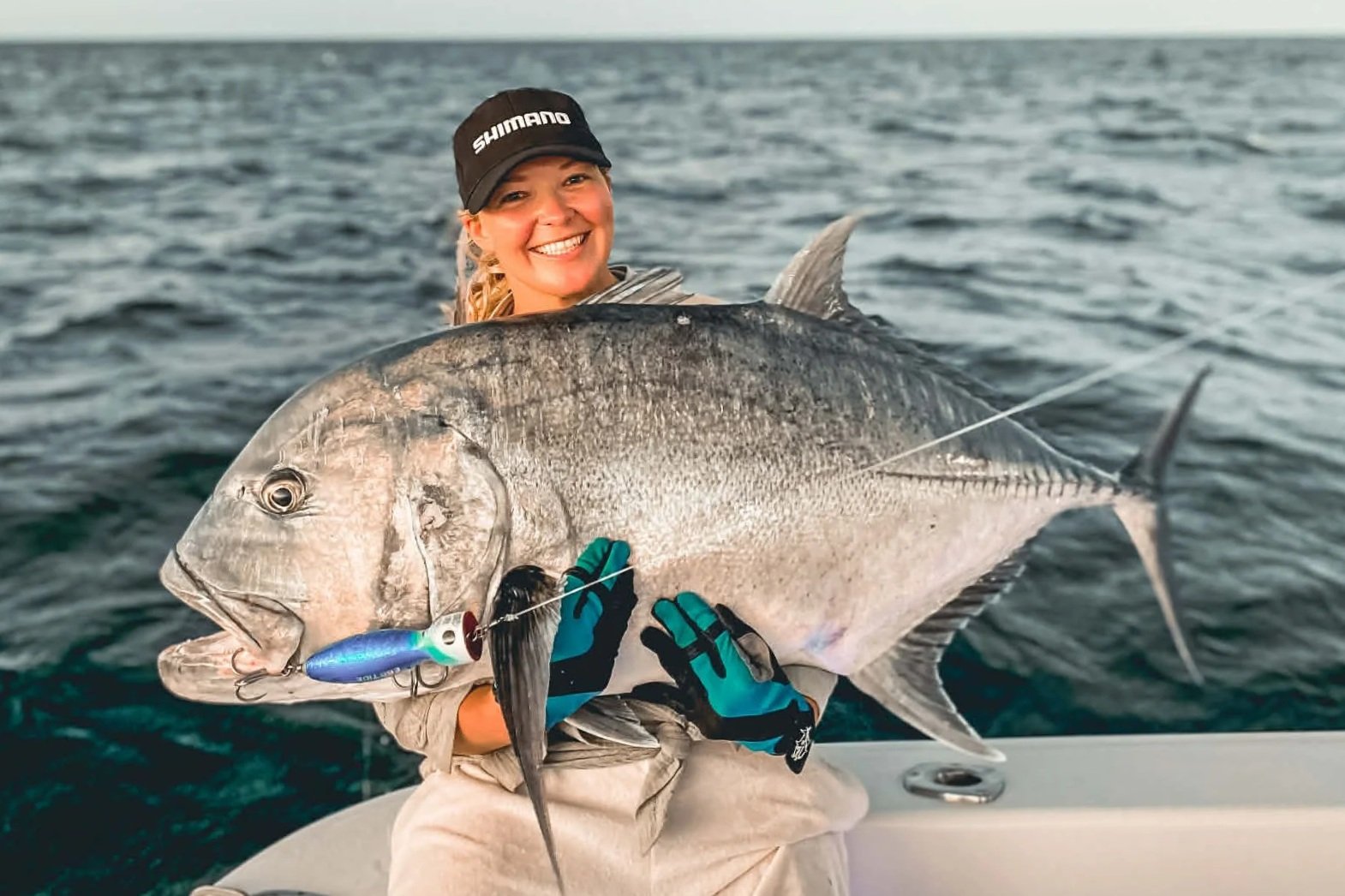
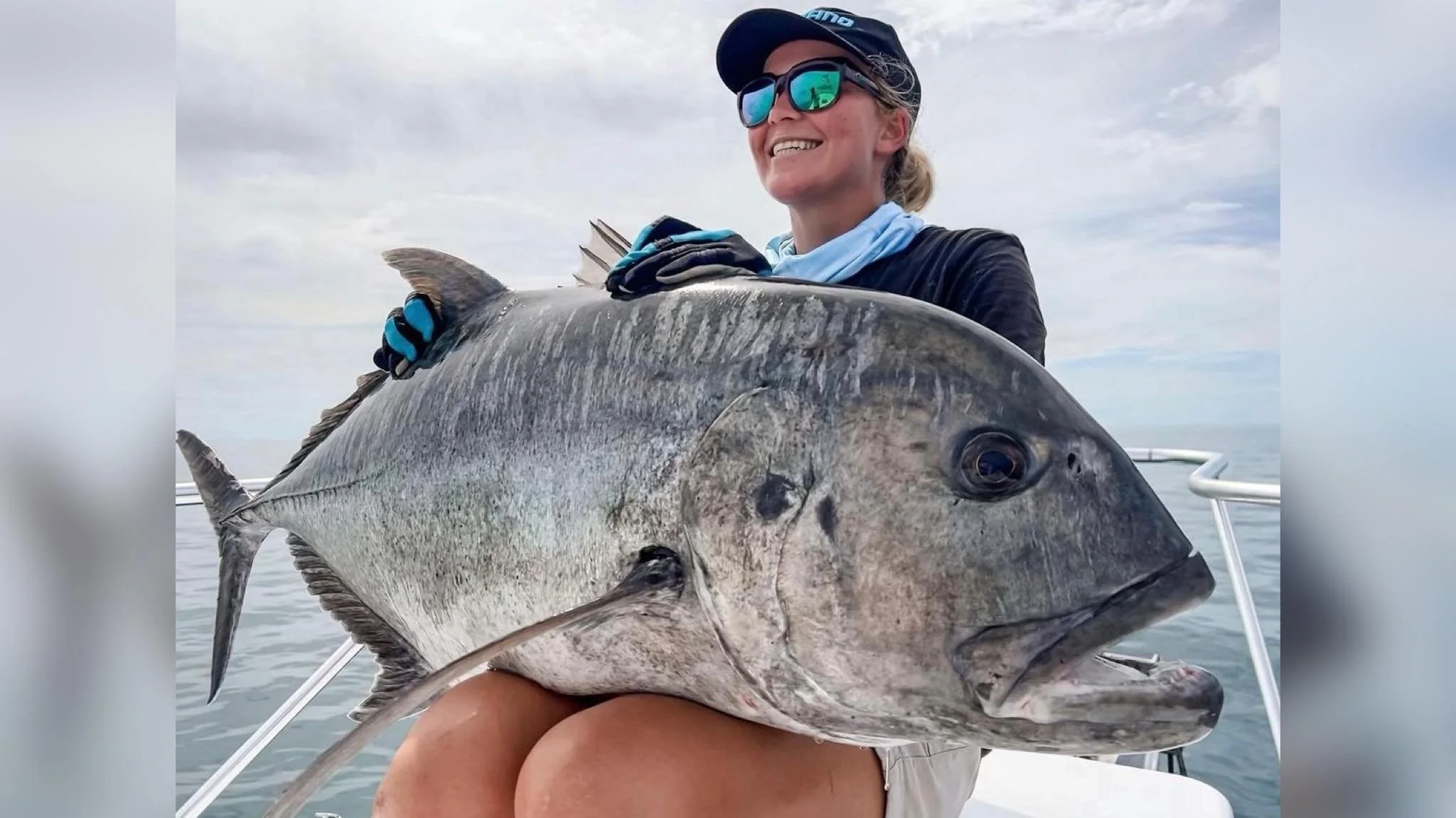
There’s something special about Top Water Giant Trevally
How did your fishing journey begin?
I started fishing as a young girl with my brothers and my dad, mostly land-based around Victoria and camping along the Murray River. Even my mum would take a fishing rod when we went away just the two of us on weekends.
As I got older, my interest only grew. I wanted to learn more and started planning fishing holidays to Far North Queensland, drawn to the different styles of fishing and the incredible range of species.
I’m stubborn by nature, so I wanted to learn how to do it all on my own. I read blogs, asked endless questions, and spent as much time as I could getting out there and giving it a crack.
What does fishing give you beyond just catching fish?
Fishing brings calm to the chaos. It gives me quiet when my head feels loud and creates some of my favourite memories with mates.
It’s how I clear my mind, reset, and find balance when life feels busy or overwhelming.
What’s one moment on the water that really stands out for you?
I have a lot of standout moments, but fishing the Ribbons Ladies Marlin Tournament in Cairns a few years ago is right up there. Being surrounded by strong, supportive women and feeling that level of encouragement across the entire competition was incredibly special.
The support wasn’t just within our team, but from every woman involved, and that’s something I’ll always remember.
Have you faced any challenges as a woman in fishing, and how did you navigate them?
Becoming a crew member on a liveaboard charter in Far North Queensland was one of my biggest challenges. Some guests were openly hesitant about having a female crew member, which only pushed me to work harder.
I made it my goal to be better than I was the day before, the week before, and the previous season. I practised constantly until I had things right.
Before long, those same guests were taking my advice, letting me tie their FG knots, asking for casting tips, and trusting my guidance. That shift was incredibly rewarding.
What’s something you’ve learned about yourself through fishing?
Working in the fishing industry taught me just how resilient I am. Five-day charters, 15-hour days, and quick turnarounds in port pushed me in ways I hadn’t experienced before.
Through that, I discovered a level of determination, strength, and mental toughness I didn’t know I had. Fishing has shown me what I’m capable of when I commit fully.
Do you have a favourite species, style of fishing, or place to fish? Why?
Casting topwater lures for Giant Trevally on the Great Barrier Reef is my ultimate favourite. The power of those fish is unreal. They pull like a freight train and get the heart pumping every single time.
How do you support or encourage other women in the fishing space?
When women come to me with questions or for advice, I always try to give them my full attention. I remember how overwhelming it felt when I first started out, and I know how much encouragement can help.
If someone is putting in the effort and doing a good job, I make sure they know it. And if anyone needs a hand or guidance, there are no silly questions. I’m always happy to help.
What role do community groups play in the future of women’s fishing?
Community groups give women a platform to share their love of fishing, connect with others, and ask questions when they don’t yet have a strong support network.
They help build confidence, visibility, and connection, which are all essential for bringing more women into fishing and helping them stay there.
For any woman thinking of starting to fish, what piece of advice would you give her?
Read up on some tips and tricks for the species you want to target and practise the basics. When I was starting out, I used to screenshot knot diagrams so I had them handy when I needed to re-tie.
If fishing in front of others feels daunting, find a quiet pier or land-based spot until you build confidence. Join a local fishing page and look out for free fishing clinics in your area.
Most importantly, remember that no one gets good at fishing by sitting on the couch. Get out there, have fun, and give it a go. You can do it, and I guarantee it will be some of the most rewarding solo time you’ll ever have.
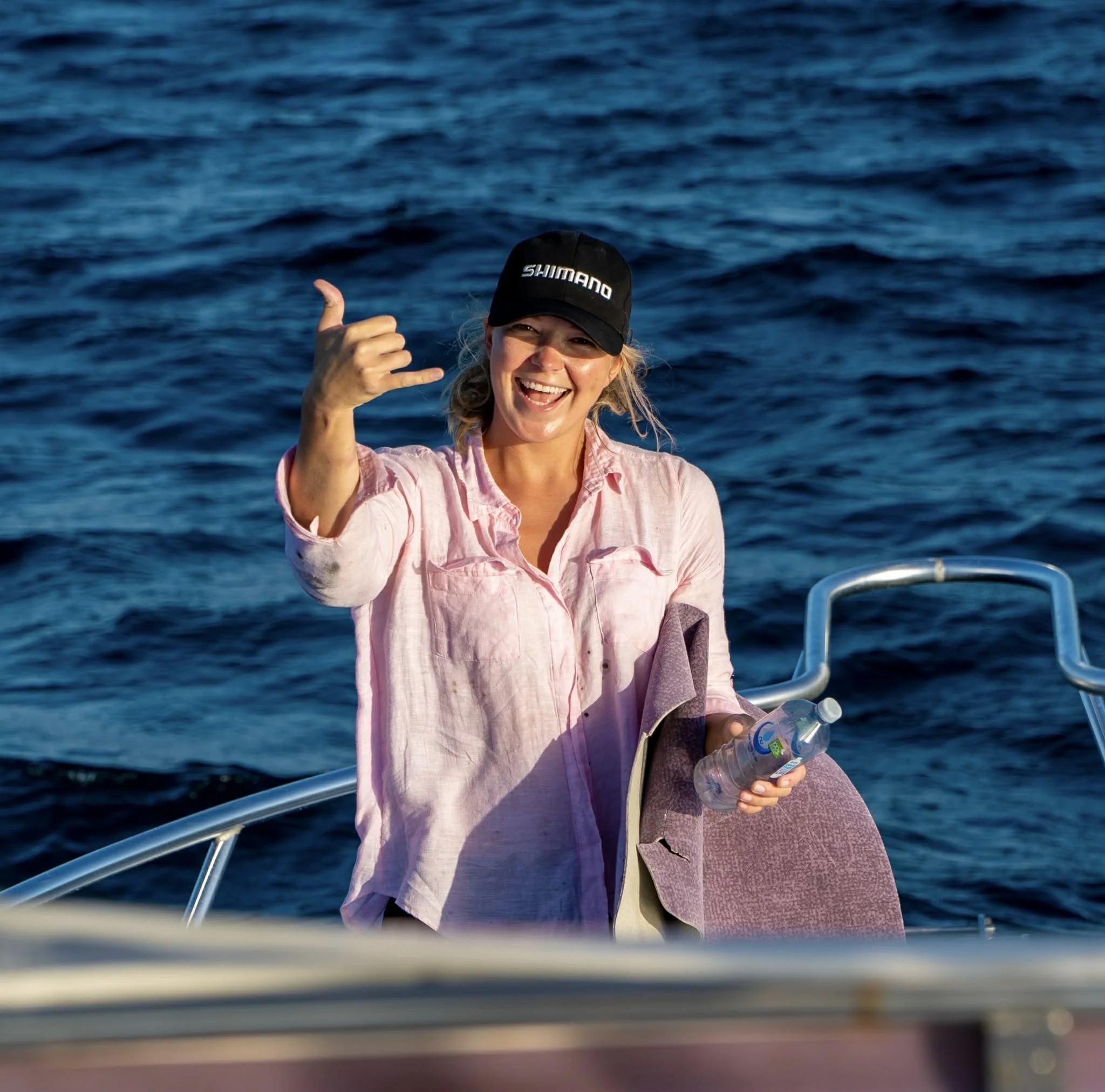
Emma’s story is a reminder that confidence is built through effort, repetition, and the willingness to show up even when things feel uncomfortable. Through determination, resilience, and a genuine desire to help others, fishing has become both her escape and her proving ground.
I hope you’ve enjoyed getting to know Emma and her journey as much as I have.
Kymmy 💛
Michelle Brittain
Michelle Brittain is a mother of two, a health and wellness professional, and a passionate advocate for women in fishing and boating. With a background in Myotherapy and surf instruction, Michelle’s work has always centered around helping people connect with their bodies, the outdoors, and a healthy, active lifestyle.
For the past eight years, she has also dedicated herself to being a role model and ambassador within the fishing and boating industry, using storytelling, education, and lived experience to promote sustainability, connection, and inclusion. As a television host on Channel 7’s AFN, a WIRFAB leader since 2019, and an ambassador for a range of respected marine and fishing brands, Michelle brings passion, wisdom, and authenticity to everything she does, both on and off the water.
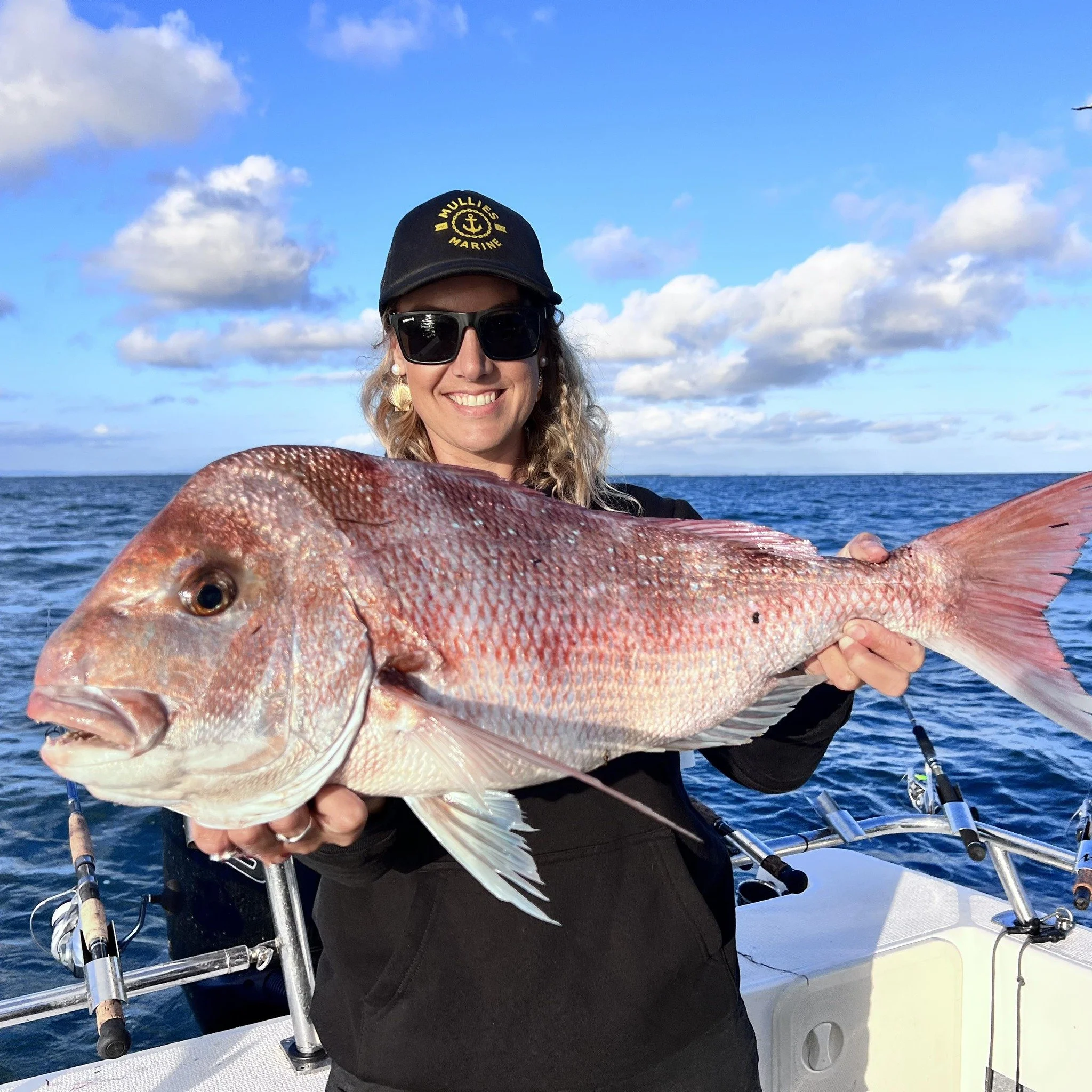
A great Snapper landed by Michelle
Tell us a little about yourself and where fishing fits into your life right now
Fishing has been a powerful teacher in my life. Through fishing, I’ve learned to show up as myself, to help others, and to appreciate patience and gratitude. Taking the time to slow down, look around, and be thankful for the life I live fills my cup.
Fishing has given me community, passion, entertainment, and adventure. It has helped me learn things I never thought were possible and shaped me into someone who is self-sufficient, a teacher, and a sharer of knowledge and wisdom.
How did your fishing journey begin?
My fishing journey began when I was very young, growing up in the 1980s. We spent a lot of time outdoors, particularly at the beach. Holidays were often centred around the water, and my sisters and I loved spending hours there.
My pop introduced me to fishing as a way to learn patience and enjoy downtime. We would sit on riverbanks or jetties, while my mum shared stories of fishing with her own mum using handlines, catching garfish, flounder, and flathead.
Now, I’m passing parts of this passion on to my daughter, her cousins, and friends’ children, continuing that generational connection.
What does fishing give you beyond just catching fish?
Beyond catching fish, fishing gives me so much more. It offers a connection to nature, mental clarity, mindfulness, and a sense of reset. It provides social connection, community, physical wellbeing, and functional movement.
Fishing also teaches life skills, environmental stewardship, sustainability, and the thrill of the unknown. And of course, it puts food on the table.
What’s one moment on the water that really stands out for you?
One of my most memorable moments on the water happened while I was fishing solo for Aussie salmon from my boat among the yacht moorings at a quiet local time.
A male dolphin, catalogued in 2016 by the Marine Mammal Foundation, came over and began to play, leaping out of the water while catching the salmon. He held his catch up high, showing off and feasting.
After he’d eaten, I put my rod down and sat at the edge of my boat. The dolphin came up beneath my hand and stayed with me for a moment, just staring. I was overwhelmed with tears of joy. That experience absolutely lifted me.
Since then, he often finds me out on the bay, riding the wake beside my boat. It was incredibly special.
Have you faced any challenges as a woman in fishing, and how did you navigate them?
There are many challenges in life and in the fishing industry. I’ve experienced both positive and negative interactions with men and women along the way.
Rather than letting that deter me, it has made me stronger. I remind myself of who I am, what my values are, and why I do what I do. I stay in my lane, keep shining my light, and focus on helping open doors for others to do the same.
What’s something you’ve learned about yourself through fishing?
Fishing has reinforced the importance of trusting myself. It has shown me the value of patience, resilience, and staying true to who I am, even when faced with challenges.
I’ve learned not to feed negativity, but to learn from it and move forward with confidence and purpose.
Do you have a favourite species, style of fishing, or place to fish? Why?
My favourite species is the humble Southern Calamari. Not only are they great on the table, but they’re also incredibly fun to catch.
Whether fishing from a boat, pier, or the rocks, calamari are an all-year-round species, and you learn something new every time you target them, whether it’s technique, gear choice, or reading conditions.
How do you support or encourage other women in the fishing space?
I use social media as a tool for real representation. I share the reality of fishing, not just the glossy highlights, but also the hard work, the mess, and the technical side.
This helps normalise the image of women as serious, capable anglers and provides a reference point for other women who want to start. I’ve learned a lot from the men in my life, and it’s important to me to pass that knowledge on.
What role do community groups play in the future of women’s fishing?
Being part of women’s fishing networks has been incredibly powerful. Leveraging platforms like WIRFAB has helped create safe, visible spaces for women.
Joining a network of like-minded women shifted the dynamic for me from feeling isolated to being part of a strong, connected movement. These groups play a vital role in connection, confidence, and visibility.
For any woman thinking of starting to fish, what piece of advice would you give her?
Trust your gut. Don’t accept less than you deserve. Learn from negative experiences but don’t let them dim your light.
Stay true to yourself, because sometimes others can’t see who they are yet, and that has nothing to do with you.
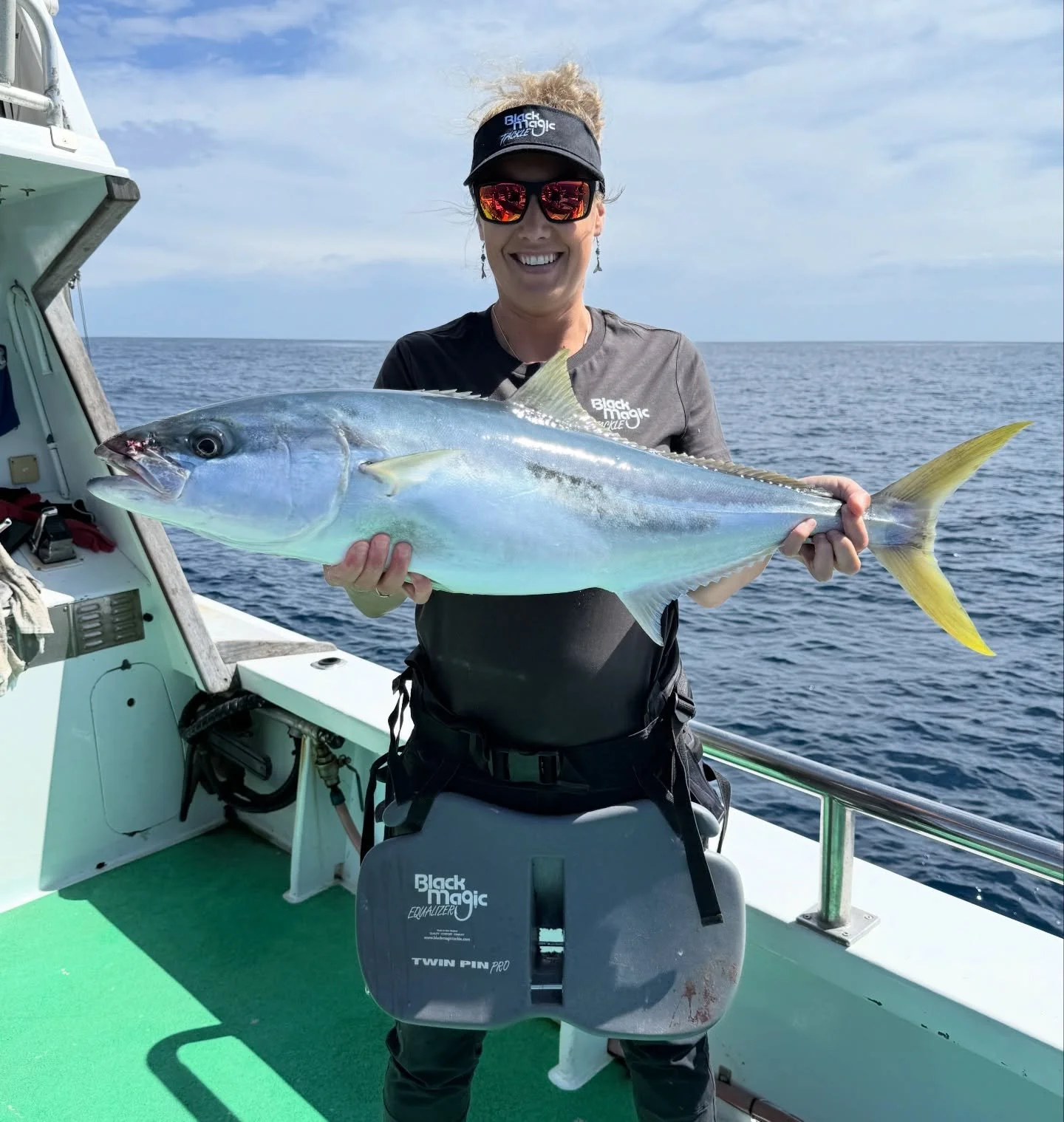
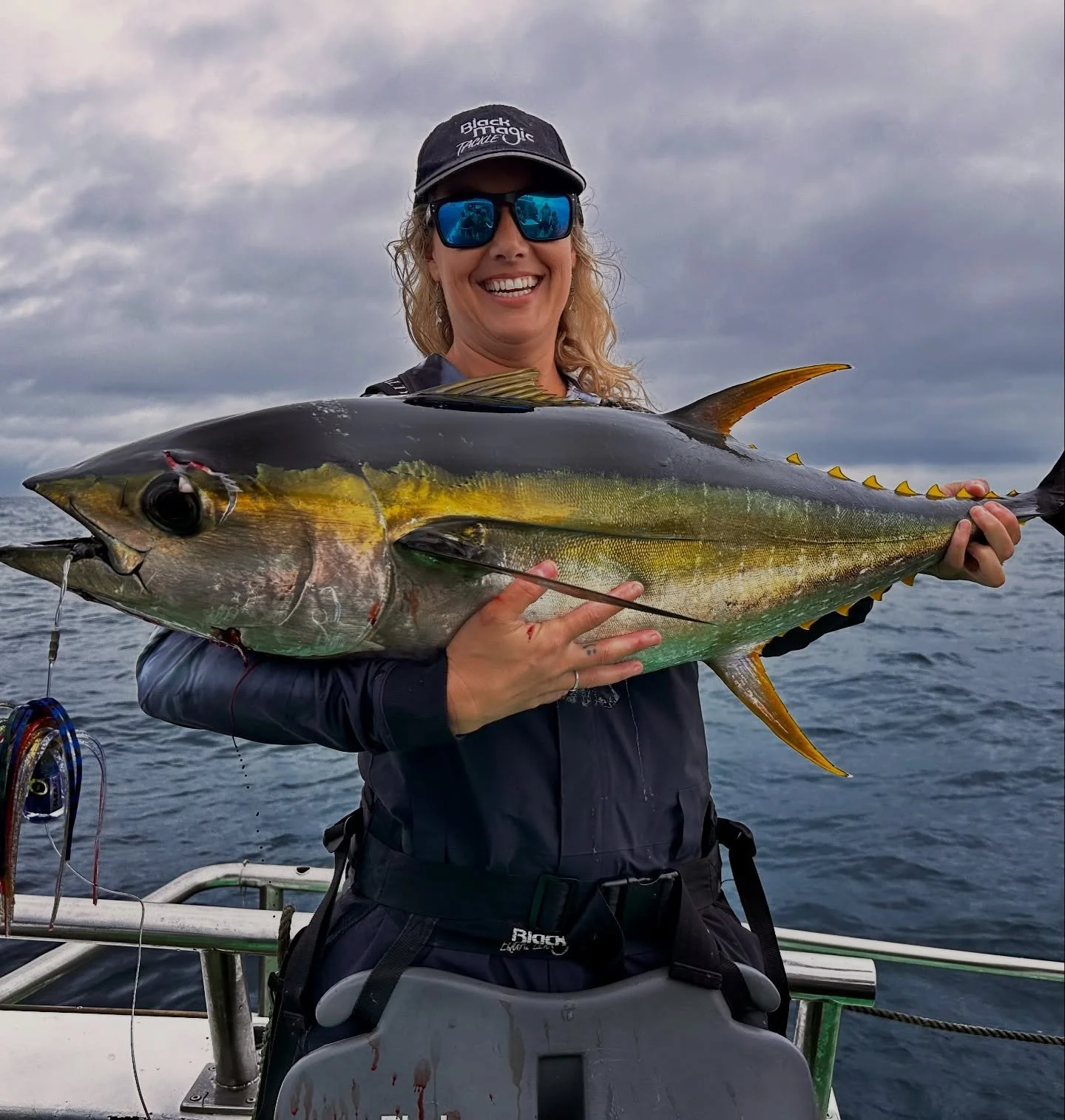
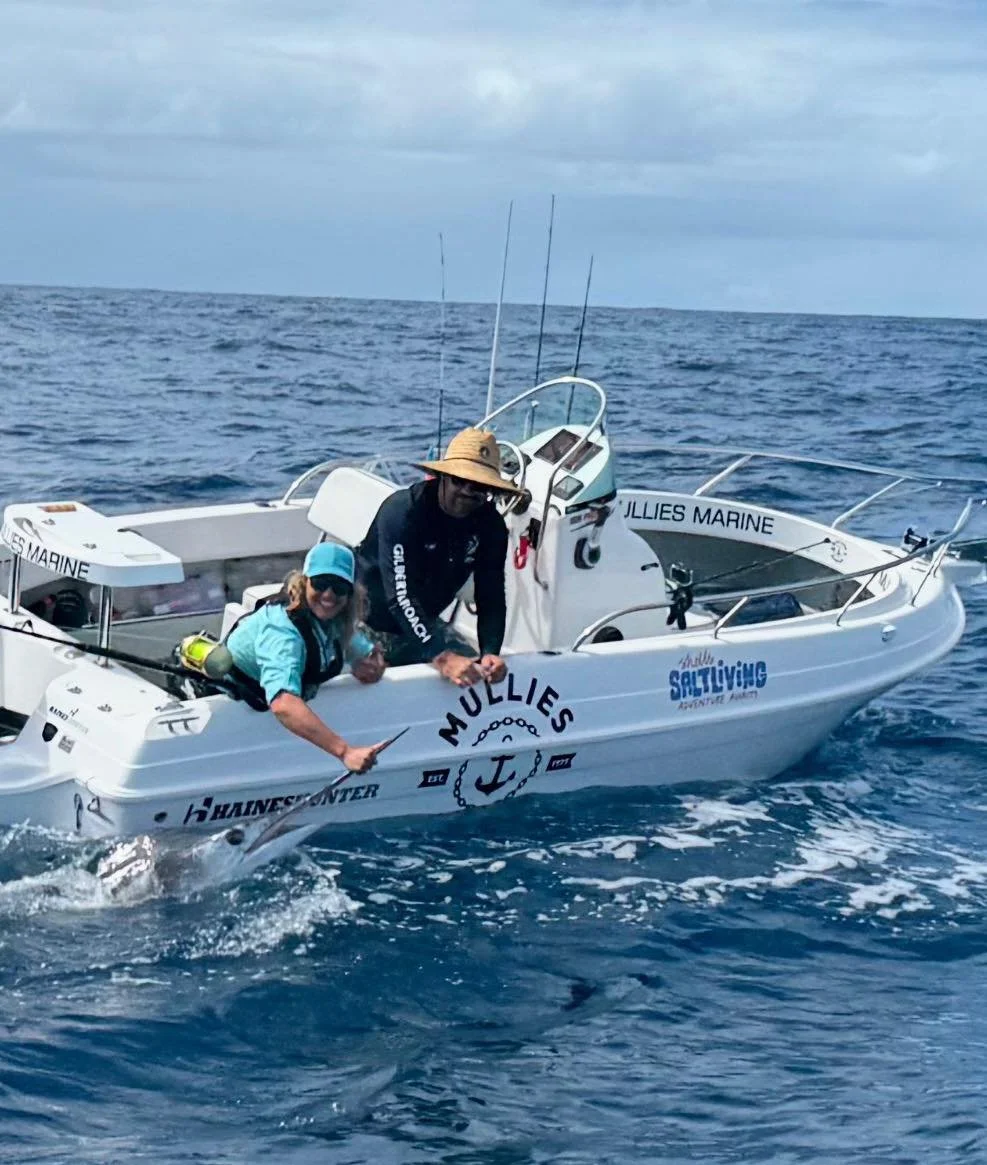
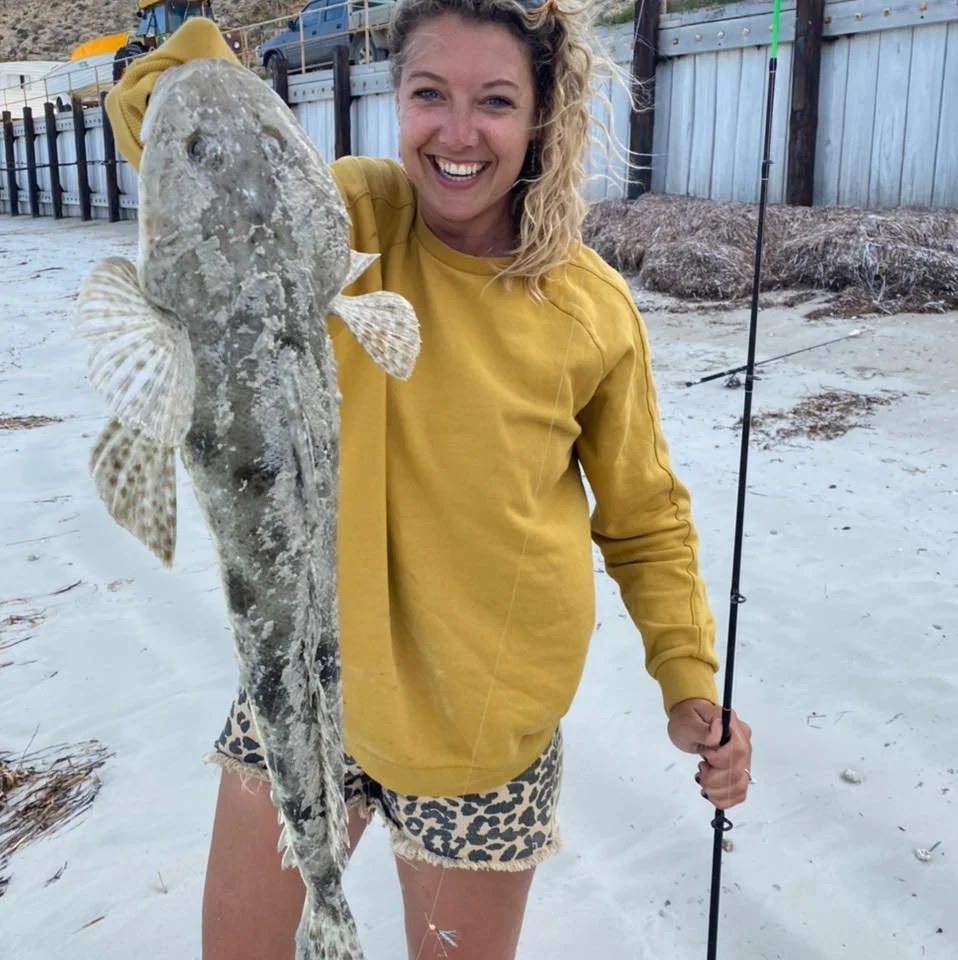
Michelle’s story reminds us that fishing is more than a pastime. It’s a teacher, a connector, and a way of showing up fully in the world. Through her passion for education, sustainability, and community, Michelle continues to use fishing as a platform to uplift others and create meaningful change.
I hope you’ve enjoyed getting to know Michelle and her journey as much as I have.
Kymmy 💛
Cassie Price
Cassie’s fishing story is deeply woven into family, adventure, and place. From long harvest breaks spent camping and fishing along South Australia’s Coorong and River Murray, to leading national conversations around fish habitat restoration, fishing has always been more than a pastime for Cassie. Today, as CEO of OzFish, she continues to use fishing as a way to connect people, protect waterways, and inspire the next generation to care deeply for the places they fish.
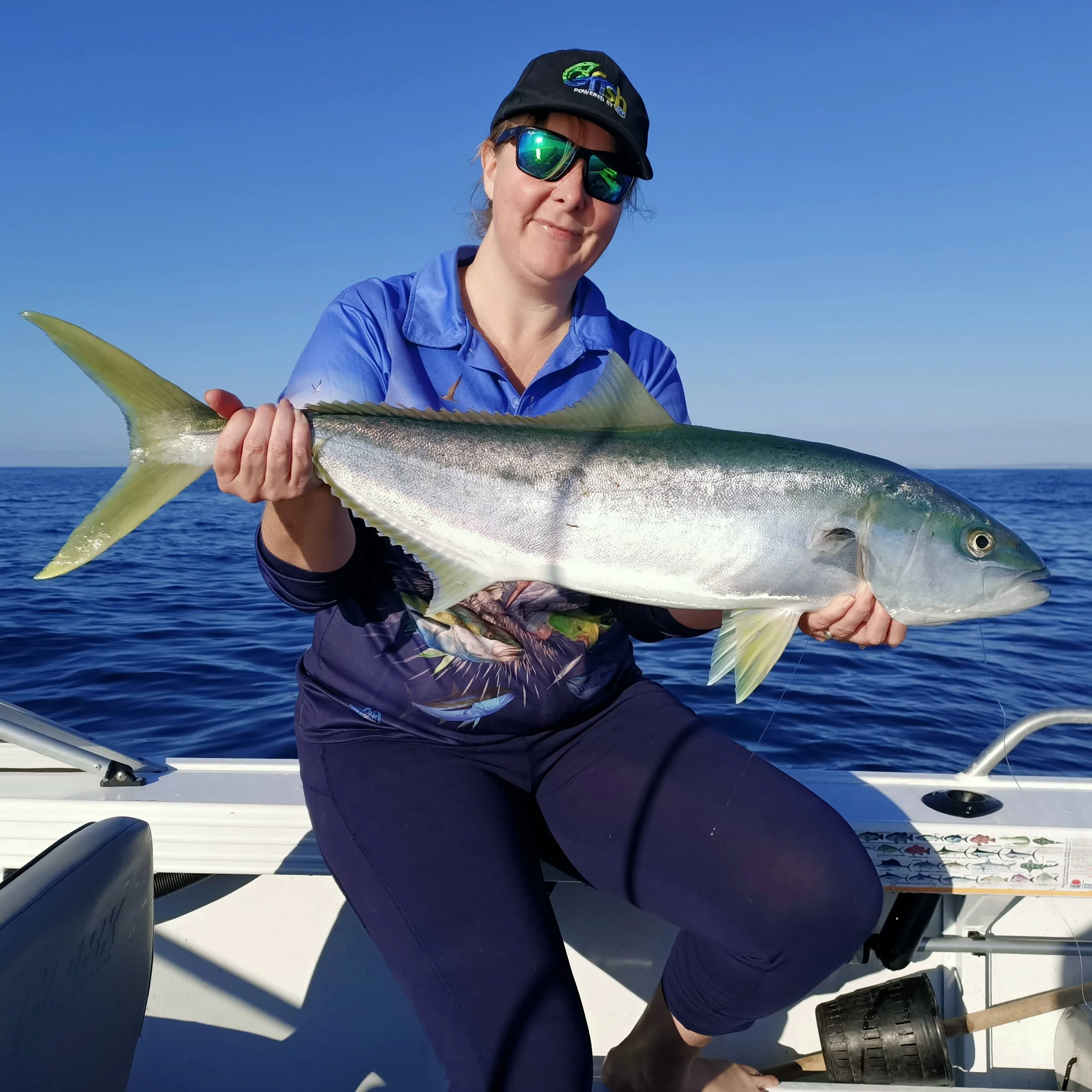
Cassie with a nice Kingfish
Tell us a little about yourself and where fishing fits into your life right now.
I grew up farming in South Australia’s mallee and learned to fish across the Coorong Beach, the Gulfs and the River Murray. When I was 16, we sold our family farm and moved to Ballina on the NSW north coast, where we entered the boating business. I already loved fishing, but Ballina opened doors to local competitions, community involvement, and even a Saturday morning radio segment talking boating and fishing.
Today, I still live near Ballina with my partner and our two teens. I’m the CEO of national fish habitat restoration charity OzFish. Life is full and busy, and fishing is something I now have to deliberately make space for, but it’s become more important than ever. It connects me with others, gives my kids meaningful experiences, keeps me grounded in nature, and sits at the heart of both my personal life and career.
I fish whenever I can. I’m mostly an ocean fisho, but I love land-based fishing in bays, estuaries and rivers. I target everything from reef and pelagic species offshore, to sand whiting, gar, jacks and bass closer to home. One of my favourite things is simply fishing somewhere new. Fishing gives you a reason to explore.
How did your fishing journey begin?
Although we lived a long way from the coast, my Dad loved adventure. Every year after harvest, we took two to three weeks off and went camping on fishing holidays along the coast. Those trips were flat out fishing from dawn to dusk. If I wasn’t fishing from the boat, I was on the jetty, snorkelling, or gathering shells along the beach.
Between those big trips, we fished the Murray or headed to the Coorong when weather changes rolled through. Dad watched the forecasts closely and we could be packed and on the road within an hour. I was about seven when I caught my first fish. I caught nine King George Whiting off Venus Bay and famously fell asleep before I could land the tenth.
What does fishing give you beyond just catching fish?
Catching fish is almost the least of what fishing gives me. It’s always been about adventure, exploration, and challenging myself. These days it also gives me precious time with my parents, my partner and my kids, a deep connection to nature, and time outdoors without even realising I’m exercising. Fishing is also a huge part of a career I genuinely love.
What’s one moment on the water that really stands out for you?
There are so many. Fishing off the cliffs west of Fowlers Bay and watching dolphins tail-walk and back-flip onto the reef with no other humans in sight. A pod of pilot whales swimming under the boat off Ballina. A sailfish cruising past us in clear water, glowing with colour.
One of my most memorable fish was a 16kg Spanish Mackerel off Flat Rock, caught when I was about 19. I’ve never bettered that fish or that thrill. And closer to home, catching my personal best Yellowbelly at 51cm on the Murray, surrounded by river cliffs and signs of Aboriginal culture, was incredibly special.
Have you faced any challenges as a woman in fishing, and how did you navigate them?
In my teens and early twenties, when I was fishing competitions and doing well, I was often accused of my Dad catching fish for me and handing them over to weigh in. It was offensive and exhausting. Being part of a fishing club where women’s voices were consistently dismissed was equally frustrating. Eventually, Dad and I walked away from the competition scene.
These days, if someone refuses to respect a woman’s voice, I simply go around them. There is no longer space for that behaviour in recreational fishing. I also do everything I can to help other women go around those barriers too.
What’s something you’ve learned about yourself through fishing?
Fishing has taught me just how capable and resilient I am. It has done that since I was a little girl. It constantly reminds you of your strengths, especially when things don’t go to plan.
Do you have a favourite species, style of fishing, or place to fish?
Fishing in South Australia feels like coming home. The Coorong, the River Murray and the Gulfs hold a deep connection for me. If I need to reset or recharge, fishing those waters does something special that nowhere else quite matches.
How do you support or encourage other women in the fishing space?
Through my role as OzFish CEO, I use my voice to create space for other women to use theirs. I’m involved with WRFL, AusWIF, and support WIRFs across Victoria and Queensland. I’m also on the Board of the Australian Recreational Fishing Foundation and ensure women have a strong seat at that level of influence.
At a grassroots level, OzFish works hard to make women feel welcome, visible, and supported. We show real, everyday fishing. Sometimes it’s standing on the bank with other mums and kids, and that matters just as much as any offshore trip. I also make it a rule to say yes to support requests from women whenever I can.
What role do community groups play in the future of women’s fishing?
Women’s fishing groups help women find their people. Showing up in a male-dominated space is hard if you can’t see anyone like yourself. These groups lower that barrier, create confidence, and make it easier for women to participate without feeling like they have to be the first or the only.
For any woman thinking of starting to fish, what piece of advice would you give her?
You don’t need much to start. You don’t need a boat or a big setup. Grab a basic rod, a simple rig, a sinker and some bait. Tackle store staff are far better at helping beginners than they used to be. Watch where people fish locally and go there. Talk to other fishos.
Enjoy the process of learning. Fishing is a journey. Pay attention to the water, the sky, the plants, and the fish. My Dad always said you need to think like the fish. Mostly, you learn by being out there.
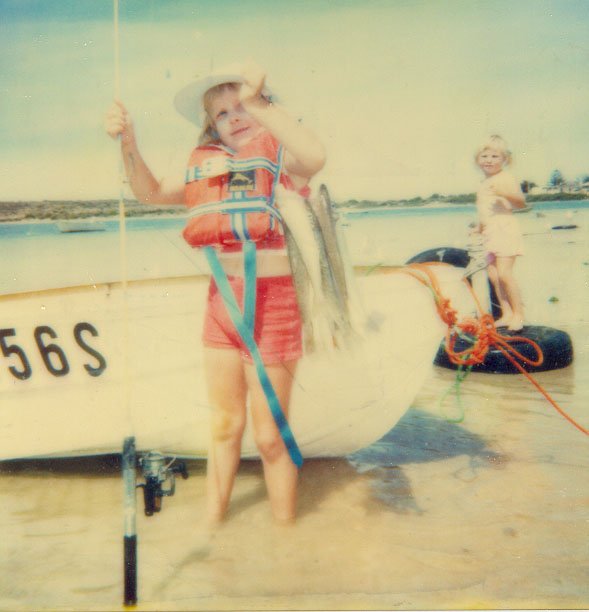
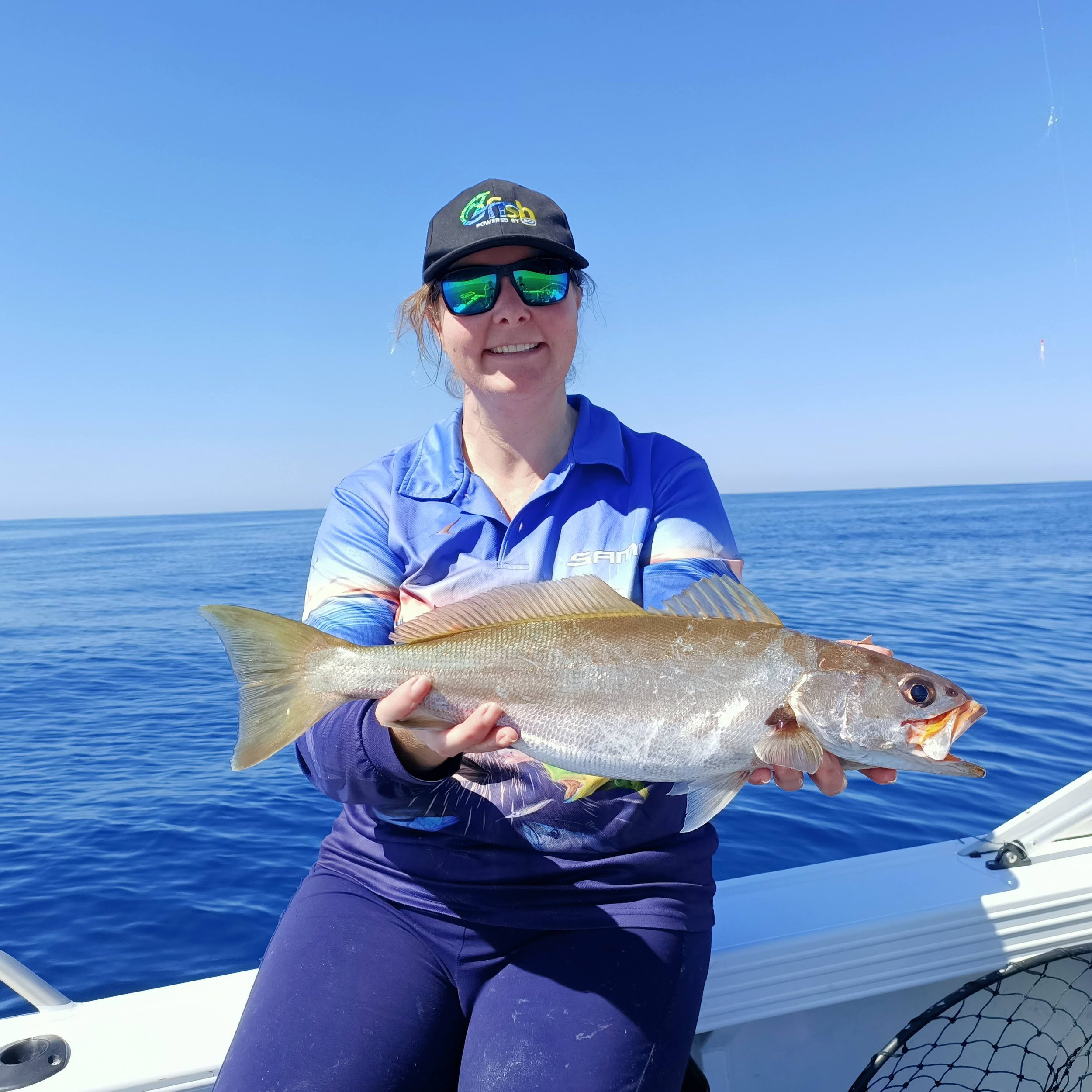
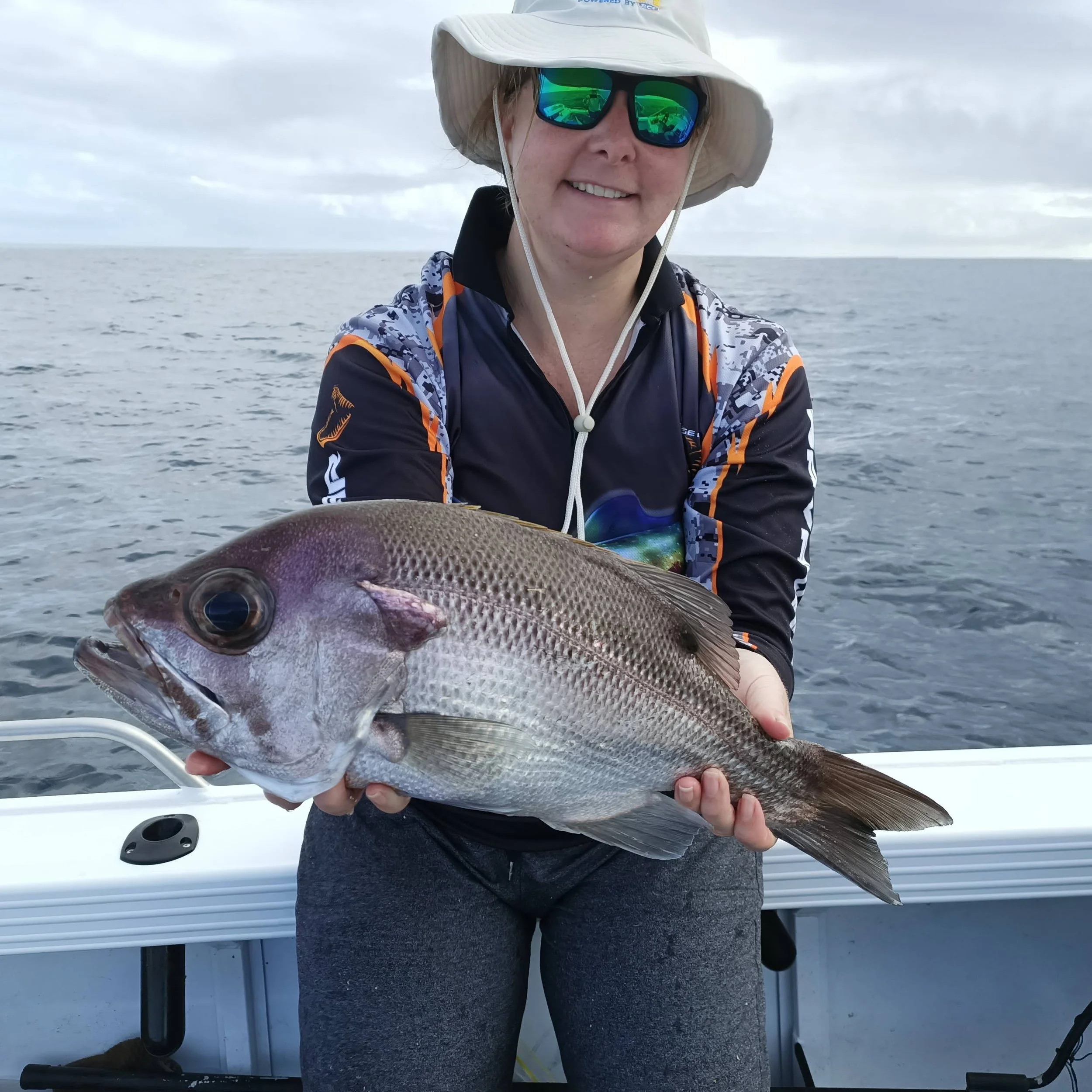
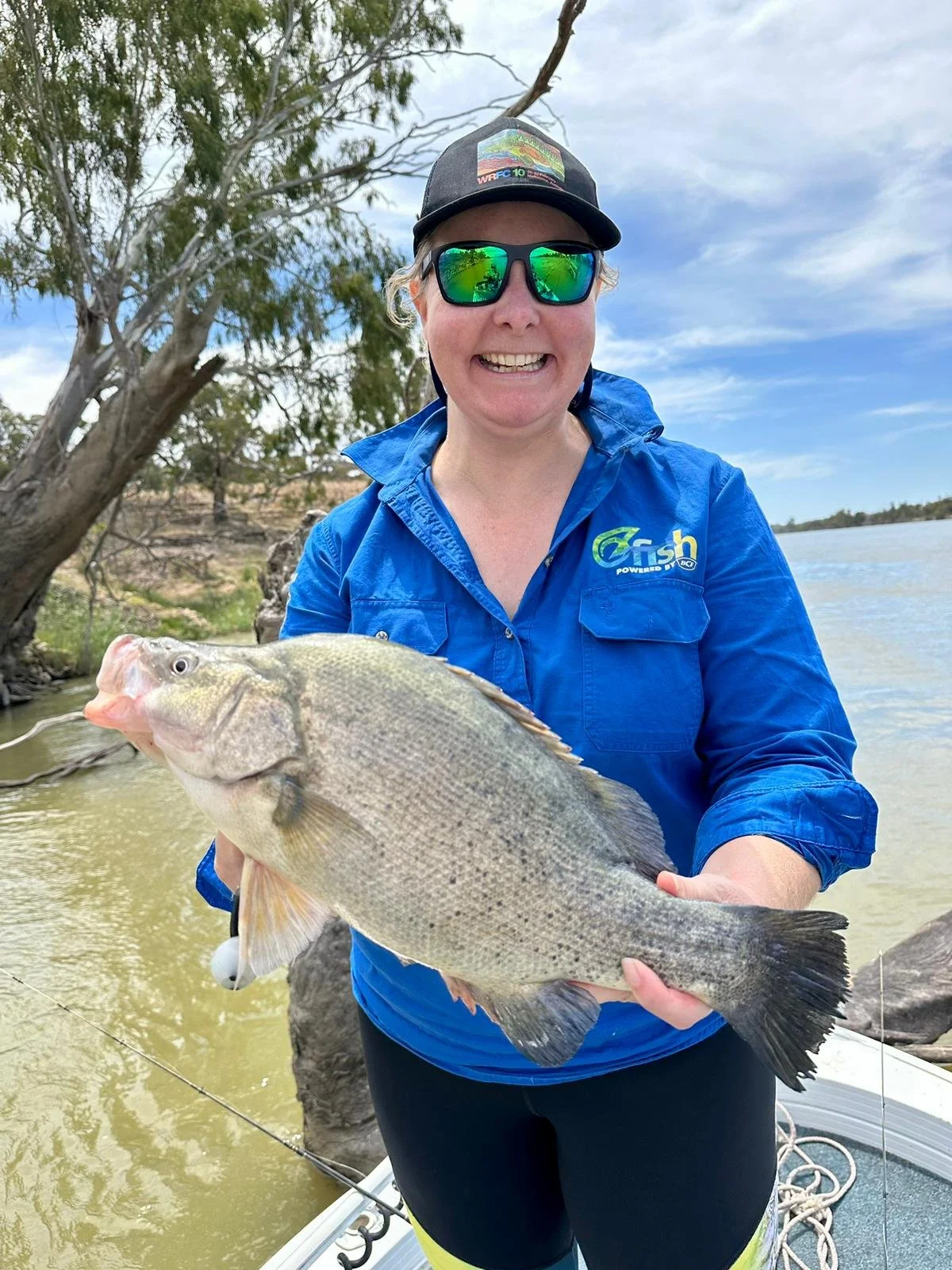
Cassie’s story is a powerful reminder that fishing shapes not only memories, but careers, communities, and the future of our waterways. Through leadership, advocacy, and a lifelong love of fishing, she continues to help protect the places we fish and ensure women have a strong voice within the sport.
I hope you’ve enjoyed getting to know Cassie and her journey as much as I have.
Kymmy 💛
Final Words
The women featured in Women Who Fish: Volume One have generously shared their stories, experiences, and perspectives, and we encourage you to continue following their journeys beyond this page. Supporting and amplifying the voices of women in fishing strengthens our community and creates space for more women to step confidently onto the water.
We also strongly encourage learning more about and supporting the Women’s Recreational Fishing League (WRFL). The work being carried out by WRFL is genuinely groundbreaking, creating pathways, leadership opportunities, and confidence for women in fishing, and playing a vital role in addressing the gender imbalance that has long existed in recreational fishing. When women are visible, supported, and empowered, meaningful change follows, and WRFL is leading that change.
If protecting the places we fish matters to you, we also encourage getting behind organisations like OzFish, whose work in habitat restoration is critical to the future of fishing across Australia. Healthy waterways are the foundation of everything we love about fishing, and supporting this work helps ensure those opportunities remain for generations to come.
And finally, if you’re a woman who fishes and feel called to share your story, we’d love to hear from you. This is just the beginning. We’re always looking for the next group of women to feature, because every journey adds strength to the bigger picture.
Thank you for being part of the Lady Anglers Downunder community and for supporting women in fishing.
Kymmy 💛