
On the Water with Kymmy: Beyond What Works
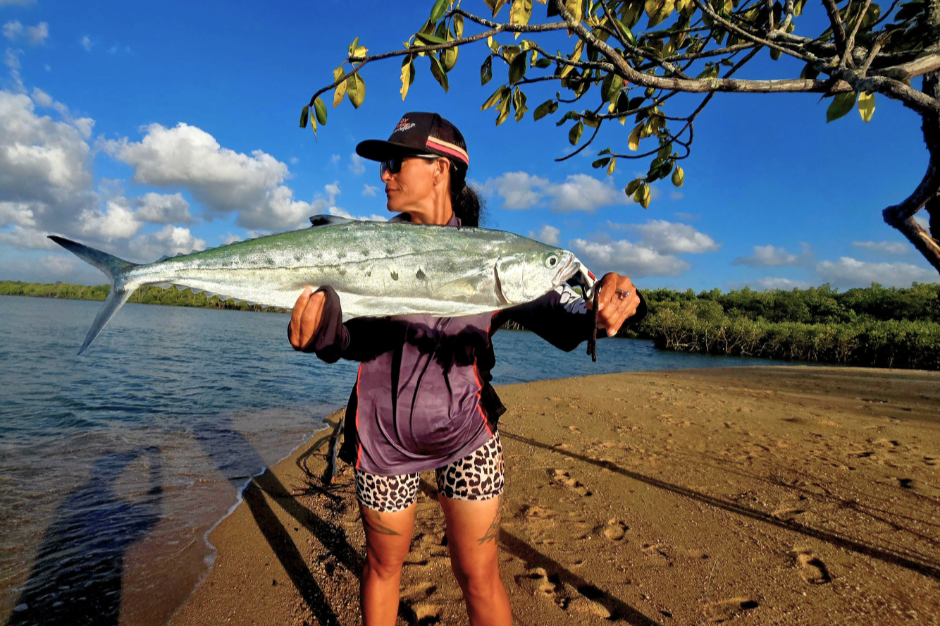
There's something about fishing that I don't think I'll ever get tired of.
Learning.
It doesn't matter how long you've been fishing, how many species you've caught or how confident you are with a rod in your hand. There is always something new to figure out.
A different species. An unfamiliar waterway. A lure you've never used before. A technique you've watched someone else master but haven't quite wrapped your own head around.
And for me, that's a huge part of what makes fishing so bloody enjoyable.
I don't just want to catch fish.
I want to keep getting better at figuring out how to catch them.
Beyond what you already know
Think about how many of us first experienced fishing.
For me, it was with Dad. He'd rig the rods, bait the hooks and take the fish off the line. My job was pretty much to hold the rod and hopefully catch something.
And there's absolutely nothing wrong with that.
Plenty of people spend their entire lives bait fishing. They enjoy it, they're good at it and they're perfectly happy doing exactly that.
Good on them.
But for others, me included, there's an urge to explore what else is possible.
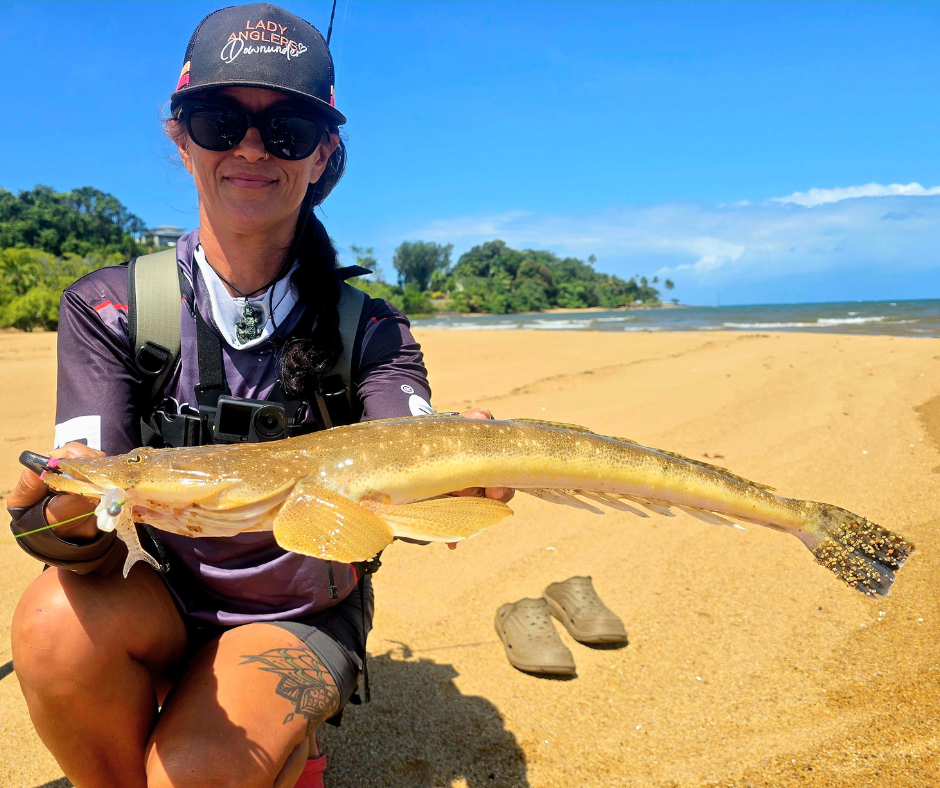
Let's take the humble flathead as an example.
You might start by learning how to catch them on bait. You discover where they like to sit, the conditions they feed in and the areas worth targeting.
Then one day you decide to try a curl-tail soft plastic.
Suddenly you're learning something different.
Instead of waiting for a fish to find your bait, you're experimenting with how to make an artificial lure look and behave like something worth eating.
You're thinking about retrieve speed, pauses, water depth and how the lure moves.
Eventually you might become quite proficient with that soft plastic.
So, what next?
Perhaps you tie on a diving hardbody and start experimenting all over again.
Same species. Different presentation. Another opportunity to learn.
There's a difference between knowing how to catch a fish and understanding the different ways you can catch it.
And that's where I think fishing becomes particularly interesting.
Because you're not just learning how to use different lures. You're learning more about the fish themselves.
Sometimes stubbornness pays off
Now, I'd love to tell you that I'm the kind of angler who immediately recognises when something isn't working and makes the appropriate change.
But I'd be lying. 😂
I'm stubborn. (Go ahead and guess my Star Sign haha)
If I'm fishing a lure that I believe should be working, I'll often persist with it longer than I probably should.
Maybe the fish aren't interested in the way I'm presenting it.
Maybe I need to slow things down.
Maybe I need to speed things up.
Perhaps a longer pause or a different rod movement will be enough to convince a fish to eat.
And sometimes it works.
Other times, I probably should have changed lures half an hour earlier.
But there's learning in that process too.
Because improving your fishing doesn't always mean tying on something different. Sometimes it means discovering another way to work what you've already got.
I was reminded of this after recording a podcast with “Fish’n Talk from the Shed” (You can listen to it here)
During the conversation, host “The Lazy Yakker” shared a simple piece of advice.
"If the fishing is slow, go slower."
The very next day, Chris and I headed out fishing.
And the fishing was dead.
Absolutely dead.
I remembered those words and decided to put them to the test.
I slowed my retrieve.
And on that very cast, I caught a fish.
Now, I'm certainly not suggesting that slowing your retrieve will magically solve every difficult fishing session.
But that one fish was a bloody good reminder that there's always something to learn from other anglers, regardless of how much experience you have, or how much experience they have.
Because you never know when a little nugget of fishing wisdom might come your way, whether it’s from someone who’s been fishing for fifty years or someone who’s only just picked up a rod 50 days ago.
Sometimes the best lessons come from the people you least expect to learn them from.
The moment you decide someone has nothing to teach you is the moment you potentially miss out on learning something valuable.
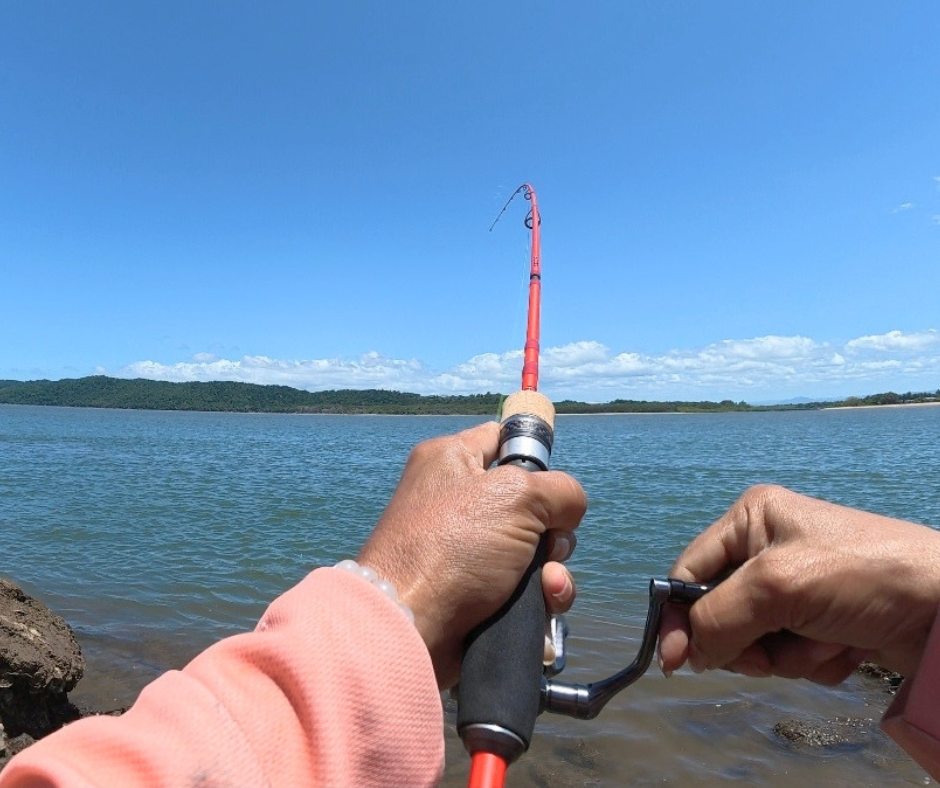
Getting comfortable with being uncomfortable
It's easy to become attached to what works.
We all have our favourite rods, reels, lures and brands.
Those trusty combinations that have produced fish time and time again.
And naturally, when you're standing beside a promising stretch of water, there's a temptation to reach for something you already know how to use.
Why wouldn't you?
You know how it swims. You know how to work it. You've got confidence in it.
But what happens when you deliberately pick up something unfamiliar?
Recently, I applied to become part of the Maria Field Crew.
Now, here's the thing.
I didn't have years of experience using Maria products. In fact, diving hardbodies weren't exactly a lure style I was particularly familiar with, at all.
But I saw an opportunity to challenge myself, expand my knowledge and continue putting myself forward within the fishing industry.
As someone who is a huge advocate for women in recreational fishing, that's important to me.
I want to continue growing as an angler, but I also want to remain visible and lead by example.
To show that women belong in this space.
That we can be knowledgeable, capable and bloody good at what we do.
And that we don't need to know absolutely everything before we're willing to put our hands up and have a go.
Sometimes growing as an angler means being willing to feel like a beginner again.
Making it work in your own backyard
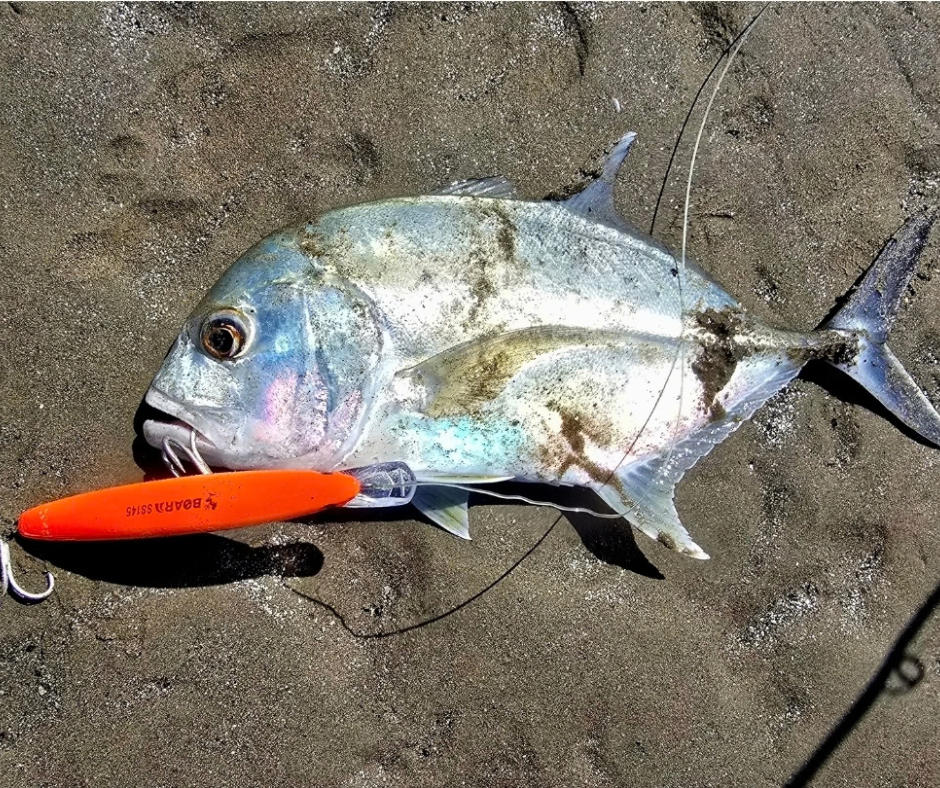
One of the lures I've been experimenting with is the Maria BOAR SS145.
It's a lure I hadn't previously used, and learning how to work it effectively has been an interesting exercise.
A lot of the anglers I've seen fishing this style of diving lure are doing so from boats, rock ledges and other environments quite different from where I spend most of my time.
I'm predominantly a flats fisher.
And as anyone who fishes the flats knows, water depth can be a fairly significant consideration when you're experimenting with lures designed to dive.
I watched videos from some of the existing Maria Field Crew members to see how they were working their lures and whether those techniques might translate to the environments I fish.
But ultimately, I needed to get out there and experiment for myself.
Different retrieves. Different approaches. Working out what I could do with the tackle I had available.
And yes, I've since managed to catch a little GT on the BOAR SS145.
Was it a monster?
Nope.
But was I happy?
You bloody bet.
Because that fish represented more than just another catch.
It was a little bit of confirmation that experimenting, adapting and being prepared to try something unfamiliar can pay off.
I haven't mastered that lure.
I'm still learning.
And that's precisely the point.
It's one thing to learn how somebody else catches fish. It's another to take that knowledge and work out how to make it useful in your own fishing.
Experience should make you more curious, not less
Here's something I feel pretty strongly about.
Fishing is one of those pursuits where you never, ever stop learning.
And if there's a fisho out there who genuinely believes they've learned everything there is to know about fishing, well, I reckon they're kidding themselves.
There are always new species to understand.
New waterways to explore.
Different techniques to experiment with.
Tackle continues to evolve, new products become available and there's always another angler doing something a little differently who might have something worthwhile to teach us.
You could spend fifty years fishing the same stretch of water and still encounter something that makes you question what you thought you knew.
Now, don't get me wrong.
If you're perfectly happy soaking a bait every weekend, catching a feed and enjoying yourself, bloody good on you.
You don't need to become a lure-fishing enthusiast, buy every new product that hits the market or chase a hundred different species to prove anything to anybody.
But being comfortable with how you fish and being closed off to learning are two very different things.
For me, there's no appeal in deciding I've learned enough.
I want to keep challenging myself.
Keep experimenting.
Keep getting things wrong occasionally, figuring out why and hopefully getting them right the next time.
Because the more I learn about fishing, the more I realise just how much there still is to learn.
You belong on the water
And while we're talking about challenging ourselves, I want to touch on something else that's particularly close to my heart.
Women putting themselves forward in recreational fishing.
It's 2026.
Fishing isn't a gentleman's game. Historically, it never really was.
Yet I still encounter conversations about women questioning whether they have enough experience to try something new, pursue an opportunity or step into a part of the fishing world they haven't previously explored.
My advice?
Just bloody do it.
You have as much place on the water as any Bob, Joe or Henry out there.
You don't have to be an expert before you begin learning.
You don't have to master every technique before you try another.
And you certainly don't have to wait until you feel you've earned somebody else's approval before putting yourself forward.
And if you’re a woman who hopes to encourage or inspire other women in fishing, I think there’s something else worth considering.
You need to be willing to put yourself out there, too.
It’s easy enough to tell someone else to back themselves, embrace opportunities and step outside their comort zone. But, are you prepared to take your own advice?
That doesn’t mean you have to be the loudest person in the room, have thousands of followers or put every fishing adventure on social media.
It means being prepared to have a go, even when you’re not entirely sure how things will turn out or how people will receive you.
You can’t control how people receive you. You CAN control whether you give yourself the opportunity in the first place.
That's part of why I continue looking for opportunities to grow myself.
I can't encourage other women to embrace opportunities, back their abilities and try something new if I'm not prepared to do the same.
And leading by example doesn't mean demonstrating that I know everything.
Sometimes it means demonstrating that I'm still willing to learn.
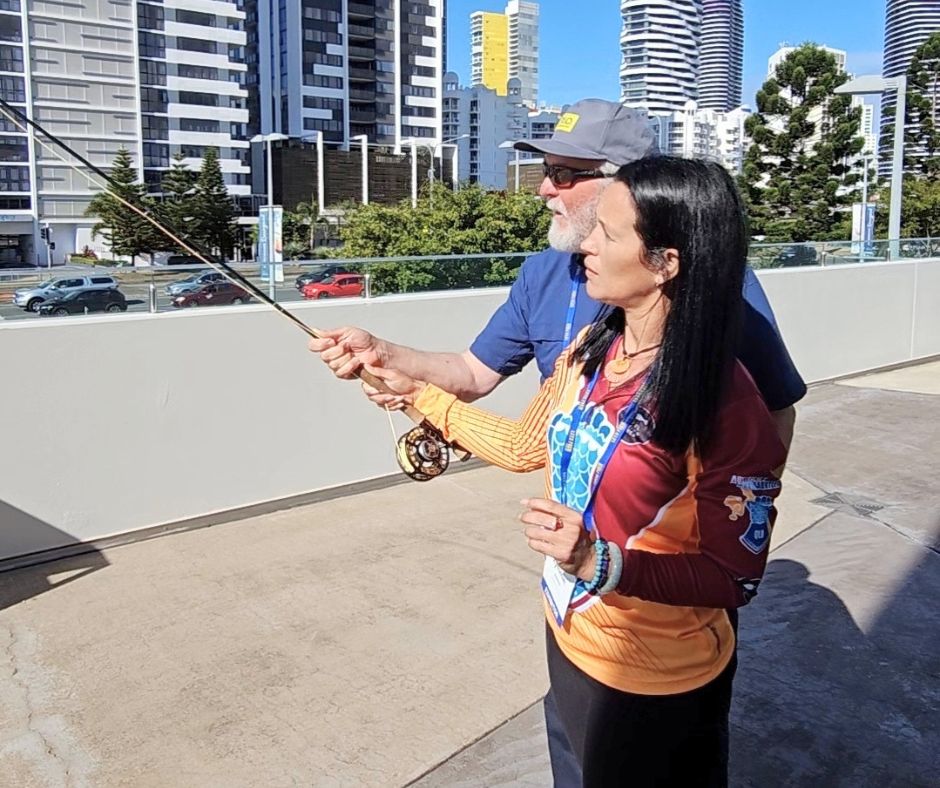
An impromptu casting lesson with the great Peter Morse. FlyFishing is another thing I’d love to master … one day
There's always another challenge
So, what's next for me?
Reef fishing.
At the moment, almost all our fishing is land-based.
Rivers, creeks, beaches and flats are where I've developed much of my fishing knowledge and experience.
But I cannot bloody wait for the day Chris and I can head offshore and start exploring the reef.
Those gorgeous reef species.
Different environments.
Different techniques.
An entirely new collection of things to figure out.
And undoubtedly, plenty of moments where I'll realise I have absolutely no idea what I'm doing.
But that's what excites me.
Because I don't want fishing to become something where I simply repeat the same familiar routine forever.
I want to keep discovering what I'm capable of.
Keep learning how different fish behave.
Keep exploring new water and challenging myself to work out how to catch what's swimming in it.
And hopefully, ten years from now, I'll still be picking up unfamiliar tackle, asking questions and occasionally making a complete goose of myself while trying something new.
Because just because something works doesn't mean it's all there is to learn.
And for me, that's the beauty of fishing.
There's always something beyond what works.