On the water with Kymmy: Topwater in Croc Country
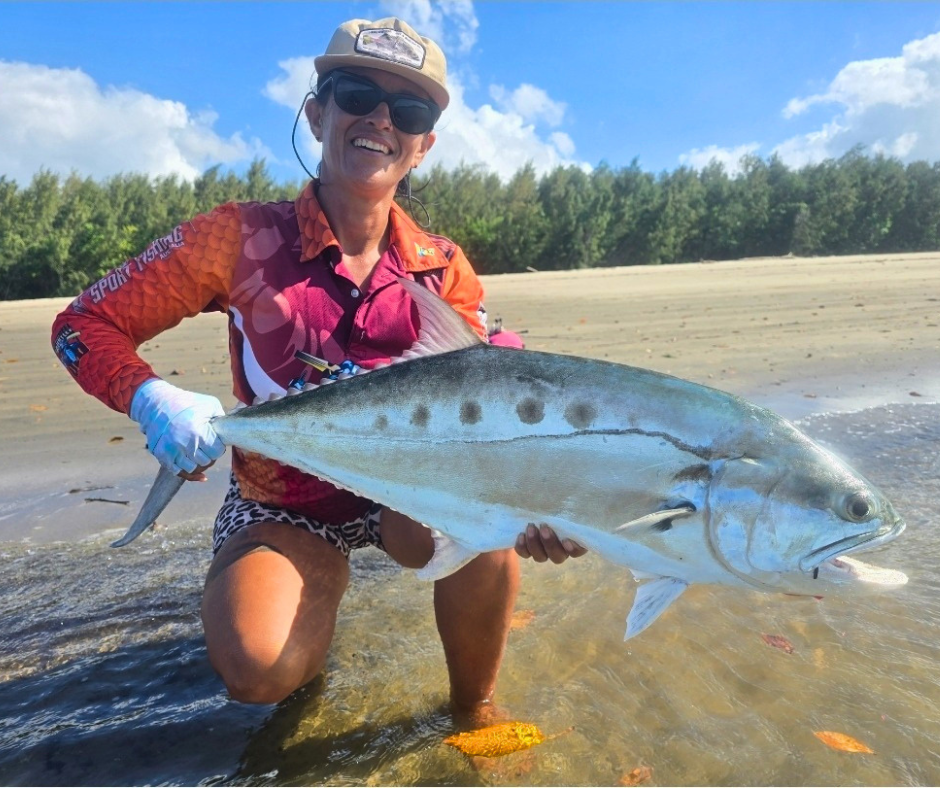
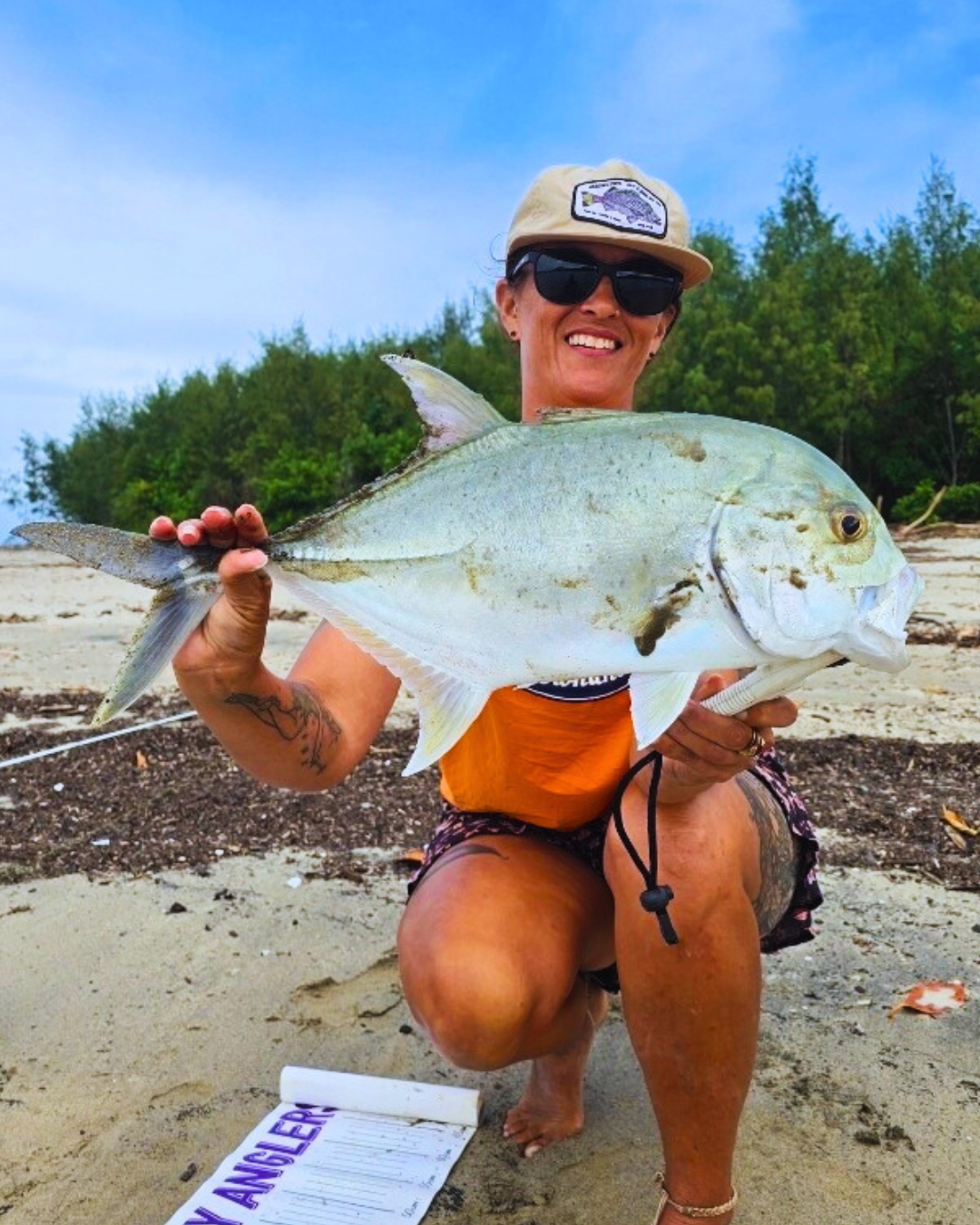
There’s nothing quite like seeing a big flash of chrome right before the water erupts in front of you… and suddenly you’re hanging onto your rod for dear life, holding your breath until that brute is finally in your hands for the token glory pic.
Mind you… it doesn’t always end that way. Or start that way, for that matter.
I’ve had my ass handed to me twice now by big, and I mean BIG, GTs that caught me completely off guard and ultimately won the fight… before quite possibly cruising around the ocean for a bit with a shiny new face piercing. Sigh.
And somehow… despite the chaos, heartbreak and near cardiac events… I keep going back to topwater.

Why it’s addictive
All fishing is fun… except bait fishing. To me, that’s boring 😅 No offence intended. You do you 😉
But topwater? That’s next level.
More often than not, you get to watch the entire story unfold from beginning to end.
You see where your lure lands.
You see every bloop, twitch or skipped retrieve across the surface.
And then, hopefully… you see the fish absolutely detonate on it.
The visual eats are insanely addictive.
Don’t get me wrong… hook-ups on plastics or sinking lures are still bloody awesome. There’s always that anticipation of not knowing if or when the fish is going to eat.
But with topwater, you actually SEE the strike.
The bow wave.
The explosion.
The chaos.
And honestly… once you experience that a few times, it completely ruins you.
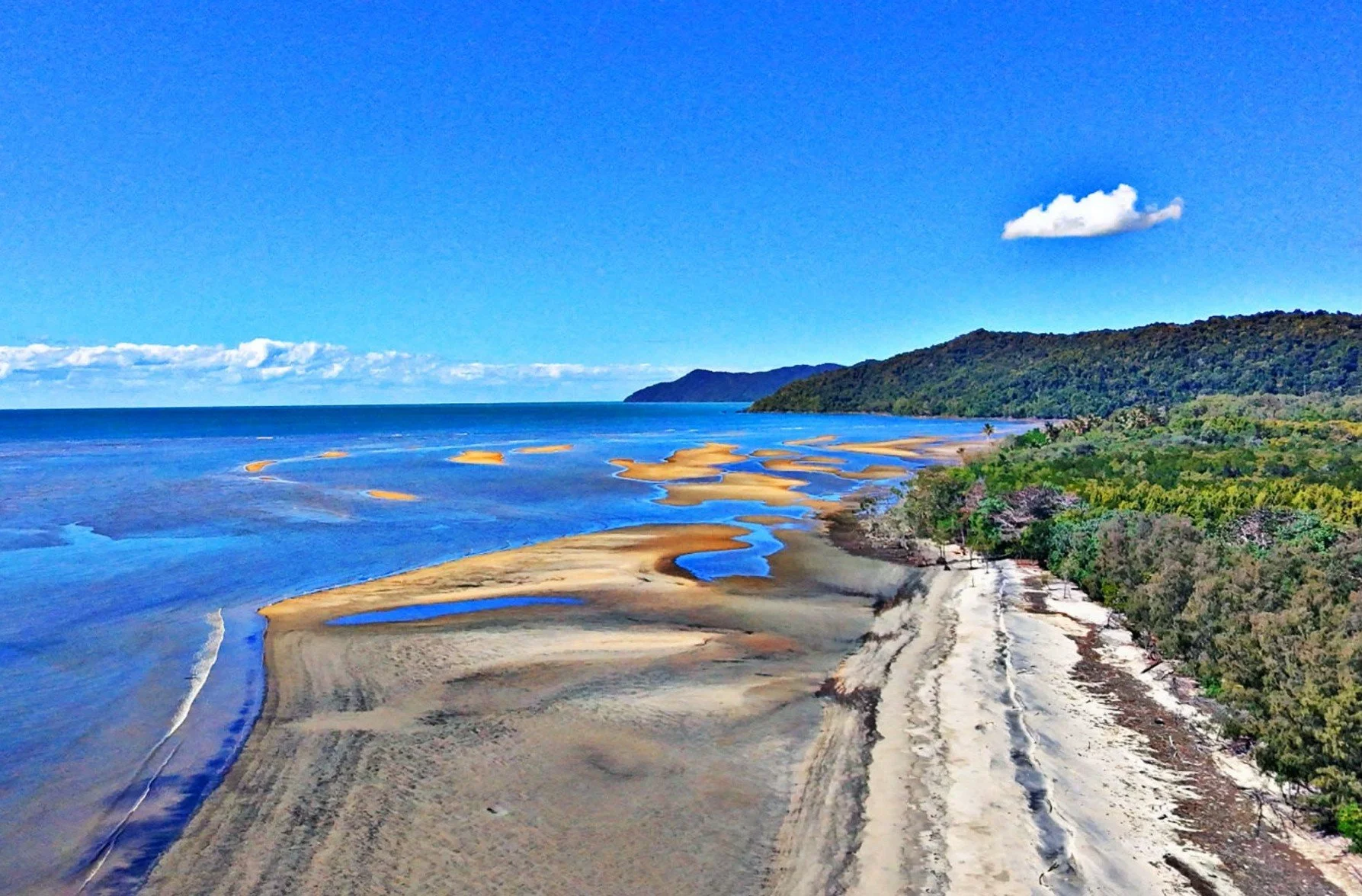
Reading the water
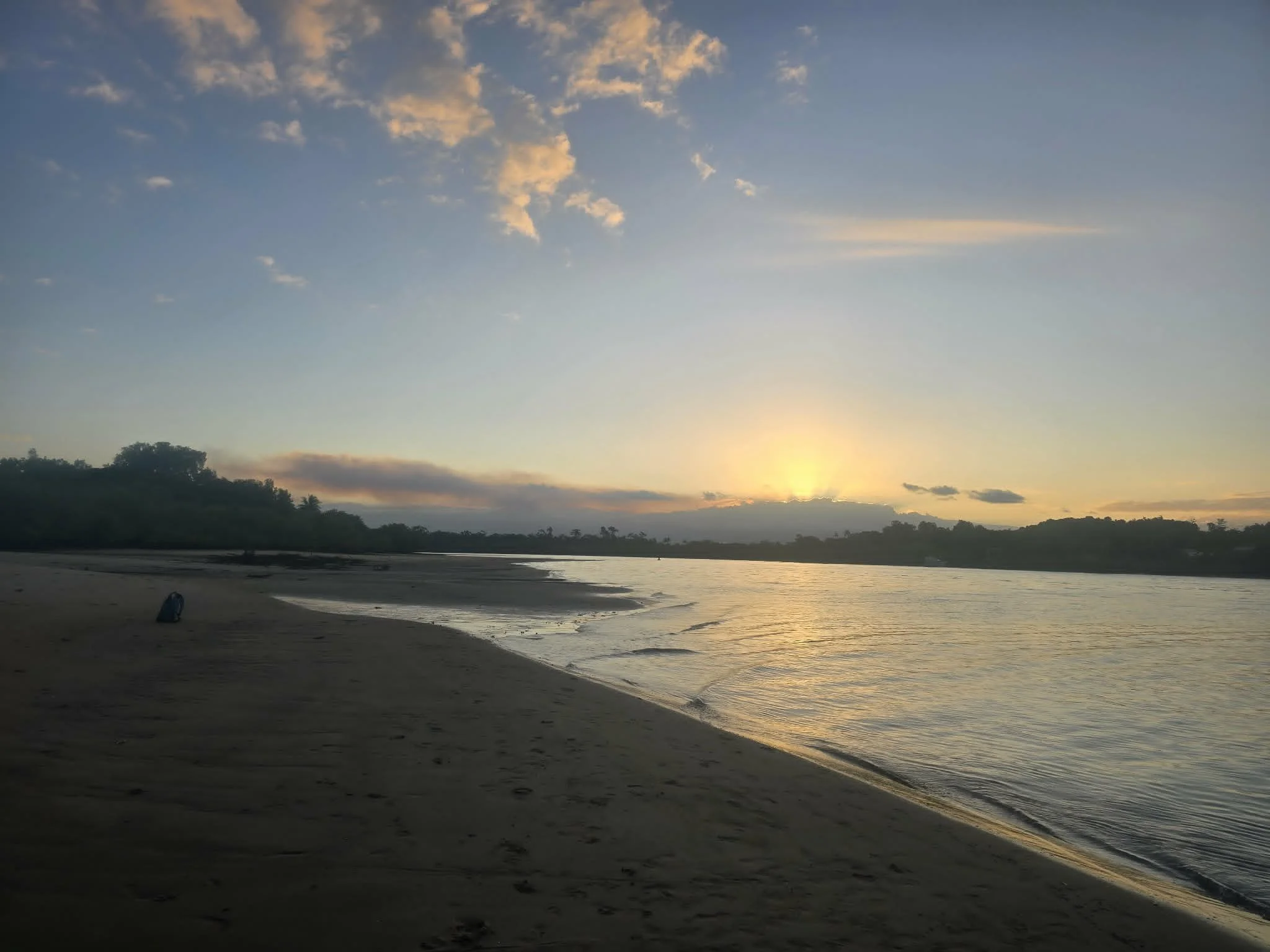
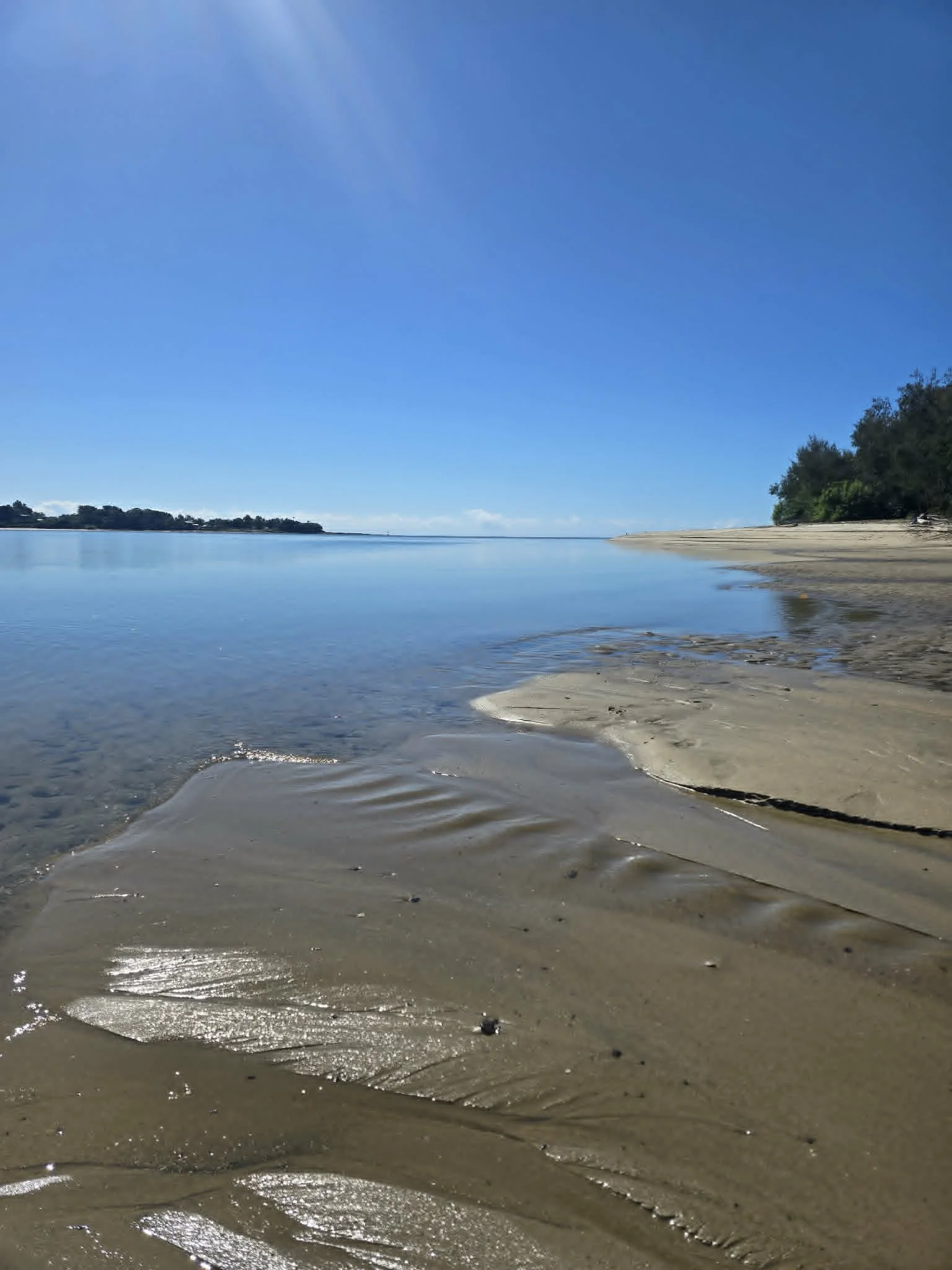
As fun as topwater is, where you place that lure matters just as much as the lure itself.
Flats fishing is still relatively new to me, and, like so many aspects of fishing, you learn as you go.
Hindsight can be a wonderful thing. When I started thinking back to the casts that consistently got the most attention, it finally clicked.
More often than not, they were the casts where I’d looked at the water and thought:
“I wonder if fish are swimming that current line?”
“That drop-off looks like somewhere a GT would sit for a bit.”
Instead of casting aimlessly, I was being intentional… and the results started reflecting that.
Whether I’m chasing JP and sooties in the rainforest or queenies and GTs on the flats, one thing stays the same… I’m always looking for the areas fish are most likely to ambush from.
On the flats, I’m paying close attention to:
current lines
pressure edges
drop-offs
back eddies
Anywhere bait can get pushed around or trapped usually deserves a cast or three.
You start noticing little things after a while too.
Nervous bait.
Changes in water movement.
Pockets of cleaner or dirtier water meeting.
Sometimes the water just looks fishy. And more often than not… it usually is.
Timing matters
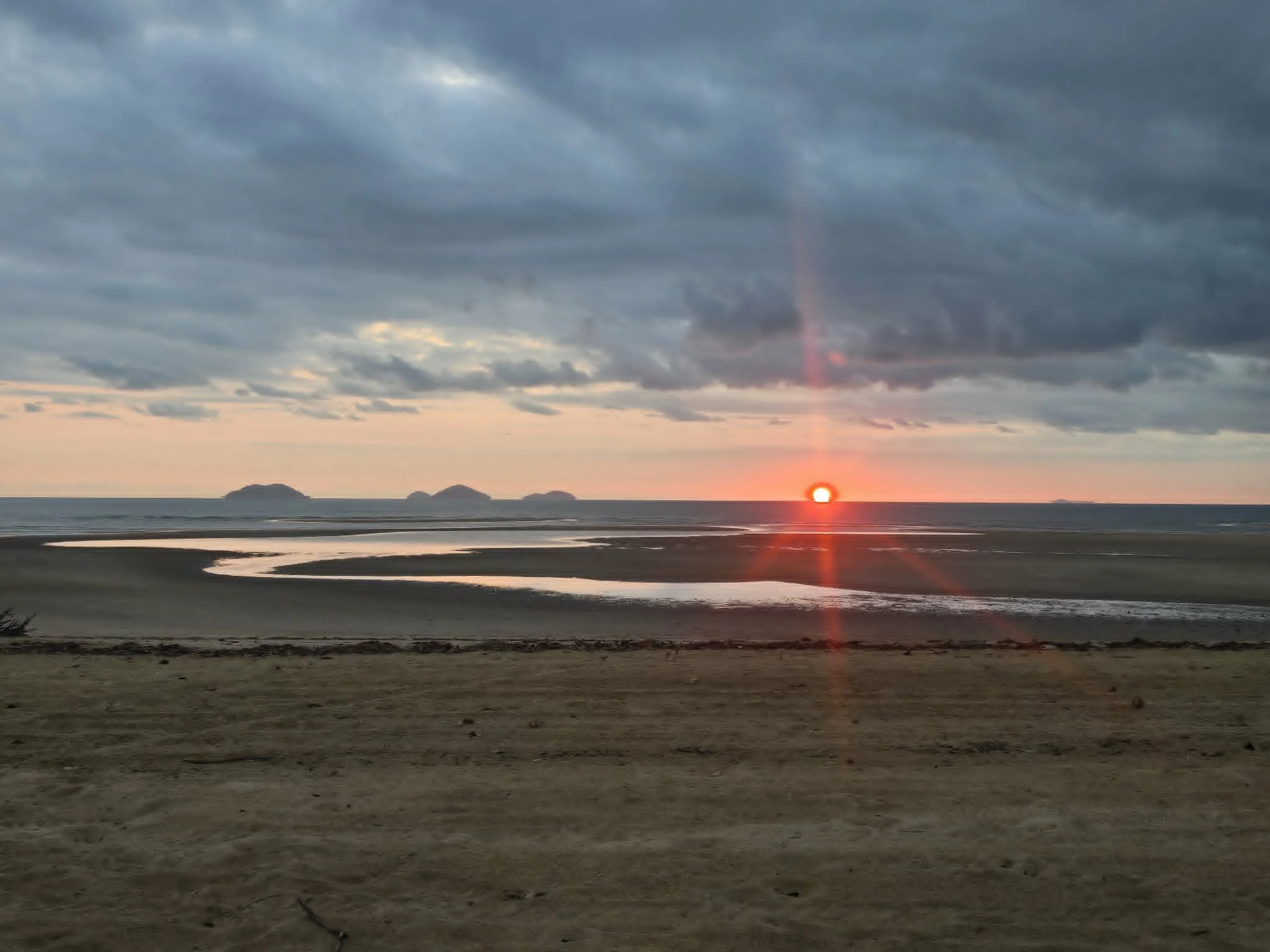
We’ve found some of our better sessions happen from roughly an hour before low tide through to about an hour after.
Sure, fish movement plays a role… but in FNQ, timing isn’t just about the fishing. It’s also about safety.
Some of the places we target require creek crossings to reach the flats and, at higher tide, those crossings can go from “easy enough” to “absolutely not” pretty quickly.
We intentionally fish those lower tide windows so we can cross safely, fish effectively and get back out before the water rises too much… because becoming part of the local food chain was never high on the bucket list 😅
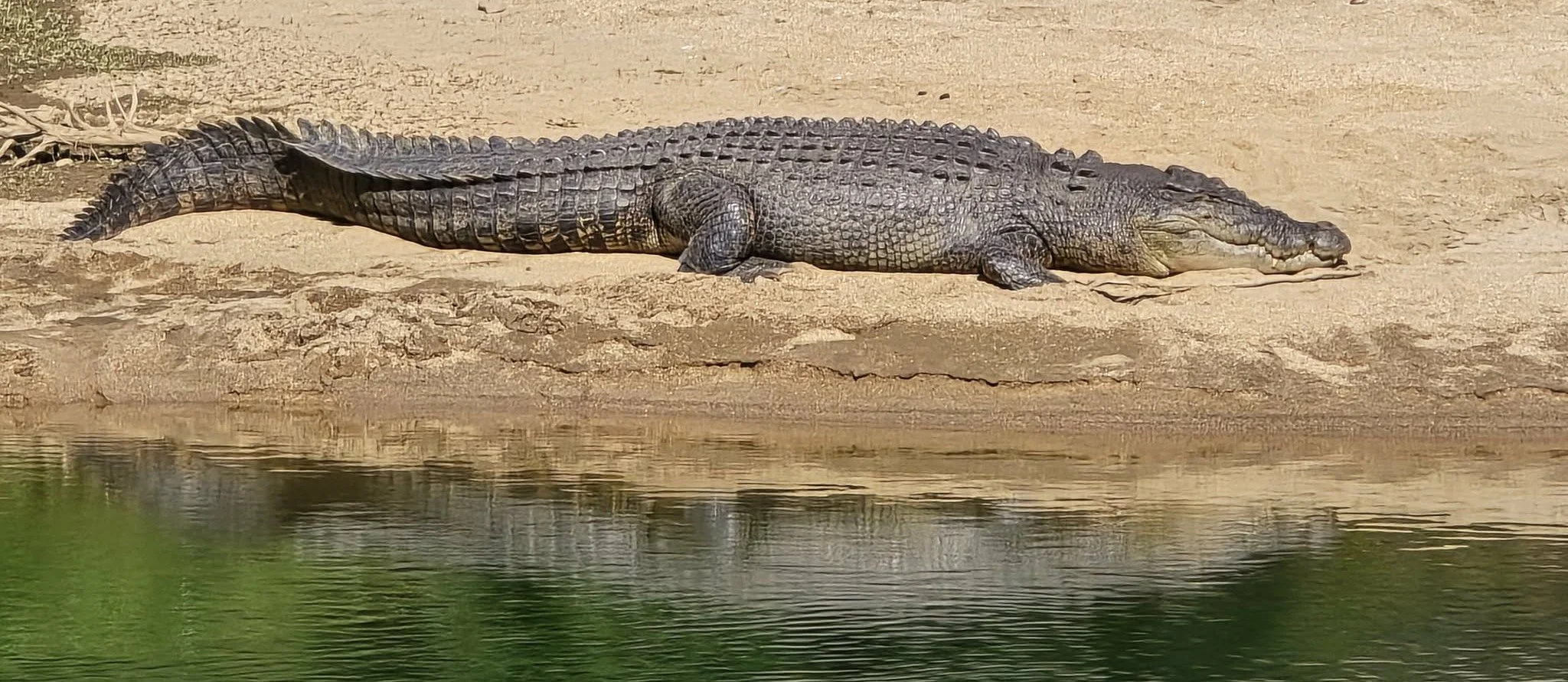
Respecting croc country
When you spend enough time fishing in FNQ, especially landbased, you develop a deeper respect for who you’re sharing the water with.
After one particularly close encounter, I became even more aware of how quickly things can change out there.
These days, we’re constantly assessing our surroundings.
Water clarity.
Entry and exit points.
Tracks and slide marks.
How exposed we are standing on a bank or flat.
You never become complacent. Or at least, you shouldn’t.
That awareness doesn’t stop us from fishing… but it absolutely changes how we approach it.
Tools of the trade
I started off throwing topwater with a Daiwa 6000 BG MQ paired with an Abu Garcia 5-7kg Veritas. It handled fish beautifully… but after hours of cast after cast after cast, I started realizing the combo was slightly too heavy for my petite frame and dodgy shoulders.
Chris had bought himself a Shimano 5000 Vanford paired with a Shimano 5-7kg Impact XT and after we each had a go using the other person’s setup… we swapped 😅
I guess we’re just meant to be, right?
We run 30lb Sufix braid on both setups and generally fish 40-50lb mono leader.
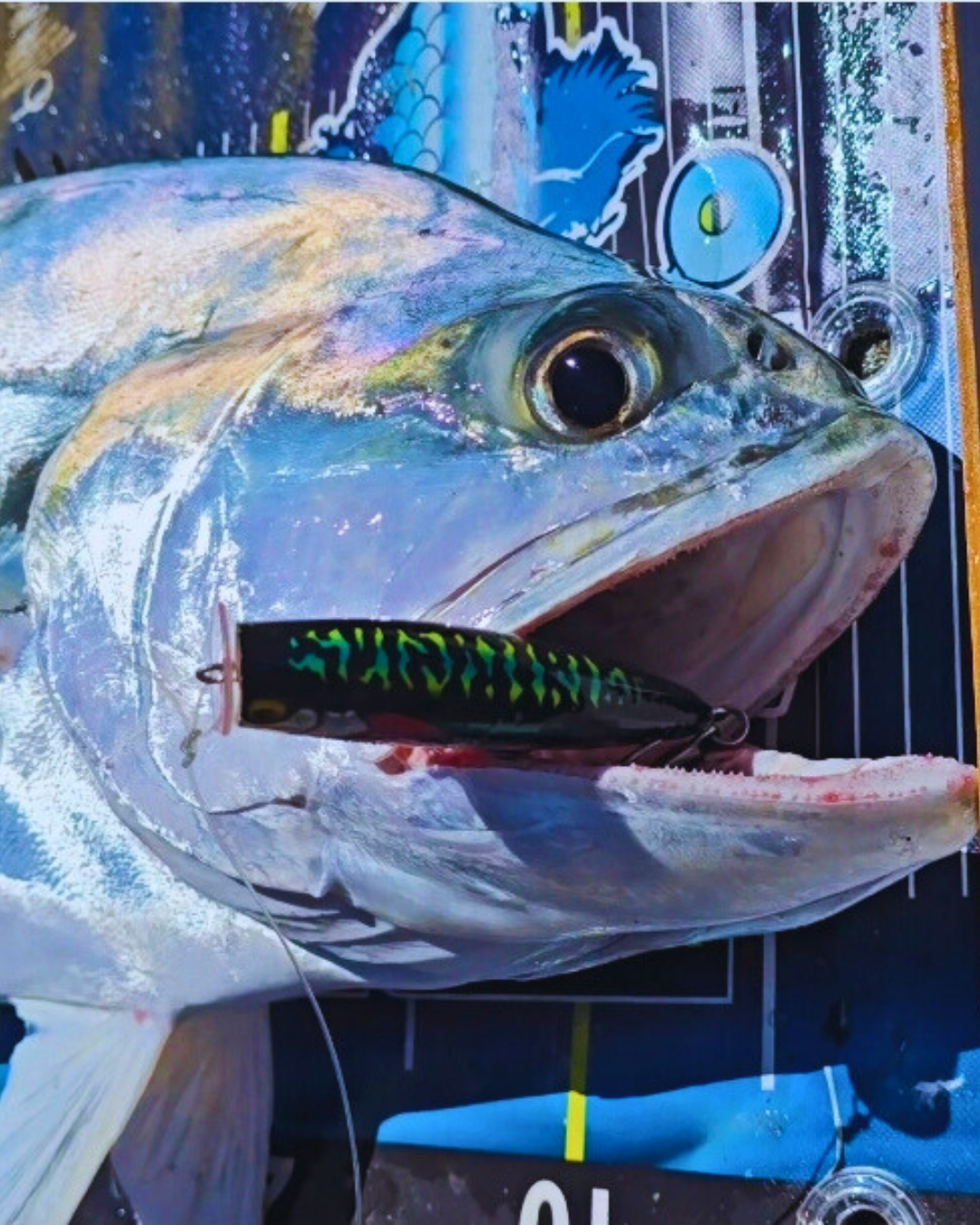
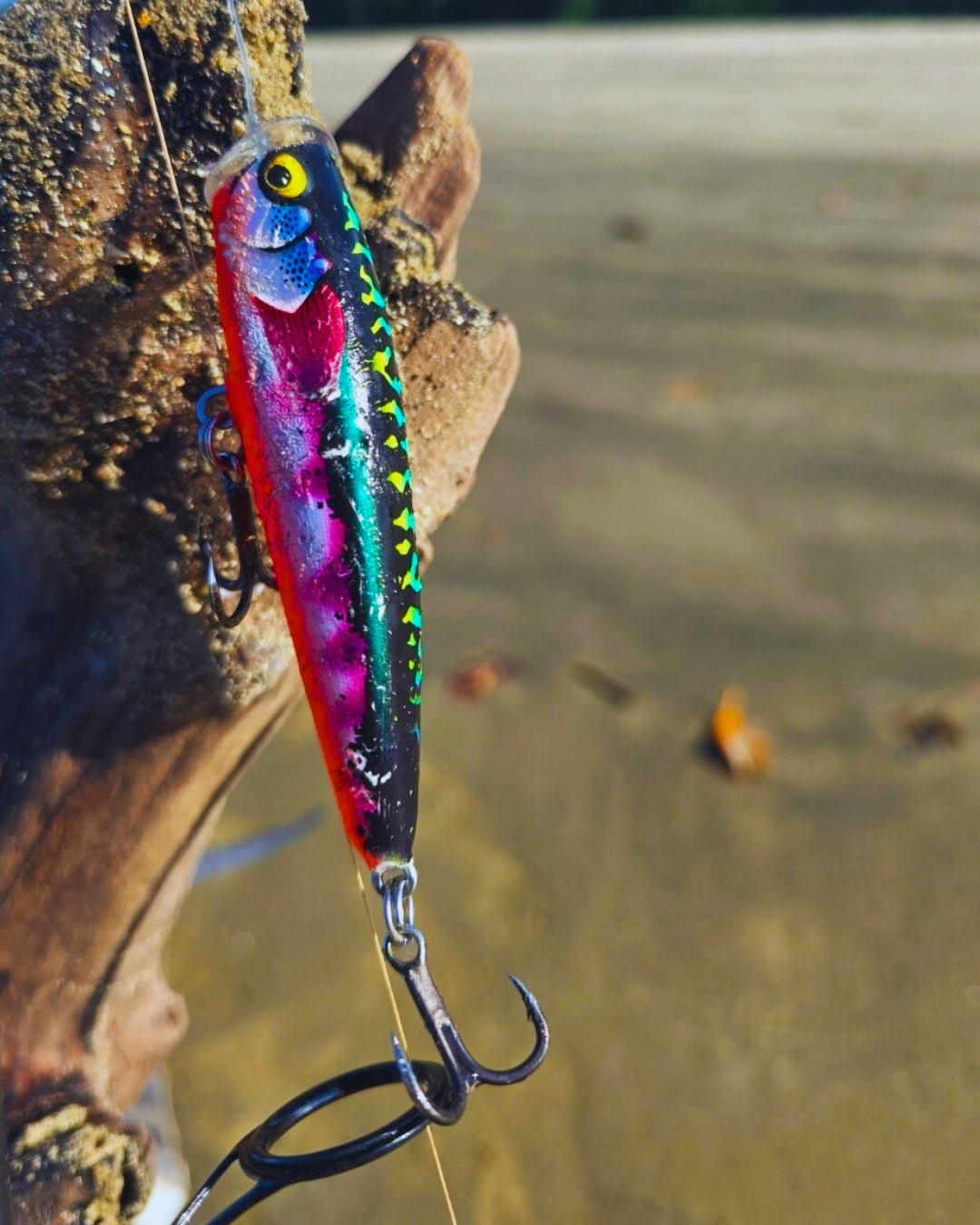
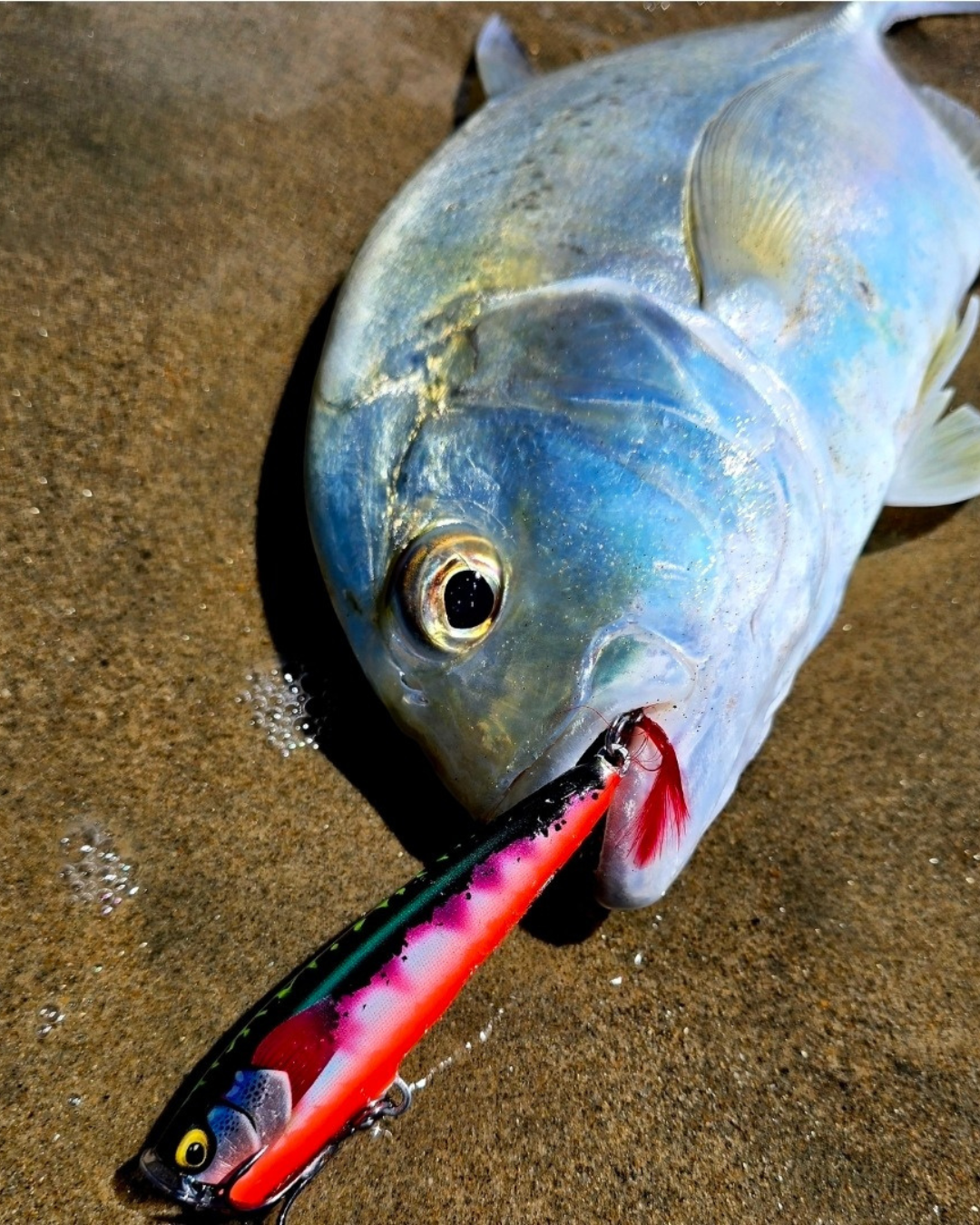
A majority of my bigger queenies and GTs have come on a 97mm Rapala Skitter Pop Elite in Toman. I refuse to hit the flats without at least one in my kit.
The thing I love most about that lure is how versatile it is. If the fish aren’t responding to an aggressive popping retrieve, you can completely change things up and work it walk-the-dog style or even burn it across the surface.
While I’ve still not converted a fish burning it in… we’ve absolutely fired fish up doing it and then hooked up the very next cast after slowing things down and popping it properly on the way back through.
Closing
Dry season in FNQ is well and truly on its way now… or at least I bloody hope so 😅
Hopefully that means we’ll be back out on the flats again real soon, eagerly waiting for that next chaotic, adrenaline-fuelled topwater strike.
If you’re gearing up for the same kind of missions we are… tight lines and please stay safe out there.
And if you’ve got any topwater tips or stories worth sharing, feel free to drop them in the comments 👇